Shaoyang, Hunan Apr 10, 2026 (Issuewire.com) - The global shift toward decarbonization has placed unprecedented pressure on the hardware supporting renewable energy infrastructure. As solar arrays, energy storage systems (ESS), and electric vehicle (EV) charging networks expand into increasingly diverse climates, the demand for reliable power transmission has skyrocketed. Central to these systems is the power connector—a critical component that must ensure seamless energy flow while withstanding environmental degradation. For many system integrators, the search for a High Quality Power Connector Factory from China has become a strategic priority to balance technical rigor with project viability. A power connector serves as the vital junction in electrical circuits, designed to carry high current and voltage safely between power sources and devices, requiring precision engineering to prevent energy loss or catastrophic failure.
The New Energy Challenge: Engineering for Harsh Environments
The rapid growth of the new energy sector has redefined the "standard" operating environment for electrical components. Unlike traditional indoor industrial setups, modern energy systems are frequently exposed to high UV radiation, extreme temperature fluctuations, and corrosive saline atmospheres in offshore or coastal installations. These conditions demand connectors with superior ingress protection and material stability.
Historically, procurement officers faced a binary choice: invest in Tier 1 Western brands with significant "brand premiums" or risk project integrity with low-cost, uncertified alternatives. However, as the industry matures, the emergence of specialized manufacturers like Jnicon has created a middle ground. By focusing on industrial-grade performance without the legacy overhead of century-old conglomerates, these manufacturers are providing a viable pathway for large-scale energy deployments that require both durability and fiscal discipline.
Performance Benchmarks: Engineering for Reliability
In the realm of power connectivity, reliability is not a subjective claim but a measurable technical output. Evaluating a factory’s output requires a deep dive into three critical pillars: protection, material science, and mechanical interface.
- Ingress Protection and Environmental Resilience
For outdoor new energy applications, moisture and dust are the primary enemies of electrical conductivity. High-quality connectors must achieve a minimum of IP67 or IP68 ratings. This level of protection ensures that the internal contacts remains completely dry even during temporary submersion or high-pressure washdowns. Beyond water resistance, the housing must be treated for salt spray resistance, a necessity for the growing sector of marine and floating solar farms.
- Advanced Material Science
The internal architecture of a power connector relies on high-performance copper alloys. These conductors are often silver or gold-plated to maximize conductivity and minimize contact resistance, which directly reduces heat generation during high-current transmission. The exterior housing typically utilizes flame-retardant (UL94-V0) and UV-stabilized engineered plastics. These materials ensure that the connector does not become brittle under constant sunlight or pose a fire risk during a system fault.
- The Precision of Locking Mechanisms
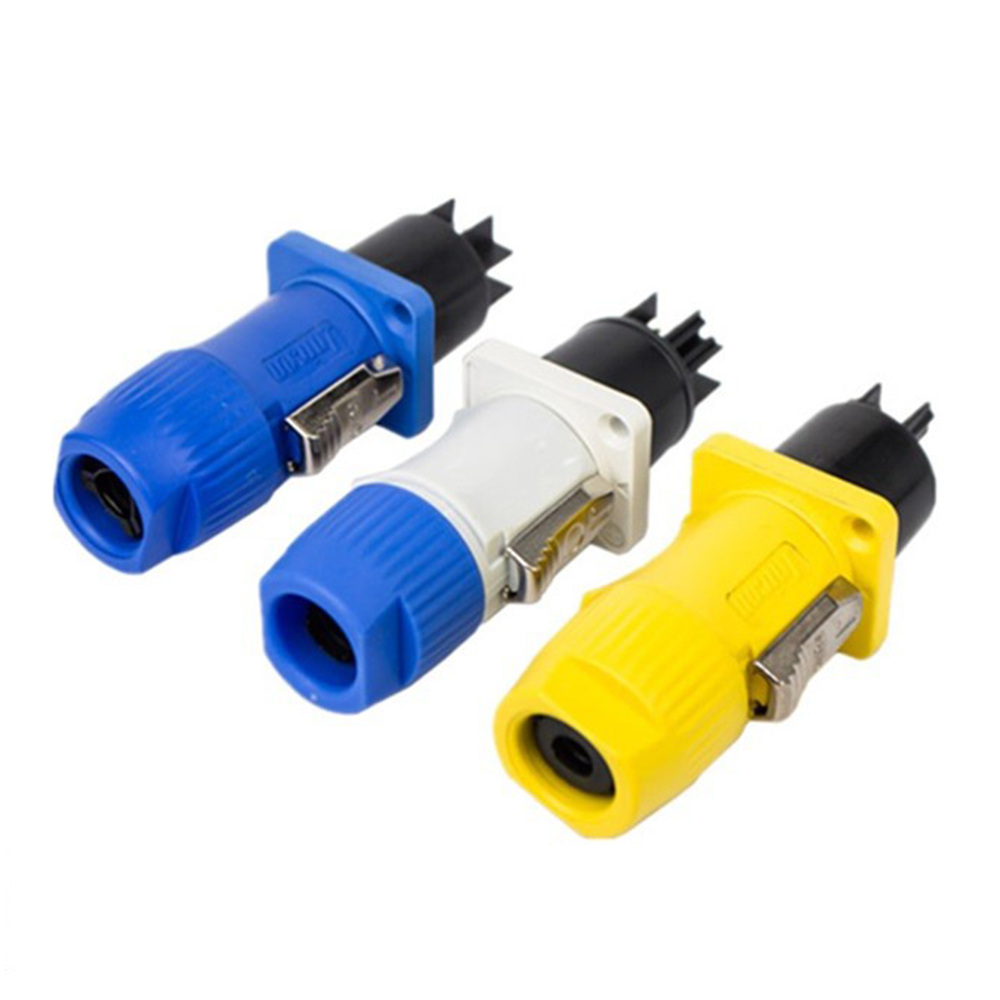
One of the most significant innovations in modern power connectors is the "Quick-lock" or self-locking mechanism. In large-scale solar installations where thousands of connections are made, traditional screw-thread interfaces are prone to human error and loosening due to vibration. Patented quick-lock systems provide both tactile and audible feedback, ensuring a secure connection in seconds. This not only improves the long-term stability of the power grid but significantly reduces labor costs during the installation phase.
The Economic Equation: How Manufacturing Efficiency Drives Value
The competitive pricing of leading Chinese connector factories is often misunderstood as a result of lower quality standards. In reality, the cost advantage is a byproduct of vertical integration and geographical clustering.
A sophisticated factory operates its own R&D centers, high-precision mold workshops, and automated assembly lines. By maintaining internal control over the entire production cycle—from the initial design and simulation to the final injection molding and testing—manufacturers eliminate the "middleman" markups associated with outsourced components. This verticality also allows for a much faster feedback loop; engineering adjustments can be implemented in days rather than months.
Furthermore, being situated within a global manufacturing hub allows for "Just-in-Time" access to raw materials and specialized sub-components. This ecosystem reduces logistics overhead and allows for a scale of production that naturally lowers the per-unit cost. For an OEM or ODM partner, this translates to greater flexibility. Where traditional brands might charge prohibitive fees for custom cable lengths or specific pin configurations, integrated factories can offer tailored solutions that accelerate the "Time-to-Market" for new energy products.
Strategic Applications in the New Energy Landscape
The versatility of industrial power connectors allows them to serve as the "nervous system" for various high-growth sectors:
- Solar & Energy Storage (ESS):In solar inverters and battery containers, connectors like the MJ series or M25/M28 series manage high-current throughput. These components must handle the thermal expansion and contraction cycles inherent in daily solar cycles without losing contact pressure.
- Electric Vehicle Infrastructure:Beyond the charging gun itself, the internal power modules of a charging pile require robust connectors to distribute energy from the grid to the vehicle’s battery. Reliability here is paramount for public safety and uptime.
- Outdoor Lighting and Micro-grids:In smart city applications and remote micro-grids, connectors must endure decades of exposure. High-quality power connectors provide a maintenance-free solution for LED drivers and localized power distribution units, ensuring that these systems remain operational in the face of seasonal storms.
Decision Evaluation: Positioning Jnicon in the Global Market
When assessing the landscape of connectivity solutions, it is helpful to categorize providers based on project requirements. Tier 1 global brands remain the gold standard for aerospace or mission-critical medical applications where cost is a secondary concern to legacy certification.
However, for the industrial new energy sector—where performance must be high but project ROI is strictly calculated—Jnicon occupies a strategic "sweet spot." By holding international certifications such as UL, TUV, CE, and RoHS, the technical gap between these specialized manufacturers and legacy brands has effectively closed. For a system integrator, the choice of a high-performance industrial connector is an exercise in "Value Engineering"—achieving the necessary technical specifications without overpaying for a brand name.
Conclusion: Bridging the Gap in Global Energy
As the world transitions toward a more electrified future, the components that facilitate this energy flow can no longer be overlooked. The rise of Chinese high-tech enterprises specializing in connectivity represents a shift in the global supply chain. By combining a large R&D workforce—often exceeding 50 specialized engineers—with state-of-the-art automated production, these firms are proving that "Made in China" is synonymous with high-precision engineering.
For engineers and procurement professionals in the new energy space, the goal is clear: ensure the longevity of the system while maintaining a competitive edge. Through continuous innovation in locking mechanisms, material durability, and manufacturing efficiency, Jnicon provides the reliable hardware needed to power the next generation of global infrastructure.
For more information on advanced power connectivity solutions, visit: www.jnicongroup.com
Media Contact
Hunan Jnicon New Energy Technology Co., Ltd. hnjnicon@jnicon.com http://www.jnicongroup.com