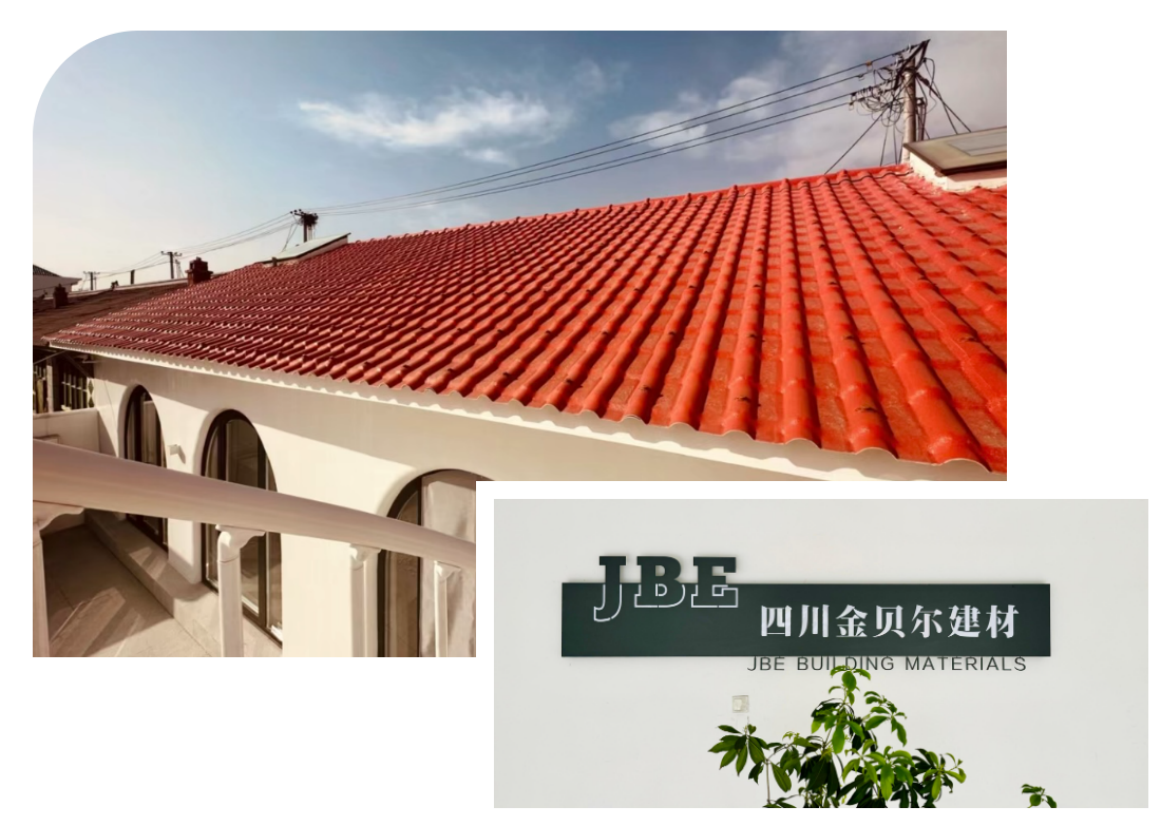
Deyang, Sichuan Aug 10, 2026 (Issuewire.com) - During peak summer months, industrial manufacturing facilities with conventional metal roofing face sustained operational challenges. Solar radiation striking uninsulated corrugated steel sheets raises internal roof surface temperatures rapidly, radiating intense thermal energy downward into production areas. This severe thermal transfer creates uncomfortable working environments for personnel and places a heavy, continuous burden on facility cooling systems, resulting in high electricity consumption and increased carbon footprints. Addressing this specific structural vulnerability requires a move toward advanced material engineering that addresses thermal transfer directly at the building envelope. As an established high quality PVC hollow sheets manufacturer in China, JBE (Sichuan Jinbei’er Building Materials Co., Ltd.) engineers specialized multi-wall roofing systems designed to lower thermal conductivity and minimize industrial energy demands. By replacing traditional high-absorption materials with structured polymers, modern facility managers can systematically control indoor temperatures and improve overall structural efficiency.
Roof Thermal Dynamics and Industrial Energy Consumption
Industrial manufacturing hubs and modern agricultural buildings require stable microclimates to preserve sensitive machinery, ensure livestock health, and maintain workforce productivity. Traditional single-layer metal roofs possess high thermal conductivity, acting as direct heat conductors during sunny periods. The resultant internal heat buildup requires continuous mechanical ventilation and heavy air conditioning, driving up facility operational overheads substantially over time.
Sichuan Jinbei’er Building Materials Co., Ltd. addresses this critical environmental issue by replacing solid, highly conductive building materials with engineered low-conductivity polymer profiles. Rather than relying on secondary insulation blankets or chemical coatings that deteriorate over years of exposure, integrating thermal management directly into the structural roofing substrate provides a permanent barrier to solar heat gain. This strategic material intervention helps stabilize internal structural temperatures across extreme seasonal fluctuations.
Engineering Principles of Twinwall PVC Hollow & AP Hollow PanelsStructural Insulation and Thermal Performance
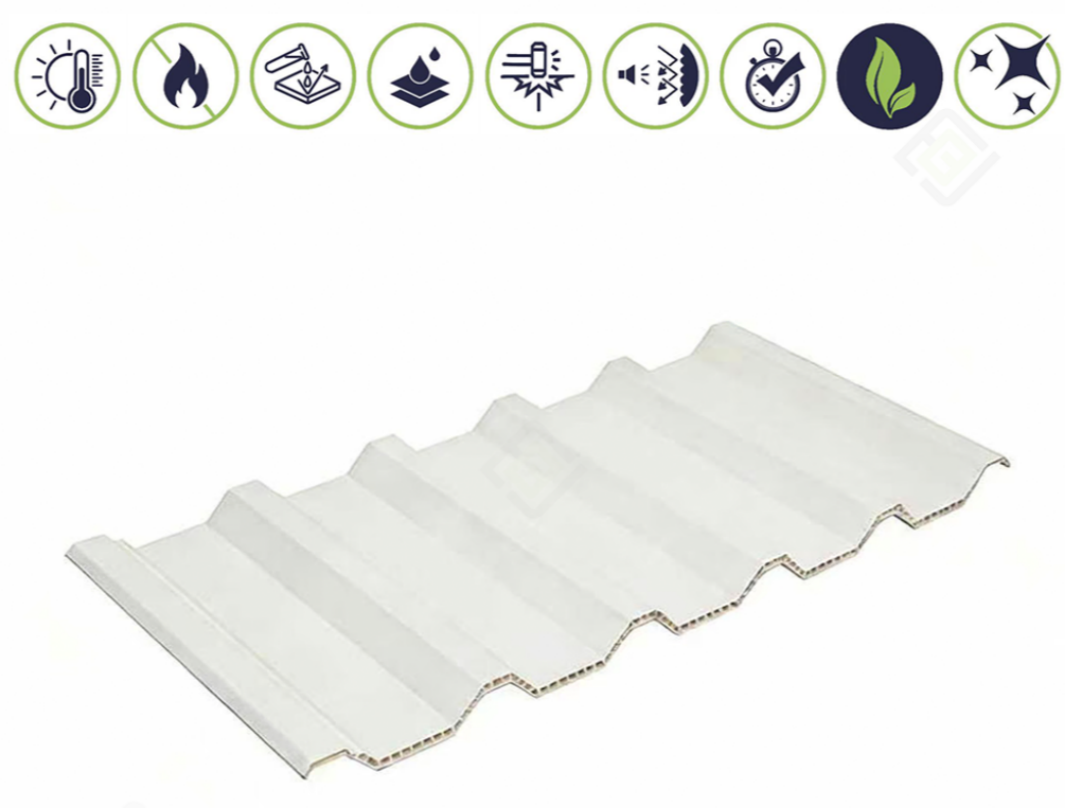
The energy-saving capabilities of the specialized roofing systems manufactured by JBE rest on specific spatial geometry and advanced material science. The 885 Twinwall configuration features an overall width of 885 mm and an effective operational coverage width of 830 mm, incorporating a standard wave height of 40 mm. The core mechanical distinction of this profile lies in its twin-wall hollow profile, which permanently traps a continuous layer of static air within the internal chambers.
Because stagnant air is an exceptional natural insulator, this specific multi-wall design yields a thermal conductivity rating significantly lower than that of standard color-coated steel sheets. The dead-air space effectively breaks the path of conductive heat transfer, blocking solar radiation from penetrating the building interior.
Material Composition and the Smart Lock System
Long-term structural durability is achieved through advanced multi-layer co-extrusion technology. The outer layer of the panel consists of premium co-extruded Acrylic Styrene Acrylonitrile, which provides robust ultraviolet resistance, prevents accelerated color fading, and withstands prolonged weathering. Beneath this protective outer shield, the structural core utilizes specialized polyvinyl chloride formulations. This chemical composition ensures that the panels remain entirely immune to acid, alkali, and industrial chemical corrosion, eliminating the oxidation and rust issues common to metallic roofs.
For commercial projects requiring enhanced mechanical stability under high wind loads, the AP Hollow Panel variant incorporates the proprietary Smart Lock system. This integrated interlocking mechanism completely eliminates exposed fasteners, creating a continuous, airtight connection that optimizes wind resistance and prevents water ingress, thereby safeguarding the integrity of the internal insulation layer.
Project Selection Matrix and Concrete Efficiency Benefits
Deploying these advanced polymer roofing systems requires a clear understanding of specific technical parameters and environmental conditions to achieve optimal performance:
- Target Environments:The panels are highly suited for chemical processing plants, fertilizer storage warehouses, metallurgy facilities, commercial foundries, agricultural livestock barns, and industrial carports where thermal control and corrosion resistance are simultaneously required.
- Specification Standards:The standard profile maintains an overall width of 885 mm, an effective width of 830 mm, and a wave height of 40 mm. Structural support designs should maintain a purlin spacing between 600 mm and 800 mm to ensure structural load compliance, while panel lengths can be adjusted based on specific project dimensions.
- Quantifiable Insulation Impact:Real-world operational monitoring indicates that upgrading from uninsulated metal roofing to high quality PVC hollow sheets reduces indoor ambient temperatures by 3 to 5 degrees Celsius during peak solar exposure. This temperature drop reduces the reliance on mechanical chilling units, lowering building cooling energy costs and operational expenses.
- Installation Integrity:Maintaining systemic efficiency requires the utilization of original factory-matched Smart Lock ridge tiles, specialized EPDM fasteners, and dedicated sealing components. These components ensure that the completed roof functions as a unified barrier against thermal bridging and moisture penetration.
Tailored Engineering and Project-Specific Customization
Sichuan Jinbei’er Building Materials Co., Ltd. maintains strict manufacturing control by utilizing 100% virgin raw materials throughout the co-extrusion process, completely avoiding recycled regrinds that compromise structural lifespan. Operating as an agile high quality PVC hollow sheets manufacturer, the company supports comprehensive original equipment manufacturer and original design manufacturer requests alongside precise project-specific sizing.
For facilities requiring balanced internal illumination without compromising thermal efficiency, the hollow profile can be configured with matching translucent hollow daylighting bands. The technical engineering team provides detailed structural load analysis, structural span references, and optimized panel layout schematics prior to installation. To simplify global logistics and minimize onsite fabrication waste, panel lengths can be customized to match shipping container constraints, restricting lengths to a maximum of 5.8 meters for standard 20-foot containers. This precise sizing maintains shipping density while ensuring swift assembly upon arrival.
Conclusion
Effective industrial energy conservation depends heavily on the initial selection of durable, low-conductivity building envelopes. The high quality PVC hollow sheets manufactured by JBE redefine industrial roofing expectations by combining structural geometry with advanced polymer chemistry. By replacing traditional high-maintenance metallic options with insulated, corrosion-proof alternatives, Sichuan Jinbei’er Building Materials Co., Ltd. delivers measurable energy reductions and practical protection for modern commercial infrastructure.
For comprehensive technical specifications, project portfolios, and material certification data, please visit the official corporate portal at https://www.jberoof.com/
Media Contact
Sichuan Jinbei'er Building Materials Co., Ltd. *****@jberoof.com https://www.jberoof.com/