Jiangmen, Guangdong Jan 15, 2026 (Issuewire.com) - The global manufacturing landscape is currently undergoing a seismic shift, driven by the convergence of traditional chemical engineering and advanced digital intelligence. Within the specialized sector of high-performance bonding materials, Epoxy Glue Adhesive Producers are increasingly moving beyond conventional batch testing toward autonomous, data-driven production environments. As industries ranging from consumer electronics to renewable energy demand tighter tolerances and higher reliability, the integration of Artificial Intelligence (AI) in quality control has transitioned from a futuristic concept to a practical necessity.
The Evolution of the Epoxy Resin Industry
For decades, the production of epoxy acrylates and specialized oligomers relied heavily on manual sampling and retroactive laboratory analysis. However, the rise of "Industry 4.0" in China’s manufacturing hubs has introduced a new paradigm. Today’s market is no longer just about volume; it is about the precision of chemical properties. The modern factory floor now utilizes neural networks and machine learning algorithms to monitor viscosity, curing rates, and thermal stability in real-time.
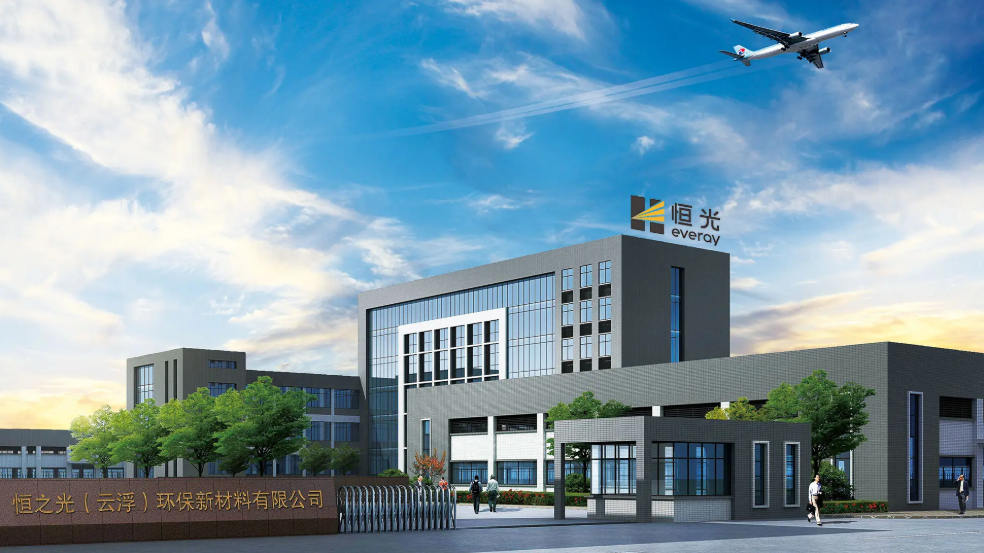
Guangdong Ever Ray Environmental Material Co., Ltd., established in 2006, serves as a pertinent example of this industrial evolution. As a high-tech enterprise focused on the research, development, and manufacturing of oligomers for UV curable resins—including epoxy acrylate and polyurethane acrylate—the company operates at the intersection of complex chemical synthesis and rigorous quality standards. The shift toward AI-enhanced monitoring allows such producers to ensure that every batch of polyester acrylate or functional modified acrylate meets the specific demands of high-end industrial applications.
AI-Driven Precision in Chemical Synthesis
The synthesis of epoxy resins involves delicate chemical reactions where temperature fluctuations of even a few degrees can alter the molecular weight distribution of the final oligomer. Traditionally, a technician might check these parameters at set intervals. In a modern AI-integrated facility, sensors capture thousands of data points per second, feeding them into predictive models.
These models can forecast a potential deviation in the reaction before it occurs. For instance, when producing aliphatic or aromatic urethane acrylates, the AI system can adjust the catalyst feed rate or cooling jacket temperature automatically. This proactive approach minimizes waste and ensures that the structural integrity of the adhesive remains consistent across different production runs. By stabilizing these variables, producers can offer more reliable solutions for sensitive sectors like semiconductor packaging and automotive structural bonding.
Enhancing Optical Clarity and Durability via Machine Vision
One of the most significant breakthroughs in quality control is the application of machine vision. In the production of UV-curable resins, maintaining optical clarity and eliminating microscopic impurities is paramount. AI-powered cameras installed on the filtration and packaging lines use deep learning to identify contaminants or air bubbles that are invisible to the human eye.
For products like water-borne polyurethane acrylates or pure acrylates, which are often used in coatings and high-clarity films, this level of scrutiny is vital. The system compares the flowing material against a database of "perfect" samples, instantly flagging any batch that shows signs of yellowing or haze. This digital oversight ensures that the end-user receives a product that performs exactly as specified in the technical data sheets, reducing the likelihood of failures in the field.
R&D Acceleration and Molecular Customization
Beyond the factory floor, AI is reshaping the laboratory. The development of special functional modified acrylate oligomers requires testing hundreds of monomer combinations to achieve desired properties such as scratch resistance, flexibility, or chemical endurance.
Instead of the traditional "trial and error" method, researchers now use AI to simulate how different molecular structures will interact. This accelerates the R&D cycle significantly. By analyzing the performance data of previous epoxy acrylate formulations, the software can suggest modifications to the molecular backbone to enhance adhesion on difficult substrates like low-surface-energy plastics or treated metals. This synergy between human expertise and computational power allows for the rapid creation of bespoke solutions for global clients.
Sustainability and Environmental Impact
The move toward "Environmental Material," as highlighted by the focus of Guangdong Ever Ray, is also being bolstered by AI. Modern quality control systems are now being programmed to optimize energy consumption during the polymerization process. By calculating the most efficient exothermic path for a reaction, AI reduces the carbon footprint of the manufacturing facility.
Furthermore, the precision offered by AI minimizes the production of "off-spec" material. In a traditional setup, a failed batch might need to be disposed of or heavily reprocessed. AI’s ability to maintain tight control over the synthesis of water-borne resins means less solvent waste and a more sustainable output of eco-friendly oligomers. This alignment with global environmental standards is becoming a core competitive advantage for Chinese producers in the international market.
Application Scenarios: From Electronics to Aerospace
The practical impact of these technological advancements is best seen in the diverse application scenarios of modern epoxy resins. In the electronics industry, where components are becoming increasingly miniaturized, the adhesive must provide high-strength bonding while acting as an electrical insulator. AI-monitored production ensures that the dielectric properties of the epoxy acrylate remain uniform.
In the renewable energy sector, particularly in the manufacturing of wind turbine blades or solar panels, the resin must withstand extreme UV exposure and mechanical stress. The use of AI in the quality control of polyurethane acrylate ensures that these materials can endure decades of outdoor exposure without degrading. Major case studies in the industry show that companies utilizing these smart manufacturing techniques report a significant decrease in long-term material fatigue, providing peace of mind to infrastructure developers.
The Future of Smart Adhesives
As we look toward the next decade, the role of AI will likely expand into "smart" adhesives—materials that can communicate their own status. Quality control will not end at the factory gate but will continue through the product's lifecycle. Sensors embedded in bonded structures could potentially relay data back to the producers, informing the next generation of R&D.
For now, the focus remains on perfecting the consistency and performance of the building blocks of the UV-curing industry. By focusing on the sophisticated chemistry of epoxy acrylates, polyester acrylates, and various modified oligomers, producers are building a foundation of reliability. The integration of AI is not merely a trend; it is the new standard for an industry that demands perfection at the molecular level.
The commitment to research and the adoption of advanced manufacturing technologies continue to define the trajectory of high-tech enterprises in this space. For those interested in the technical specifications and the broad range of UV-curable solutions available for modern industrial needs, further information regarding specialized oligomers and their applications can be found by visiting the official resource for Guangdong Ever Ray Environmental Material Co., Ltd. at https://www.everayuvresin.com/.
Media Contact
Guangdong Ever Ray Environmental Material CO.,Ltd sale@ever-ray.com https://www.everayuvresin.com/