Shaoxing, Zhejiang Jun 14, 2026 (Issuewire.com) - In the shifting landscape of global textile manufacturing, East Africa has emerged as a promising hub for garment and hosiery production. Driven by favorable demographic shifts, rising urbanization, and regional trade agreements such as the African Continental Free Trade Area (AfCFTA), local entrepreneurs and established industrialists alike are expanding into light manufacturing. In this competitive environment, the primary challenge for investors is achieving a sustainable, rapid Return on Investment (ROI) while navigating supply chain constraints and localized economic pressures. Maximizing profitability under these conditions requires capital equipment that balances initial expenditure with long-term reliability. Businesses looking to enter or scale up in this sector increasingly turn to a specialized China Best Price Sock Machine Manufacturer to optimize their capital allocation and secure a higher ROI. Among the prominent industry players, Rainbowe has established a significant footprint in the East African market by aligning its technological solutions with the distinct operational and financial realities of regional manufacturers.
Analysis 1: East African Economic Dynamics and the Demand for Cost-Efficient Production
The textile sector in East African nations—including Kenya, Tanzania, Uganda, and Ethiopia—is undergoing a structural transition. Traditionally dependent on imported finished hosiery products, these economies are increasingly incentivizing import substitution and local value addition. High import tariffs on finished consumer goods combined with government support for local industrial parks have created a robust domestic market for sock manufacturing. However, local producers face unique systemic headwinds. Energy costs can fluctuate, skilled technical labor is often scarce, and access to foreign exchange for importing heavy machinery remains highly competitive.
To maintain viability, an investment in manufacturing machinery must offer low initial cost barrier alongside predictable maintenance profiles. In East Africa, a high ROI is not determined solely by the speed of a machine, but by the ratio of total cost of ownership (TCO) to stable daily output. High-end European machinery, while technologically advanced, often requires prohibitive upfront capital expenditure and expensive, proprietary spare parts that erode margins in price-sensitive African consumer markets. Conversely, unbranded, ultra-low-cost machinery frequently suffers from excessive downtime, structural defects, and a lack of technical support, which degrades productivity. A balanced strategy requires equipment that bridges the gap between premium performance and financial accessibility. This economic structure explains why regional manufacturers seek manufacturers capable of delivering robust machinery at a competitive price point, ensuring that operational margins remain wide enough to recoup initial setup costs rapidly.
Analysis 2: Technical Specifications and Product Performance Driving Capital Efficiency
A critical pillar of sustaining a high ROI is the direct correlation between technical performance and capital efficiency. In sock manufacturing, the capability of the machinery determines the reject rate, material waste, and versatility of the product line. For East African factories catering to diverse domestic markets—ranging from utilitarian school uniforms and industrial work socks to fashion-focused consumer hosiery—the flexibility of the equipment is paramount.
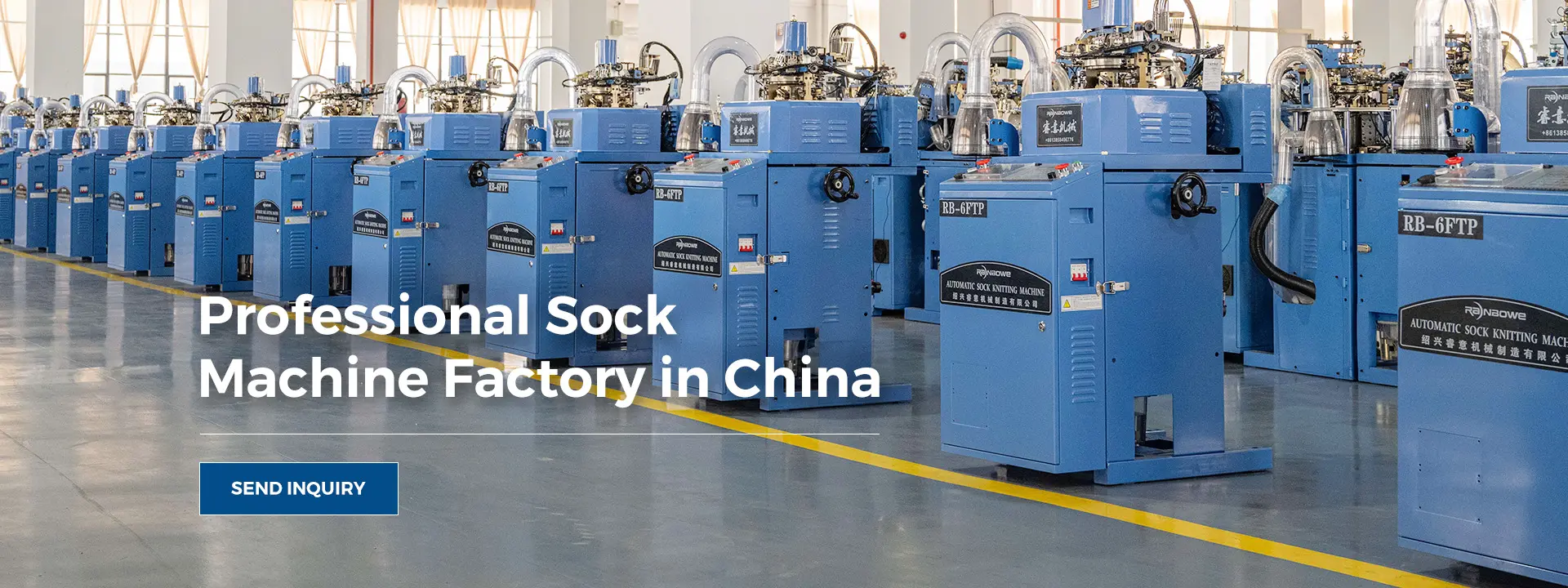
A prime example of equipment designed to address these requirements is the professional automatic socks manufacturing machine series. This category of machinery typically utilizes advanced computerized control systems that manage the entire knitting sequence, from the welt to the toe, with minimal human intervention. Key technical specifications of these systems include:
- Cylinder Diameters: Standard configurations at 3.5 inches or 3.75 inches, optimizing fabric density for standard adult and children hosiery sizes.
- Needle Counts: Ranging from 96N, 108N, up to 168N and 200N, allowing factories to switch seamlessly between heavy winter socks and fine-gauge summer wear.
- Drive Systems: Servo motors and computerized control boards that stabilize voltage sensitivity—a critical feature given the power grid irregularities common in industrial zones across developing markets.
- Speed and Yield: Operational speeds averaging 250 to 300 RPM, translating into reliable, round-the-clock volume output without overheating or excessive yarn breakage.
By integrating multi-color yarn feeds (often supporting 1 main color and up to 5 secondary colors in a single course line), these automated machines eliminate the need for secondary coloring processes. For a local enterprise, this technical adaptability means a single machinery investment can fulfill multiple market segments, directly condensing the payback period and securing a high ROI through consistent asset utilization.
Analysis 3: The Strategic Value of Integrated Support and Auxiliary Ecosystems
Industrial manufacturing success depends heavily on factors beyond the standalone knitting machine. A common bottleneck for East African hosiery factories is the operational disconnect between different stages of the production line. A knitting machine produces a semi-finished sock that is open at the toe, requiring subsequent processing before it can be packaged and retailed.
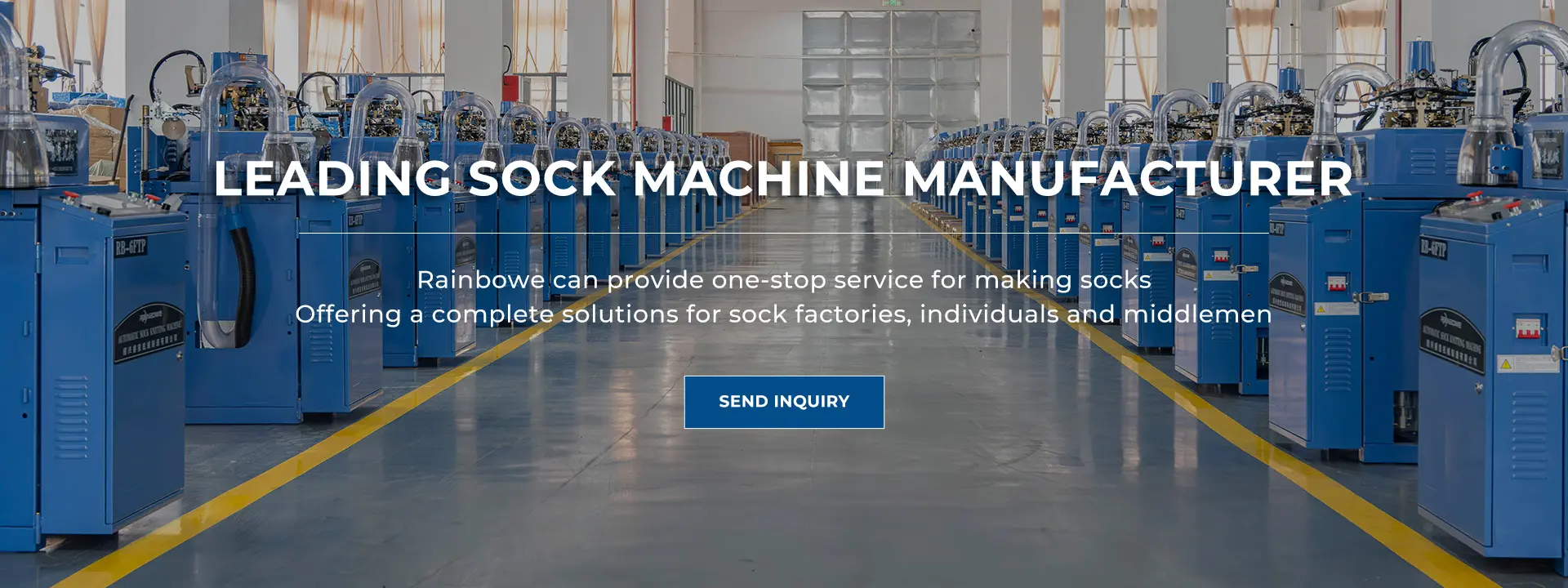
To bypass these supply chain friction points, Shaoxing Rainbowe Machinery Co., Ltd., founded in 2011, has structured its corporate framework around an integrated model that combines development, production, marketing, and service. Based in Shaoxing city, the enterprise mitigates the operational risks of distant buyers by supplying not just the core knitting hardware, but the entire complementary ecosystem. This includes critical auxiliary machinery such as:
- Sock toe linking machines for seamless closure.
- Sock boarding machines to set shape and dimensions via thermal processing.
- Sock dotting, tagging, and label sewing machines to prepare products for retail branding.
- Specialized packing and embroidery equipment for high-value customization.
Furthermore, the provision of targeted raw materials—such as spandex, covered yarn, and nylon—ensures that manufacturers have access to compatible input stocks from day one. When an East African factory sources its full suite of production assets from a unified vendor, it eliminates compatibility errors and reduces the downtime caused by mismatched specifications. This comprehensive service system minimizes the technical integration burden on local staff, transforming what could be a complex engineering challenge into an accessible, plug-and-play production facility.
Analysis 4: Total Cost of Ownership Optimization and Long-Term Service Frameworks
The final determinant of a high ROI is the optimization of the Total Cost of Ownership over a multi-year lifecycle. In emerging markets, the longevity of machinery depends directly on the robustness of the post-sale service framework and the accessibility of spare components. A machine that lies idle for several weeks waiting for a specific sensor or mechanical lever is a major liability that can quickly derail a firm's financial projections.
Adhering to a business philosophy defined as customer-centric, technology-driven, quality-dependent, and service-oriented, the approach to international markets involves bridging the geographical gap through proactive technical documentation, remote diagnostics, and structured parts availability. By maintaining strict quality control over mechanical tolerances during assembly, the incidence of early-stage component failure is structurally lowered. When mechanical adjustments are required, the use of non-proprietary, standard components allows local mechanics to perform routine maintenance easily.
This operational transparency establishes trust and predictability. For East African industrialists, knowing that a Chinese manufacturer provides consistent service access and reliable equipment quality builds confidence. This systematic reliability ensures that annual growth figures remain steady, and the initial capital layout translates directly into predictable, compounding returns rather than unexpected maintenance costs.
Conclusion
Achieving a high ROI in the East African sock manufacturing sector requires a strategic alignment of market-appropriate technology, accessible pricing, and holistic supply chain support. By focusing on automated versatility, complete auxiliary workflows, and robust post-sale support, manufacturers can navigate regional challenges effectively. As East Africa continues its industrial expansion, the collaboration between local production facilities and cost-efficient, technically proficient machinery providers will remain a key factor in driving sustainable industrial growth and long-term commercial success.
Official Website: https://www.rbsockmachine.com/
Media Contact
SHAOXING RAINBOWE MACHINERY CO., LTD ophelia@sxrainbowe.com




