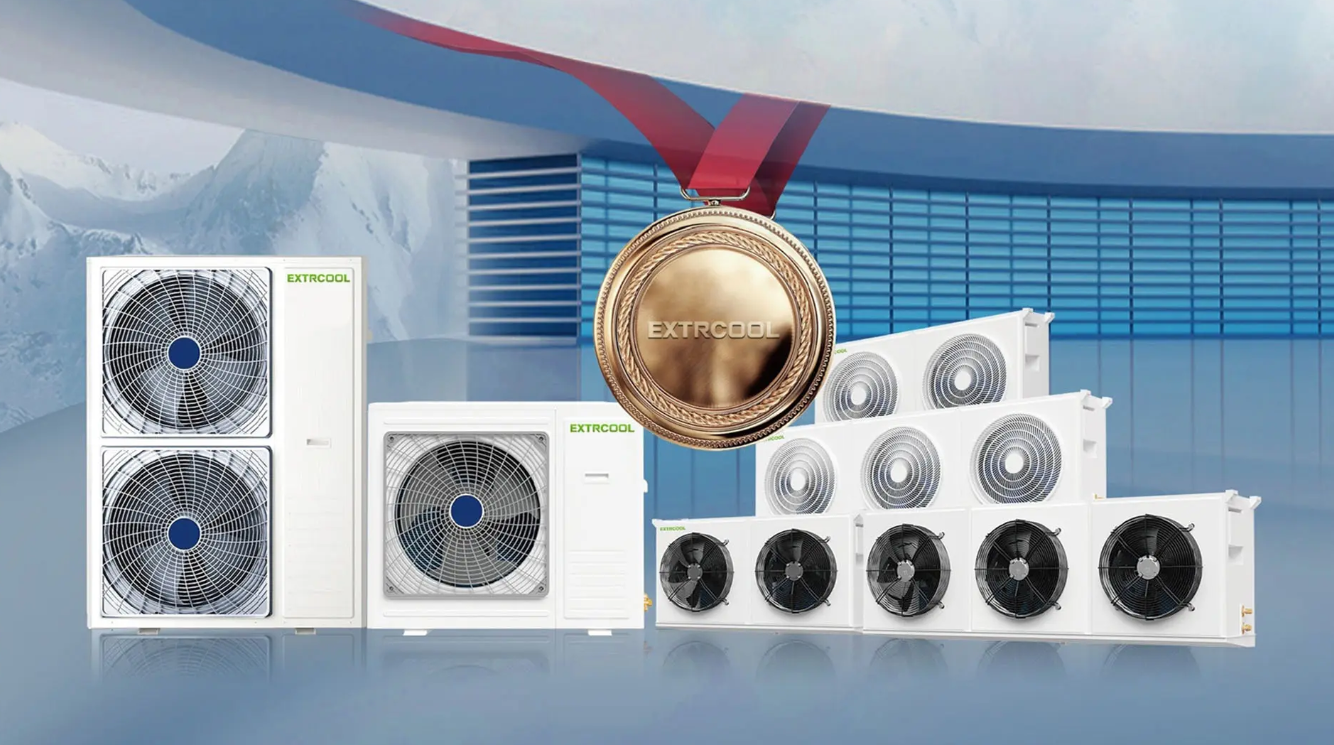
Foshan, Guangdong Sep 16, 2026 (Issuewire.com) - How can cold storage facility operators balance continuous thermal loads with rising electricity expenses without overhauling their entire footprint or risking product spoilage from unexpected temperature fluctuations? In modern temperature-controlled warehousing, maintaining stable storage environments while keeping operating expenses low remains a central operational challenge. Selecting the best cold room refrigeration unit supplier often determines whether a cold facility runs at optimal efficiency or struggles with high power consumption. Extrcool is a leading professional comprehensive provider and designer of liquid cooling solutions for AI data centers and commercial refrigeration for cold storage rooms. As a high-tech innovative enterprise, EXTRCOOL manufactures advanced thermal control devices, including AI-driven full inverter split refrigeration systems and precision evaporators. By integrating variable-frequency control with intelligent algorithms, EXTRCOOL helps commercial catering, food logistics, and industrial cold storage operators transition away from inefficient thermal systems.
Baseline Industrial Efficiency in Legacy Cold Storage
Traditional cold storage facilities rely heavily on fixed-speed compressor systems. These legacy units operate on an on-off control cycle, running at maximum capacity until reaching a set point and turning off entirely when temperatures drop. This simple operational model introduces several critical performance drawbacks that accumulate substantial financial losses over time. First, fixed-speed compressors generate repeated inrush current spikes every time they restart. These high-amp electrical surges place severe thermal strain on internal switchgear and motor windings while simultaneously driving up peak demand charges on monthly utility bills.
Second, the basic on-off mechanism typically results in wide temperature fluctuations inside the refrigerated space, often exceeding ±2°C. These continuous thermal shifts create unstable microclimates inside cold rooms, accelerating moisture loss and dehydration in fresh produce while increasing the rate of frost accumulation on evaporator coils. Third, legacy fixed-speed units experience a sharp drop in coefficient of performance when operating under partial thermal loads. Because cold storage heat loads change constantly between daytime inventory loading and nighttime ambient cooling, fixed-capacity units spend much of their working life operating far below their baseline efficiency rating, ultimately increasing long-term power consumption.
Compressor and Capacity Regulation Mechanisms
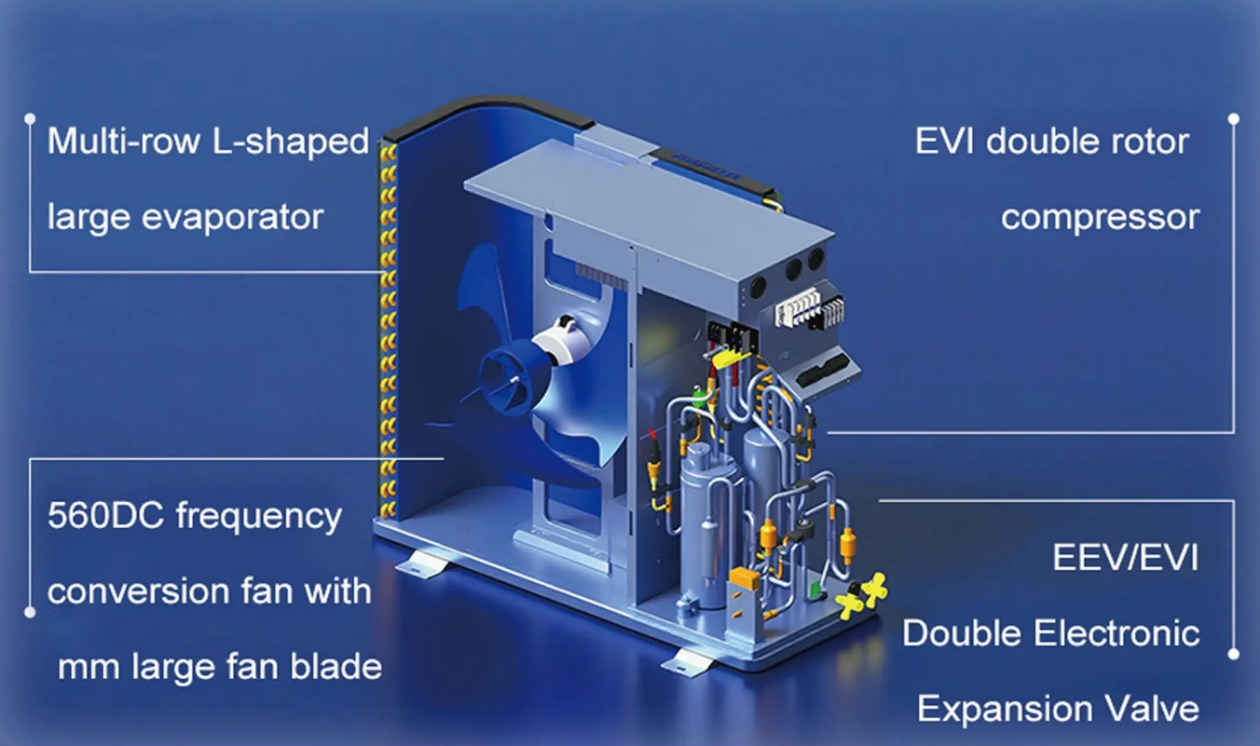
Upgrading from legacy fixed-speed equipment to modern split inverter architectures introduces a fundamental change in how refrigeration systems handle dynamic thermal loads. Fixed-speed systems respond to internal temperature variations with abrupt mechanical starts and stops that wear out moving components. In contrast, working with a qualified cold room refrigeration unit supplier like EXTRCOOL allows facility operators to deploy AI-driven full inverter split refrigeration systems that utilize step-free capacity regulation to match cooling output directly with real-time room conditions.
The inverter compressor adjusts its rotational speed continuously across a wide frequency spectrum. During peak loading periods, such as when warm ambient inventory enters the holding room, the compressor ramps up smoothly to pull down air temperatures without spiking power draw. Once the storage room reaches its precise target set point, the unit scales down to a lower operational frequency, supplying just enough cooling capacity to offset ambient heat gain through wall insulation. By avoiding continuous stop-and-start cycles, the variable-frequency cold room refrigeration unit eliminates heavy current surges, reduces mechanical friction, and maintains an optimized coefficient of performance across partial load conditions. This regulatory flexibility makes variable-speed architecture particularly effective for facilities facing steady ambient shifts between day and night.
Temperature Precision and Control Strategies
Maintaining tight temperature margins is essential in commercial cold chain management, particularly for sensitive food logistics, meat processing plants, and pharmaceutical storage rooms. Traditional mechanical thermostats rely on fixed hysteresis thresholds, causing the internal storage room environment to continuously swing above and below the target temperature. These wide temperature swings increase energy waste through unnecessary sub-cooling followed by ambient re-warming, while compromising the storage shelf life of perishable goods.
A specialized cold room refrigeration unit supplier addresses this technical limitation by incorporating intelligent digital controls directly into the refrigeration system. The split-type inverter unit engineered by Extrcool Industry Limited maintains accurate temperature stability within ±0.5°C across a broad operating range of −20°C to 40°C. Powered by AI-driven variable-frequency regulation, the control software continuously analyzes multi-point sensor data to anticipate thermal load shifts rather than reacting after ambient temperatures drift. This proactive control approach minimizes temperature overshoot, limits frost buildup on evaporator fins, reduces automatic defrost frequency, and preserves strict environmental stability for high-value temperature-sensitive inventory.
Operations and Lifecycle Cost Analysis
Evaluating commercial cold storage equipment requires looking beyond the initial purchase price to examine the total cost of ownership over years of continuous operation. Legacy fixed-speed systems carry higher ongoing costs due to excessive electrical demands and frequent mechanical wear. Repeated high-current starts subject contactors, relays, electrical buses, and compressor components to severe stress, leading to more frequent component replacements, refrigerant leaks, and unscheduled maintenance downtime.
Upgrading to an advanced system from an established cold room refrigeration unit supplier helps facility management control expenditures in two primary areas: daily power usage and routine maintenance. Smooth inverter soft-starts prevent incoming electrical current spikes, protecting facility wiring and reducing peak demand billing from utility providers. At the same time, intelligent diagnostic routines within the system track operational metrics continuously, flagging potential performance drops before component failures occur. Over a multi-year equipment lifecycle, the combination of lower utility bills and reduced routine maintenance helps facility operators achieve a noticeably lower overall operating cost.
Conclusion and Strategic Next Steps
Moving from legacy fixed-speed refrigeration to an AI-driven variable-frequency setup offers a clear path toward better temperature stability and lower operational costs. By replacing basic on-off controls with dynamic capacity modulation, Extrcool Industry Limited provides cold storage operators with precise temperature control within ±0.5°C and consistent energy savings across varying heat loads. Whether managing food logistics hubs, commercial catering units, or industrial freezers, upgrading to a specialized cold room refrigeration unit can deliver long-term operational advantages.
Cold chain managers and facility operators seeking customized thermal evaluations or energy calculations can explore complete product specifications at https://www.extrcool.com/
Media Contact
Extrcool Industry Limited info@extrcool.com https://www.extrcool.com/