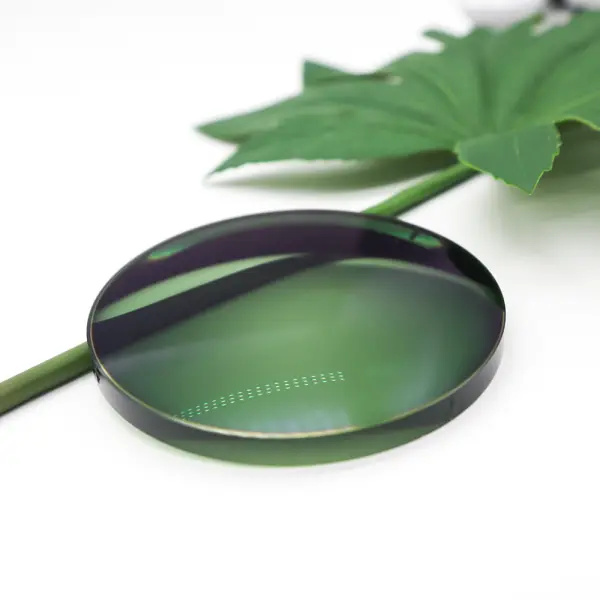
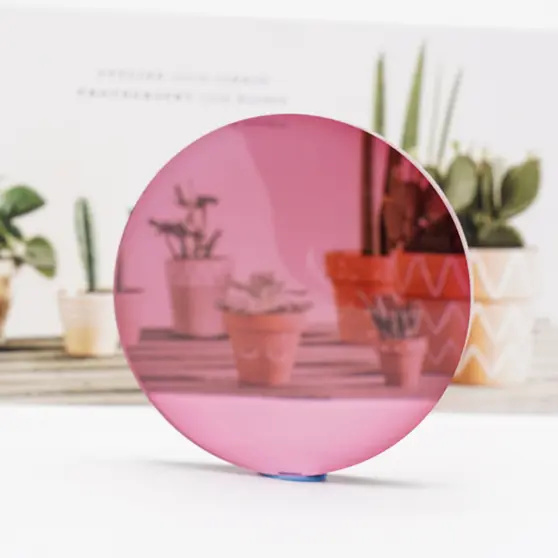
Danyang, Jiangsu Sep 17, 2026 (Issuewire.com) - What defines a Global Leading Photochromic Lenses Exporter? A professional assortment separates standard UV-triggered photochromic behavior from specialized driving conditions, where a windshield significantly reduces the UV signal needed for strong darkening. Zhenjiang Kingway Optical Co., Ltd., a specialized optical manufacturer established in 2011, provides an application-led route through its comprehensive photochromic lens range. This portfolio spans single-vision, flat-top bifocal, progressive, and higher-index options such as 1.61 and 1.67 Spin Photogray configurations for photochromic lenses indoor outdoor applications. For optical distributors, wholesale importers, and Rx laboratory procurement teams, the product assortment must be positioned around precise activation conditions and the intended use environment. Failing to differentiate these mechanisms can lead to specification errors, as professional buyers cannot assume that every photochromic lens behaves exactly the same indoors, outdoors, and inside a vehicle.
How Photochromic Lenses Change Between Indoor and Outdoor Conditions
Standard photochromic lenses rely on light-sensitive dyes that react primarily to ultraviolet exposure. Outdoors, stronger UV radiation triggers a rapid molecular shift that results in lens darkening; when the wearer returns indoors and UV exposure falls, the lens gradually moves back toward a clearer state. This structural mechanism makes the indoor-outdoor change a direct function of environmental activation conditions rather than a fixed, permanent sunglass tint.
Temperature, light intensity, specific lens chemistry, and the chosen optical design can all affect the speed and depth of the photochromic transition. For wholesale buyers, this means standard indoor-outdoor products should be marketed based on their responsiveness to direct sunlight. Sourcing managers must keep the specific product route visible in their assortment descriptions, ensuring that optical chains and retail clients understand the UV dependency. Whether specifying a 1.56 Photogray single-vision lens for general use or a more complex freeform progressive design for presbyopia, the core activation principle remains tied directly to outdoor UV levels.
Why Standard Photochromic Lenses Change Less Behind a Windshield
A standard vehicle windshield is manufactured to block the vast majority of the ultraviolet radiation that would normally trigger standard photochromic darkening. Because the necessary UV signal is filtered out by the automotive glass, standard photochromic lenses face a real and unavoidable limit regarding windshield UV photochromic activation. They simply do not receive enough direct UV exposure to reach their full outdoor tint.
For optical distributors, this physical limitation must be stated clearly before a product is positioned for driving applications. A lens that performs exceptionally well as a conventional indoor-outdoor photochromic product does not automatically deliver strong darkening behind a windshield. Distributors that obscure this limitation risk end-user dissatisfaction and increased return rates at the retail dispensing level. Clarifying the windshield’s UV-blocking effect protects the supplier’s credibility and ensures that standard photochromic lenses are sold accurately for their intended everyday use rather than as dedicated driving sunglasses.
In-Car Darkening Requires a Different Activation Requirement
Photochromic technologies explicitly designed to darken behind a windshield require sensitivity beyond the standard UV-dominant trigger. Visible-light activation is one specialized route used in driving-oriented technologies, taking advantage of the fact that intense visible light still reaches the lens inside the vehicle even when UV is blocked. That distinct mechanism creates a completely different driving-oriented procurement requirement.
Sourcing teams can use this activation distinction to separate standard indoor-outdoor products from specialized requests that demand measurable in-car darkening. When a retail chain or clinic requests photochromic lenses in car, business buyers should specify the required in-car behavior as a strict application requirement before choosing a corresponding lens technology. Unless a manufacturer explicitly matches the request with a visible-light-activated or specialized driving product, buyers should assume the standard UV limitation applies to the inventory.
Photochromic Activation and Polarization Solve Different Optical Problems
Photochromic activation controls how the lens tint changes in response to varying light conditions, while polarization is engineered to manage reflected glare through a completely different optical mechanism. One function does not automatically imply or replace the other. A lens can change color without cutting blinding glare, and a polarized lens can block glare without changing its baseline tint.
For driving assortments, photochromic tint response and polarization remain separate optical functions with distinct selection roles. The use environment must determine whether the wearer needs a light-responsive tint, dedicated glare control, or a premium product that combines multiple functions. Kingway supplies photochromic lenses to global markets across multiple optical designs. Operating a 5,000-square-meter facility with a daily output of 20,000 pairs and a workforce of over 80 employees, the factory gives distributors a broad, reliable product base for indoor-outdoor assortment planning without collapsing distinct driving technologies into the same category.
How to Specify Kingway’s Photochromic Assortment by Design, Index, Color, and Use Environment
Kingway’s extensive photochromic range provides structural choices for diverse market demands, backed by robust Stock Quantity and Prescription Lens solutions. The portfolio includes 1.56 single-vision colored and Photogray products, a 1.56 flat-top Photogray bifocal, a 1.56 progressive Photogray lens, and 1.61 and 1.67 Spin Photogray routes. These product families must be organized around optical design and refractive index before the specific use environment is added to the inquiry.
A B2B photochromic procurement brief should keep product architecture and intended use in separate fields. This ensures that a standard indoor-outdoor route is not confused with a driving-oriented requirement during the ordering process. To secure accurate manufacturing and pricing, the brief should explicitly identify:
- Optical design: specify single vision, flat-top bifocal, or progressive geometries based on patient prescription needs.
- Index or material: state the required refractive index route available for the selected product, such as 1.56, 1.61, or 1.67.
- Photochromic color or treatment: indicate whether Photogray or another available color is required for the batch.
- Intended use environment: clarify whether the lenses are for standard indoor-outdoor use or if specialized driving behavior is expected.
- Additional coating requirements: list hard coating (HC), anti-reflective (AR), or glare-control requirements when they belong to a specific available product.
- Commercial details: define the stock or Rx requirement, order quantity, OEM customized envelopes, packaging preferences, and preferred FOB or CFR trade terms.
This structured approach gives sourcing teams a reliable way to separate a standard indoor-outdoor photochromic product from a driving-oriented requirement before commercial selection begins. It also keeps light-responsive tint and glare-control requirements visible as separate, actionable fields when both matter to the intended application.
Photochromic Lens Application FAQ for Optical Buyers
These operational questions turn activation mechanics into practical assortment decisions for wholesale buyers, distributors, and Rx labs.
Why Do Standard Photochromic Lenses Darken Outdoors?
Ultraviolet exposure triggers the molecular change that darkens standard photochromic lenses, making outdoor UV the primary activation source for the tint transition.
Why Is the Change Weaker Inside a Car?
Modern automotive windshields are designed to block most UV radiation, significantly reducing the activation signal that standard photochromic dyes depend on to change color.
Does Photochromic Automatically Mean Polarized?
No. Photochromic tint change and polarization are fundamentally different optical functions and must be specified separately during the procurement process.
Which Kingway Photochromic Designs Are Available?
Kingway’s manufacturing range includes single-vision, flat-top bifocal, progressive, and higher-index Spin Photogray product routes to cover varied prescription and dispensing needs.
What Should a Distributor Specify for a Driving-Oriented Request?
Distributors must define the required in-car behavior, optical design, index or material, photochromic function, glare-control requirement, Rx or stock route, and quantity before matching the request to a specific product capability.
Define the Use Environment for a Global Leading Photochromic Lenses Exporter Configuration
A global photochromic sourcing brief achieves higher accuracy when indoor-outdoor activation, in-car expectations, optical design, index, color, and glare requirements are defined as independent variables. This structured methodology gives a Global Leading Photochromic Lenses Exporter request the exact application detail needed to match Kingway’s broad assortment. By isolating these factors, procurement teams avoid confusing standard UV-triggered photochromic behavior with specialized driving technologies, ensuring the final delivered lenses meet the target market’s true use conditions.
To build a precise optical assortment for your distribution network, send the required use environment, lens configuration, and volume requirements through https://www.kingway-optical.com/ for accurate product matching, OEM envelope customization, Rx laboratory processing, and FOB/CFR quotation.
Media Contact
Zhenjiang Kingway Optical Co., Ltd. *****@163.com http://www.kingway-optical.com