Xuancheng, Anhui Jul 8, 2026 (Issuewire.com) - The European analytical testing landscape is governed by some of the most rigorous and protective regulatory frameworks in the world. For laboratories and pharmaceutical manufacturers operating within the European Union, procuring laboratory consumables is not merely a matter of transactional cost, but a complex exercise in local regulatory compliance. Furthermore, the rapid modernization of European laboratories—characterized by the widespread adoption of high-throughput automated robotics and green chemistry principles—demands consumables with absolute physical uniformity and zero chemical background noise. In this high-stakes environment, identifying a Trusted Headspace Glass Sample Vials Supplier becomes a foundational requirement to mitigate the risks of analytical variance, costly out-of-specification (OOS) results, or catastrophic batch rejections during strict European quality audits.
Headspace glass sample vials are highly specialized consumables engineered to withstand immense internal pressures and thermal stress during the heating and vaporization of volatile compounds. In European industrial and clinical sectors, these vials are indispensable for testing residual solvents in pharmaceutical formulations, evaluating environmental volatile organic compounds (VOCs) in compliance with European water quality directives, and verifying flavor retention in sustainable food packaging. Because European compliance bodies strictly penalize contamination and trace impurities, the physical tolerance and chemical surface neutrality of the glass vial are paramount. Any subtle structural anomaly or surface alkalinity can cause volatile organic compounds to adsorb onto the glass, alter the internal pressure distribution, or deform automated autosampler needles, thereby invalidating critical data sequences and compromising laboratory productivity.
Step 1: Understand the Significance of Valid ISO 15378 Certification
When screening international suppliers for European procurement networks, generic quality benchmarks like ISO 9001:2015 are necessary baseline credentials but remain insufficient for primary packaging and analytical materials destined for pharmaceutical contact. The definitive benchmark required by European quality assurance professionals is the ISO 15378 certification—specifically the current ISO 15378:2017 standard. This specialized framework seamlessly integrates the core principles of ISO 9001 with the strict mandates of Good Manufacturing Practices (GMP). It is purpose-built for manufacturers producing materials that come into direct contact with medicinal products, establishing uncompromising criteria for contamination control, environmental tracking, and process validation.
For the European market, sourcing from an ISO 15378-certified facility provides verified assurance that the manufacturing infrastructure actively mitigates every vector of contamination. The standard mandates strict protocols for air filtration, particle containment, machine maintenance, operator hygiene, and comprehensive batch traceability. When a supplier maintains a valid ISO 15378 certification, it indicates that their entire operations—from raw material receipt to final sealed packaging—are audited against pharmaceutical-grade safety metrics. This rigorous oversight drastically reduces physical defects, micro-cracks, and cosmetic flaws, ensuring the seamless performance required by European laboratory robotics and high-sensitivity gas chromatography systems.
Step 2: Validate Manufacturing Environments and Cleanroom Standards
An official certificate is only as reliable as the physical factory floor that supports it. The second phase of verification requires an objective evaluation of the supplier’s industrial environment and manufacturing layout. High-quality headspace vials cannot be produced in standard industrial settings; they require advanced processing zones that mirror the pristine conditions of the European pharmaceutical and environmental labs they supply. Manufacturing plants must align with global GMP standards, incorporating smart architectural layouts that completely isolate raw glass cutting, automated tube forming, clean room packaging, and automated vision inspections.
Advanced manufacturing operations eliminate human handling and particulate contamination through the use of fully automated, high-precision production lines. A primary differentiator of a qualified supplier is the integration of a certified 100,000-level clean workshop (equivalent to ISO Class 8). Within these controlled cleanrooms, positive pressure HVAC systems continuously filter airborne dust, microscopic fibers, and chemical outgassing. Processing headspace vials within a verified cleanroom ensures that the inner surfaces of the glass remain untouched by environmental impurities prior to vacuum sealing. For analytical laboratories, this level of environmental control translates directly into lower baseline noise during gas chromatography and eliminates false-positive peaks during critical sample injections.
Step 3: Analyze Product Specifications and Mechanical Integrity
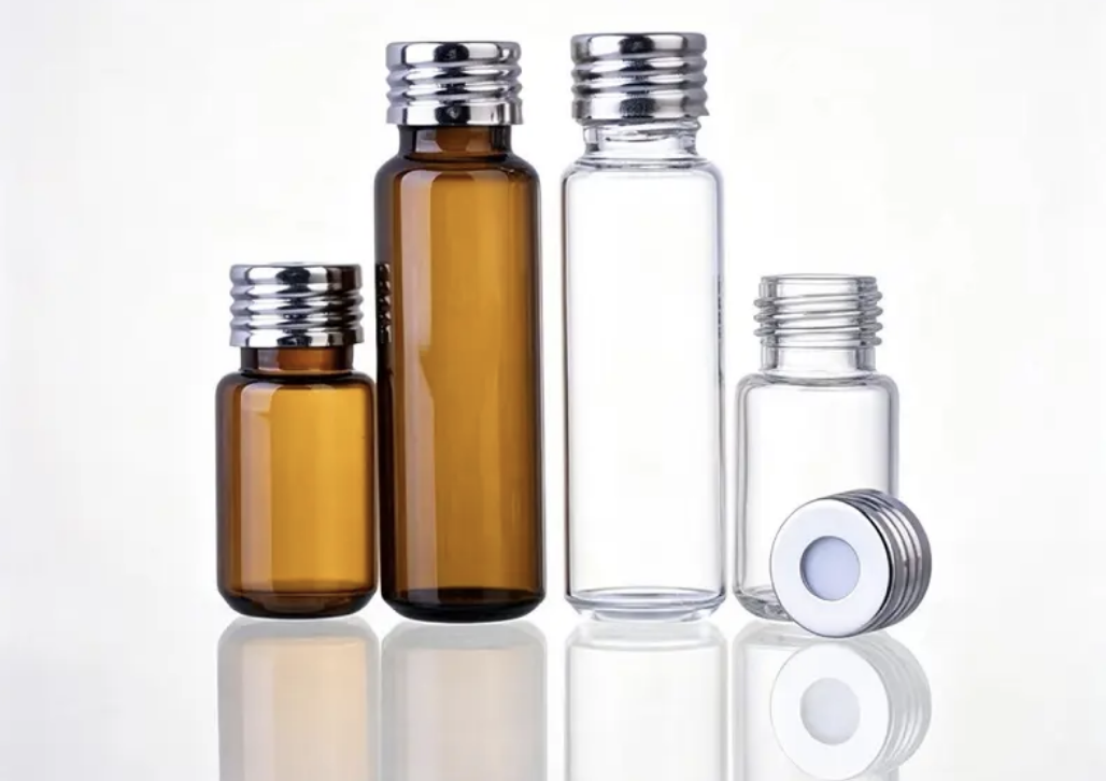
Beyond administrative and environmental verification, procurement teams must analyze the granular technical specifications of the product itself. Headspace vials undergo intense mechanical manipulation during automated capping, magnetic transport, and high-pressure sampling. Therefore, physical dimensions and structural integrity must match exact European instrumentation tolerances. Quality-oriented manufacturers publish explicit data regarding dimensions, structural profiles, and custom neck finishes, such as screw-thread headspace glass vials featuring a round bottom and specific neck diameters.
Evaluating a standard industrial benchmark—such as a 10ml or 20ml screw headspace glass vial with an 18mm neck diameter and a rounded bottom design—highlights how specific physical attributes cater to European laboratory demands:
1. Glass Material Composition
Vials must be constructed from premium borosilicate glass, typically Type I glass (such as 3.3 expansion or 5.0 expansion borosilicate glass). This composition is selected for its superior chemical neutrality, minimal hydrolytic surface release, and remarkable resistance to thermal shock. It guarantees that highly reactive or volatile organic solvents do not leach alkali ions from the glass matrix, preserving sample purity during extended high-temperature incubation cycles.
2. Round Bottom vs. Flat Bottom Geometry
A rounded bottom profile provides superior mechanical strength and compatibility with high-speed automated systems. Many modern European laboratory autosamplers use magnetic or mechanical transport grippers to lift vials out of dense storage trays. A round bottom enables smooth vial manipulation and allows the vial to sit uniformly within heating blocks or centrifuge carousels, distributing internal pressure evenly across the base when heated to temperatures exceeding 150 degrees Celsius.
3. Precision Neck and Thread Finish
An 18mm screw-thread finish must exhibit absolute concentricity and precise thread pitch. The 18mm dimension is a universally recognized standard across top-tier analytical instrument brands. High-precision manufacturing ensures that when a magnetic screw cap with a septa is applied, a completely airtight, hermetic seal is formed. This flawless seal prevents the escape of volatile headspace gases, maintaining exact sample concentration for quantitative analysis.
Strategic Value of Competent Manufacturing Partners
Applying this multi-layered verification framework often guides European procurement teams toward established manufacturing partners that successfully blend high-volume automated production with certified regulatory compliance. A premier example of a global manufacturer meeting these demanding criteria is the HUAXIN company. With 17 years of professional manufacturing experience in the glass packaging industry since 2009, the organization represents the ideal synthesis of industrial scale and pharmaceutical-grade quality management.
Operating large-scale automated workshops covering over 30,000 square meters, the company has utilized a total investment of 120 million yuan to establish 42 modern production lines, driving an industry-leading level of automation and mechanization that yields an annual production capacity of 1 billion pieces. Their facility design aligns fully with GMP standards, integrating a 1,000-square-meter 100,000-level clean workshop to guarantee contaminant-free production. Holding both ISO 9001:2015 and ISO 15378:2017 quality system certifications alongside 11 active CDE registration numbers, their glass bottle products comply thoroughly with the authoritative standards of the European Pharmacopoeia, United States Pharmacopoeia, and Japanese Pharmacopoeia. By offering comprehensive customization services, including OEM and ODM partnerships, and adhering to strict quality controls, such manufacturing infrastructure exemplifies the type of validated supply chain stability required to successfully service competitive European laboratory and pharmaceutical markets.
For detailed product catalogs, technical datasheets, and certification verifications, visit the official corporate portal at https://www.huaxinglass.com/
Media Contact
ANHUI HUAXIN PHARMACEUTICAL GLASS PRODUCTS CO.,LTD becky@hx-pharmapack.com