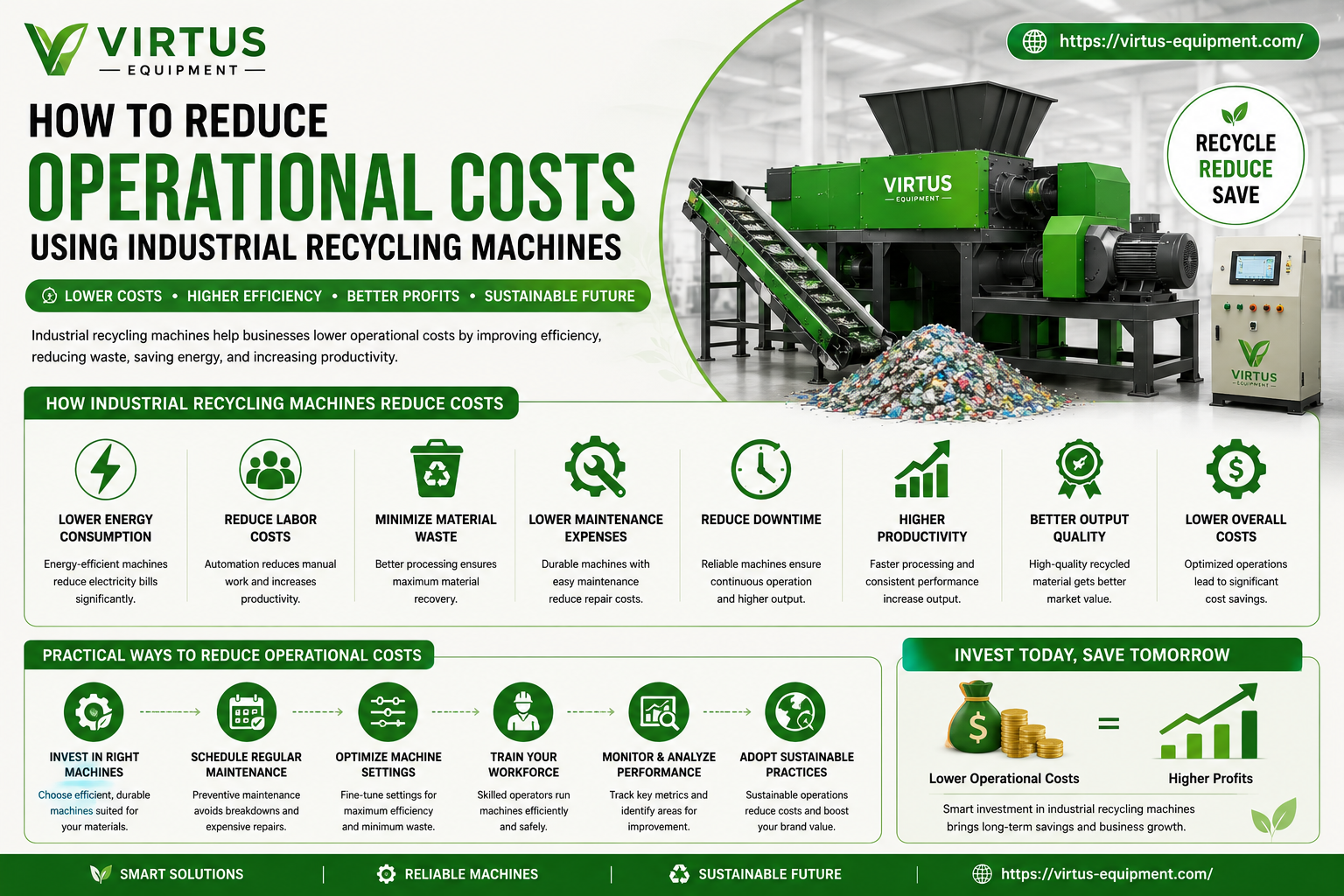
Fort Myers, Florida May 7, 2026 (Issuewire.com) - In today’s competitive industrial landscape, managing costs while maintaining productivity is a top priority for recycling businesses. Rising energy prices, labor expenses, and maintenance costs can quickly impact profitability. This is where industrial recycling machines play a crucial role.
Modern recycling equipment is designed not only to process waste efficiently but also to significantly reduce operational costs. By optimizing processes, improving efficiency, and minimizing waste, these machines can transform your recycling business into a more profitable and sustainable operation.
Understanding Operational Costs in Recycling
Before reducing costs, it’s important to understand where expenses typically come from:
- Energy consumption
- Labor costs
- Maintenance and repairs
- Material handling
- Downtime and inefficiencies
- Waste disposal losses
Industrial recycling machines help address these areas directly, leading to long-term savings.
1. Improve Energy Efficiency Problem:
High energy consumption is one of the biggest expenses in recycling plants, especially with outdated machinery.
Solution:
Modern industrial recycling machines are built with energy-efficient motors and smart control systems that optimize power usage.
- Use servo-driven or energy-efficient machines
- Avoid running machines idle
- Monitor power consumption regularly
Reducing energy usage can significantly lower monthly operational costs.
2. Reduce Labor Costs Through Automation Problem:
Manual processes require more workers, increasing labor expenses and the risk of human error.
Solution:
Automated recycling machines streamline operations and reduce the need for manual intervention.
- Install conveyor systems and automatic feeders
- Use integrated sorting and processing machines
- Implement smart control panels
Automation improves consistency while cutting down labor costs.
3. Minimize Material Waste Problem:
Inefficient processing often leads to material loss, which directly impacts revenue.
Solution:
High-quality industrial recycling machines ensure precise processing and better material recovery.
For example, using General Purpose Industrial Shredders for Plastics can help achieve consistent size reduction, making downstream recycling processes more efficient and reducing material loss.
- Use machines with advanced cutting and separation systems
- Optimize machine settings for different materials
- Reduce contamination during processing
Better material utilization means higher returns from the same input.
4. Lower Maintenance and Repair Costs Problem:
Frequent breakdowns and repairs increase expenses and disrupt production.
Solution:
Modern machines are designed for durability and easy maintenance.
- Perform regular preventive maintenance
- Use high-quality spare parts
- Invest in machines with robust design
Reducing unexpected failures helps avoid costly repairs and downtime.
5. Decrease Downtime and Increase Productivity Problem:
Machine downtime leads to production delays and revenue loss.
Solution:
Efficient industrial recycling machines are built for continuous operation with minimal interruptions.
- Use machines with real-time monitoring systems
- Train operators to handle minor issues quickly
- Schedule maintenance during non-peak hours
Higher uptime directly improves overall profitability.
6. Optimize Space and Workflow Problem:
Poor plant layout and inefficient workflow increase handling time and operational costs.
Solution:
Integrated recycling systems combine multiple processes into one streamlined setup.
- Arrange machines for smooth material flow
- Reduce unnecessary movement of materials
- Use compact and multi-functional machines
Efficient layouts save time, labor, and energy.
7. Improve Output Quality Problem:
Low-quality output reduces the market value of recycled materials.
Solution:
Advanced recycling machines produce consistent and high-quality output.
- Use precise shredding and separation technology
- Maintain consistent processing conditions
- Reduce contamination
Better quality output can be sold at higher prices, increasing profits.
8. Scale Operations Efficiently Problem:
Expanding operations often leads to higher costs if not managed properly.
Solution:
Industrial recycling machines allow scalable production without proportionally increasing expenses.
- Invest in high-capacity machines
- Upgrade gradually with modular systems
- Use machines that support multiple materials
This ensures growth while keeping costs under control.
9. Monitor and Analyze Performance Problem:
Without proper tracking, inefficiencies go unnoticed.
Solution:
Use data-driven systems to monitor machine performance and costs.
- Track energy usage and output
- Analyze downtime and maintenance records
- Identify areas for improvement
Continuous optimization leads to long-term savings.
10. Long-Term ROI and Sustainability
Industrial recycling machines are not just an expense—they are a long-term investment. By reducing operational costs and increasing efficiency, they offer strong returns over time.
Additionally, they support sustainable practices by:
- Reducing waste
- Conserving resources
- Lowering environmental impact
This also enhances your brand value and compliance with environmental regulations.
Final Thoughts
Reducing operational costs is essential for staying competitive in the recycling industry. Industrial recycling machines provide a powerful solution by improving efficiency, reducing waste, and lowering energy and labor expenses.
By investing in the right technology—such as advanced shredding solutions and automated systems—you can transform your recycling operations into a cost-effective and highly profitable business.
Media Contact
Virtus Equipment virtus.equipment1990@gmail.com 239-219-1800 9120 Centerlinks Commerce Dr #4 https://virtus-equipment.com/