Wuxi, Jiangsu Sheng Jul 27, 2026 (Issuewire.com) - How to Identify the China Best COLD ROLLING MILL Manufacturer? Look for CE & ISO Standards
Understanding the complexities of metal processing requires a deep dive into the mechanical precision and regulatory compliance that define modern industrial manufacturing. For international procurement managers and plant engineers, the search for a reliable production partner often begins with a fundamental question regarding quality benchmarks. Within the competitive landscape of industrial machinery, identifying a China Best COLD ROLLING MILL Manufacturer involves more than just comparing technical specifications; it necessitates an evaluation of how a company integrates international quality standards with practical engineering solutions. As the global demand for high-precision steel strips continues to rise, the emphasis has shifted toward manufacturers who can demonstrate consistency through rigorous certification and a proven track record in diverse international markets.
The significance of CE and ISO certifications cannot be overstated when vetting a potential partner for large-scale industrial equipment. ISO 9001 standards provide a framework for a quality management system that ensures a manufacturer maintains consistent production processes, from the initial raw material sourcing to the final assembly and testing phases. Meanwhile, the CE mark indicates that the machinery complies with the essential health, safety, and environmental protection standards for products sold within the European Economic Area. For a professional entity like Dls Machinery, these are not merely bureaucratic requirements but are central to the operational philosophy that governs the development of heavy-duty rolling equipment. By adhering to these benchmarks, a manufacturer provides a layer of technical assurance that the equipment will operate reliably under the high-stress conditions typical of a steel processing facility.
Technical Architecture of the 4-Hi Reversing Cold Rolling Mill
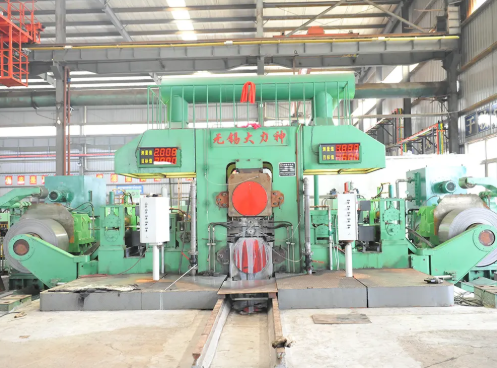
At the core of professional steel strip production is the 4-Hi reversing cold rolling mill, a machine designed to reduce the thickness of metal strips while enhancing their surface quality and mechanical properties. Unlike continuous rolling mills that require multiple stands in a sequence, a reversing mill allows the metal strip to pass back and forth through a single mill stand. This design is particularly valued by manufacturers who require flexibility in production volumes and the ability to process various material grades with high precision. The configuration of the 4-Hi mill consists of two smaller work rolls and two larger backup rolls. The smaller work rolls are responsible for the direct reduction of the metal, while the backup rolls provide the necessary structural support to prevent the work rolls from deflecting under the immense pressure required for the rolling process.
This specific arrangement is critical for maintaining the flatness and gauge consistency of the finished product. When a High Quality COLD ROLLING MILL supplier from China engineers these systems, they must account for the elastic deformation of the rolls. High-precision hydraulic AGC (Automatic Gauge Control) systems are integrated into the mill to adjust the roll gap in real-time, compensating for any variations in the incoming strip thickness or temperature. This ensures that the output meets the stringent tolerances required for industries such as automotive manufacturing, home appliances, and construction. The reversing capability of the mill also means that the tension can be precisely controlled at both the entry and exit points using advanced uncoilers and recoilers, which is essential for preventing strip breakage and ensuring uniform internal stress within the metal.
Operational Efficiency and Material Versatility
The utility of a 4-Hi reversing mill extends to its ability to process a wide range of materials, including carbon steel, low alloy steel, and stainless steel. In a typical production cycle, the strip is fed from the decoiler into the mill stand. As the strip passes through the work rolls, the grain structure of the metal is elongated and refined, resulting in increased strength and a smoother surface finish. Because the process is "cold"—meaning it occurs below the recrystallization temperature of the metal—it avoids the scaling and surface oxidation associated with hot rolling. This makes the cold rolling mill indispensable for producing the aesthetic and high-performance materials used in precision engineering.
Modern industrial users often face the challenge of balancing high throughput with limited floor space. The compact footprint of a reversing mill compared to a multi-stand tandem mill makes it an ideal choice for medium-sized enterprises and specialized steel service centers. Dls Machinery focuses on enhancing this efficiency by incorporating automated control systems that reduce the time required for roll changes and mill setups. By optimizing the hydraulic systems and ensuring that the electrical control architecture is robust, the equipment minimizes downtime, which is a primary concern for plant operators looking to maximize their return on investment. The inclusion of high-efficiency cooling and lubrication systems also plays a vital role in managing the heat generated during high-speed rolling, protecting both the rolls and the strip surface from thermal damage.
Industry Trends and the Evolution of Rolling Technology
The industrial sector is currently witnessing a transition toward increased automation and data-driven manufacturing. In the context of cold rolling, this means that equipment is no longer judged solely on its mechanical weight, but on its digital intelligence. A China Leading COLD ROLLING MILL provider must now offer systems that can integrate with factory-wide management software, allowing for real-time monitoring of production metrics, energy consumption, and equipment health. This trend toward "Smart Manufacturing" is driving the development of sensors and diagnostic tools that can predict maintenance needs before a failure occurs, thereby preventing costly unplanned shutdowns.
Furthermore, there is a clear shift toward higher precision in the thin-gauge segment. As components in electronics and specialized automotive parts become smaller and more complex, the demand for ultra-thin steel strips with perfect surface integrity has grown. This has led to the refinement of roll grinding techniques and the use of more sophisticated alloyed materials for the rolls themselves to extend their service life. Dls Machinery stays aligned with these movements by continuously updating its design protocols to accommodate the processing of new, high-strength alloys that require higher rolling forces but thinner final gauges. The ability to adapt to these changing material requirements is a key indicator of a manufacturer's technical depth and market relevance.
Global Market Presence and Peer Recognition
The reputation of a manufacturer is often solidified through its participation in international industry forums and exhibitions. Events such as METALLOOBRABOTKA in Russia and SteelFab in the United Arab Emirates serve as critical touchpoints for the global metalworking community. These exhibitions allow technical teams to demonstrate their latest engineering breakthroughs and engage directly with end-users to understand the specific environmental and operational challenges of different regions. For instance, the requirements for a rolling mill in the humid climates of Southeast Asia may differ significantly from those in the heavy industrial zones of Eastern Europe, particularly regarding electrical insulation and anti-corrosion treatments for the machine body.
Dls Machinery has consistently utilized these platforms to showcase its commitment to international standards and technical service. Participating in these high-level exhibitions provides a transparent view of the company’s capabilities and allows potential clients to verify the quality of the components used in the assembly of the mills. It is during these interactions that the value of CE and ISO certifications becomes most apparent, as they provide a common language of quality that transcends regional borders. When a China Best COLD RO制造业 Manufacturer presents its solutions on a global stage, the focus is on how the integration of proven mechanical designs and modern control technology can solve the specific productivity bottlenecks faced by steel producers worldwide.
Corporate Strategy and Quality Assurance Protocols
The structural integrity of a 4-Hi mill begins in the engineering department, where finite element analysis is used to simulate the stresses the mill stand will endure during operation. A professional manufacturer ensures that the housing of the mill is cast or fabricated from high-grade steel to provide the necessary rigidity. Any vibration or misalignment in the mill stand can lead to defects in the strip, such as wavy edges or center buckles. Therefore, the machining of the roll chocks and the alignment of the hydraulic cylinders must be performed with extreme precision.
Beyond the mechanical assembly, the quality assurance protocol involves a series of rigorous tests. This includes hydraulic pressure tests, electrical sequence testing, and dry runs to ensure that all moving parts operate in harmony. For Dls Machinery, the commitment to quality extends to the selection of sub-components, such as bearings, motors, and PLC systems, which are sourced from reputable international brands to ensure global compatibility and ease of maintenance. This holistic approach to manufacturing is what allows a provider to maintain its status in a competitive market, ensuring that each piece of equipment delivered meets the client’s specific production goals while adhering to safety and environmental regulations.
Meeting the Demands of Modern Metal Sourcing
Procurement in the steel industry is increasingly focused on the total cost of ownership. While the initial capital expenditure is a significant factor, the long-term costs associated with energy consumption, spare parts, and operational efficiency are what determine the true value of the machinery. Professional rolling mill suppliers address this by designing equipment that is not only robust but also energy-efficient. Variable frequency drives and optimized hydraulic circuits help reduce power consumption during the different stages of the rolling cycle.
Additionally, the ability to provide comprehensive technical support and operator training is a hallmark of a reliable partner. The complexity of a 4-Hi reversing mill requires a skilled workforce to operate and maintain it effectively. By providing detailed technical documentation and on-site commissioning services, a manufacturer ensures that the transition from installation to full-scale production is as smooth as possible. This level of service is essential for building long-term relationships with international clients who rely on the continuous operation of their production lines to meet their own market commitments.
The identification of a premier manufacturing partner in the cold rolling sector depends on a balanced assessment of technical capability, adherence to international standards, and a forward-looking approach to industrial trends. The integration of CE and ISO certifications serves as a primary indicator of a company's dedication to quality and safety. Through the development of high-precision equipment like the 4-Hi reversing cold rolling mill, manufacturers are able to meet the diverse needs of the global steel industry, providing the tools necessary for producing the high-quality materials that drive modern infrastructure and technology. As the industry continues to evolve toward smarter and more efficient production methods, the role of experienced engineering firms remains central to the progress of metal processing worldwide.
The selection of a manufacturing partner for cold rolling equipment is a strategic decision that hinges on the intersection of mechanical reliability and certified quality management. By prioritizing adherence to CE and ISO standards, a manufacturer ensures that its engineering output meets the high expectations of the international industrial market. The technical sophistication of the 4-Hi reversing mill, characterized by its precision gauge control and material versatility, represents a practical solution for modern steel production challenges. Furthermore, consistent participation in global industry exhibitions and a focus on automated, energy-efficient designs reflect a commitment to staying at the forefront of the metalworking sector. Ultimately, the value provided by an experienced manufacturer lies in the ability to deliver robust, high-performance machinery that supports the long-term operational success and productivity of steel processing facilities across the globe.
https://www.dls-coldrolling.com/
Media Contact
Wuxi DLS Machiney Co., Ltd. sales01@dlscoldrolling.com http://dls-coldrolling.com