
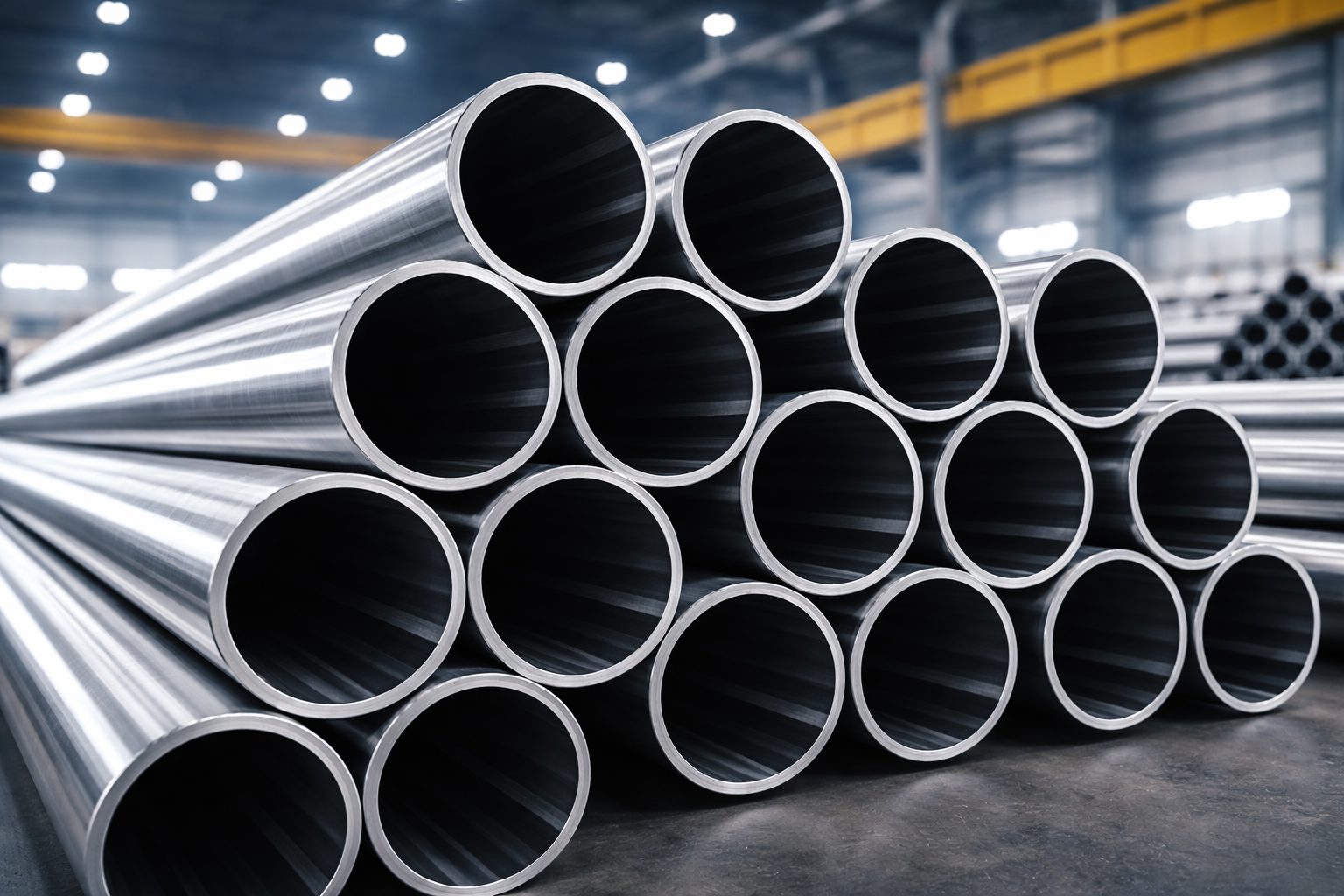
Changsha, Hunan Apr 2, 2026 (Issuewire.com) - When buyers search for seamless pipe products, they are often comparing price, delivery time, and specification. However, for industrial applications, these factors alone are not sufficient to ensure a successful purchase. The most critical consideration is quality. Whether the application involves pressure systems, structural frameworks, fluid transportation, or heat exchange environments, the performance and reliability of a seamless steel pipe directly impact operational safety, service life, and overall project efficiency.
Unlike general welded tubes, a seamless steel pipe is manufactured without a longitudinal seam, which provides superior strength and uniformity. This structural advantage makes seamless pipes suitable for demanding environments, but it also places higher requirements on material consistency, dimensional accuracy, surface quality, and mechanical performance. Buyers sourcing carbon steel pipes, alloy steel pipes, or heat exchanger tubes must therefore adopt a systematic approach when evaluating suppliers and products.
Why Quality Matters in Seamless Steel Pipes
A seamless steel pipe is widely used in applications where reliability is non-negotiable. These pipes often operate under high pressure, elevated temperatures, or corrosive conditions. In such environments, even minor defects can lead to serious consequences such as leakage, system downtime, or catastrophic failure.
For example, carbon steel seamless pipes are commonly used in structural and low- to medium-pressure applications, while alloy steel seamless pipes are preferred in high-temperature and high-pressure systems such as boilers and petrochemical plants. Heat exchanger tubes, on the other hand, require excellent thermal conductivity and resistance to corrosion and scaling.
Because of these demanding conditions, quality issues cannot be overlooked. A pipe that appears acceptable externally may still have internal inconsistencies that affect performance. Therefore, professional buyers prioritize technical verification, certification, and supplier credibility over appearance or low pricing.
1. Confirm Material Grade and Applicable Standards
The first and most fundamental step in evaluating seamless steel pipe quality is confirming that the product complies with the required material grade and industry standards. Different applications require different specifications.
Common standards include:
- ASTM A335 for high-temperature alloy steel pipes
- ASTM A333 for low-temperature service
- ASTM A213 for boiler and heat exchanger tubes
- ASTM A106 for carbon steel pipes used in high-temperature service
A reliable supplier should clearly indicate the steel grade, applicable standard, and provide supporting documentation such as mill test certificates (MTC). These certificates should include details about chemical composition, mechanical properties, and heat treatment conditions.
If the documentation is incomplete, unclear, or inconsistent with project requirements, it is a strong indication that the product may not meet expected quality levels.
2. Inspect Surface and Internal Quality
Surface quality is one of the most visible indicators of manufacturing precision. A high-quality seamless steel pipe should have a smooth and uniform surface, free from major defects.
Buyers should carefully inspect for:
- Cracks or fractures
- Folds or laps
- Pits or indentations
- Deep scratches or mechanical damage
- Excessive oxidation or scale
While minor surface imperfections may be acceptable within standard tolerances, any defect that compromises wall thickness or structural integrity should be treated as a red flag.
Internal quality is equally important but less visible. Non-destructive testing methods such as ultrasonic testing or eddy current testing are often used to detect internal flaws. Buyers should confirm whether such inspections are performed during production.
3. Check Dimensional Accuracy and Tolerances
Dimensional precision is critical for seamless steel pipes, especially in applications that involve welding, threading, or flange connections. Key parameters include:
- Outside diameter (OD)
- Wall thickness (WT)
- Length
- Ovality and straightness
Uneven wall thickness is a common issue that can reduce pressure resistance and create weak points in the system. Poor dimensional control may also lead to installation difficulties or incompatibility with fittings.
Buyers should request tolerance specifications and verify that the product complies with relevant standards. Reliable manufacturers maintain strict dimensional control through advanced production equipment and quality inspection systems.
4. Review Mechanical and Chemical Test Reports
Mechanical and chemical properties define the functional performance of a seamless steel pipe. These characteristics cannot be judged visually and must be verified through laboratory testing.
Important parameters include:
- Tensile strength
- Yield strength
- Elongation
- Hardness
- Chemical composition (carbon, manganese, chromium, molybdenum, etc.)
Mill test certificates should clearly present these results. For alloy steel pipes and carbon steel pipes used in critical environments, these reports are essential for confirming that the material meets design requirements.
In some cases, additional tests such as flattening tests, hydrostatic pressure tests, or impact tests may also be required depending on the application.
5. Understand the Manufacturing Process
The quality of a seamless steel pipe is closely related to its manufacturing process. A transparent and well-controlled production workflow is a strong indicator of product reliability.
Typical seamless pipe manufacturing processes include:
- Raw material selection (billets)
- Heating and piercing
- Hot rolling or cold drawing
- Heat treatment
- Straightening and sizing
- Non-destructive testing
- Final inspection and packaging
Each stage plays a role in determining the final quality of the pipe. For example, improper heat treatment can affect mechanical strength, while poor rolling control may lead to dimensional inconsistencies.
A trustworthy supplier should be able to explain their production process and quality control measures clearly. This demonstrates technical capability and production stability.
6. Evaluate Supplier Capability and Quality Control Systems
Beyond the product itself, the supplier’s capability is a crucial factor in ensuring consistent quality. Buyers should consider:
- Production capacity and equipment level
- Quality management systems (such as ISO certifications)
- Experience in exporting and serving international markets
- Inspection procedures and traceability systems
- Ability to provide third-party inspection reports
Suppliers with mature quality control systems are more likely to maintain consistent product standards across batches. Traceability is particularly important, as it allows buyers to track each pipe back to its production batch and raw materials.
7. Consider Application Requirements and Environment
Different applications impose different demands on seamless steel pipes. Buyers should always align material selection with operational conditions.
For example:
- High-temperature systems require alloy steel pipes with heat resistance
- Low-temperature environments require materials with good toughness
- Corrosive environments may require special alloys or protective coatings
- Structural applications prioritize strength and load-bearing capacity
Understanding the end-use environment helps ensure that the selected pipe is not only compliant with standards but also suitable for long-term performance.
8. Choose Beyond Price: Focus on Long-Term Value
While price is always an important factor in procurement, it should not be the sole deciding criterion. A lower-priced seamless steel pipe may initially seem cost-effective, but hidden quality issues can lead to higher expenses in the long run.
Potential risks include:
- Additional inspection and rework costs
- Installation difficulties
- Early failure or leakage
- Production downtime in industrial systems
Working with reliable suppliers who provide consistent quality, clear documentation, and stable delivery can significantly reduce overall project risk. In many cases, long-term value outweighs short-term cost savings.
Conclusion
Evaluating the quality of a seamless steel pipe requires a comprehensive approach that goes beyond visual inspection and pricing. Buyers should systematically assess material grades, surface condition, dimensional accuracy, mechanical and chemical properties, manufacturing processes, and supplier capabilities.
By combining technical verification with supplier evaluation, procurement professionals can make informed decisions and minimize risks in industrial applications. Ultimately, the true value of a seamless steel pipe lies not in its appearance at delivery, but in its ability to perform reliably and safely throughout its service life.
In today’s competitive global market, adopting a quality-focused purchasing strategy is essential for ensuring safety, efficiency, and long-term project success.
Media Contact
EZ STEEL INDUSTRIAL CO., LTD. marketing@ezsteelpipe.com +86 188 7402 8402




