Dongguan, Guangdong Oct 22, 2026 (Issuewire.com) - Meta Description
Learn how to create a solenoid and solenoid valve from design to manufacturing. Discover coil winding, material selection, assembly, testing, and applications. Explore Weilong’s expertise in high-quality solenoid valve solutions.
Target Keywords
Primary Keywords:
- Solenoid
- Solenoid valve
Secondary Keywords:
- Solenoid valve manufacturing process
- How to make a solenoid
- Solenoid valve manufacturer
- Industrial solenoid valve
- Direct acting solenoid valve
- Pilot operated solenoid valve
- Custom solenoid valve
- Electromagnetic valve
- Solenoid valve supplier
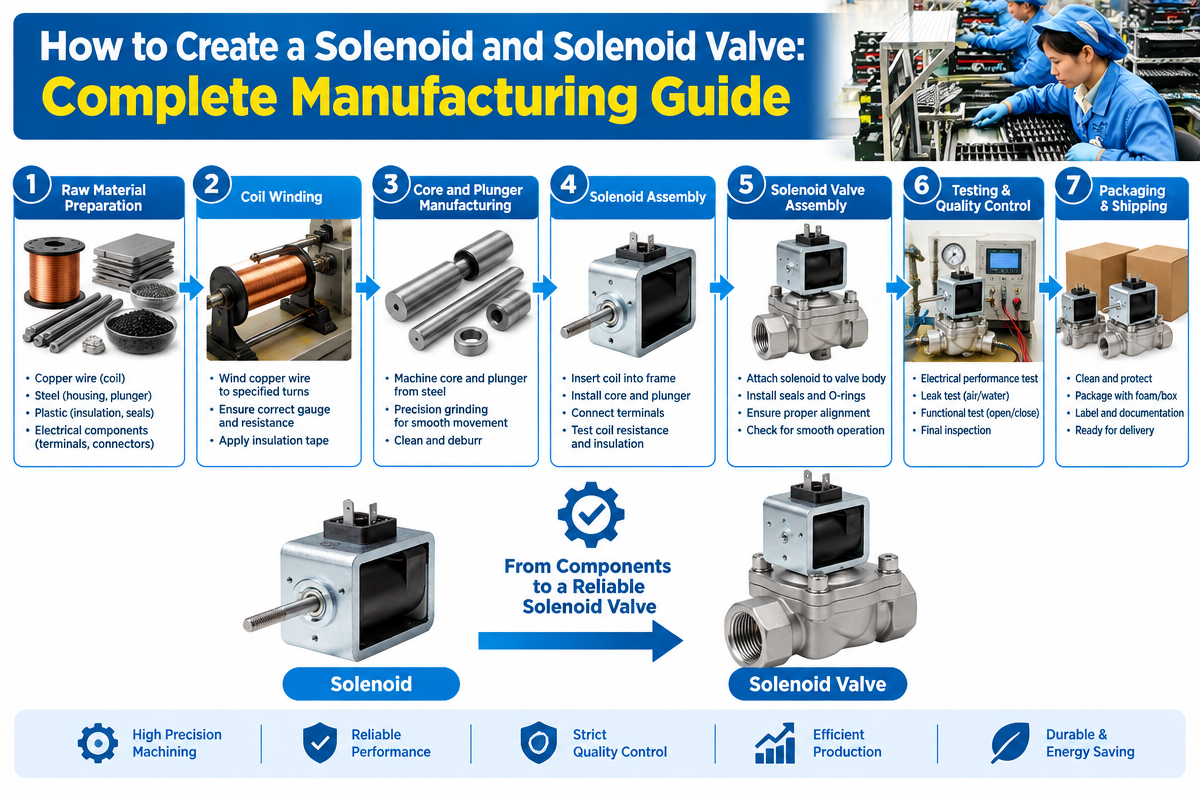
How to Create a Solenoid and Solenoid Valve: Complete Manufacturing Guide
Introduction on Solenoid and Solenoid Valve manufacturing
The solenoid and the solenoid valve constitute a crucial part of automation, fluid control systems, industrial equipment, automotive application, medical equipment and home appliances. Though the size of these devices are rather small but the functionality of them is rather high – they are responsible for converting electrical energy into the mechanical energy as well as controlling the flow of liquids and gases.
We use a solenoid. The electromagnetic force is used to generate a linear motion. The electromagnet actuator is connected with the valve device which regulates the flow of fluid by opening, shutting or controlling its direction.
A solenoid valve. The solenoid valves have become one of the most frequently used automatic control elements in industry due to the fast response and preciseness of control as well as reliability.
But how are the solenoids and the solenoid valves produced? Which material do you use for production? Which stages there are in the process of production? This complete manual covers the entire process from design up to assembly and quality checking.
- What is a solenoid?
The solenoid is a electromagnetic device which converts electrical energy into the mechanical energy.
Basic design of the solenoid includes the following:
coil (copper),
magnetic core (core memory),
plunger motion,
spring mechanism,
housing,
electrical terminal.
The magnetic field which is generated with a current passing through the coil moves or attracts the plunger creating the linear motion.
The motion which is provided by a solenoid is able to:
opening and shutting the valves,
locking mechanisms,
switching devices,
actuators mechanical types,
automation equipment industrial.
The high quality solenoid valve should provide:
powerful electromagnetic force,
fast response time,
the low consumption of electricity,
high durability,
robust performance under different conditions.
- What is a solenoid valve?
The solenoid valve is the automatic valve controlled with an electromagnet solenoid.
It is responsible for regulating the motion of:
water,
gas air,
oil,
vapor,
and other industrial fluids.
The flow of the liquid is regulated by a solenoid valve by means of electrical signals. Once the power is turned on, a magnetic force is generated with a solenoid moving the internal plunger. This movement opens or closes the valve passage.
Compared to the traditional manually-operated valves, the solenoid valve provides:
operation - automatic,
remote control of the valve,
high speed of switching,
preciseness of flow control,
the reduced number of personnel needed.
Typical applications are:
systems of industrial automation,
air tools,
watering systems,
heating and cooling systems,
water treatment devices,
medical equipment,
automotive systems;
- The solenoid design
At first, an engineer should be aware of which kind of solenoid he is going to make.
3.1 Defining operational requirements
The first thing is to be aware of the environment where you are going to operate.
The key points in the design are:
voltage.
Common operating voltages include:
6 V DC,
12 V DC,
24 V DC,
110 V AC,
220 V AC
Right voltage will ensure stable operation and protection from overheating.
The requirements of force
The mechanical load which will be moved with a solenoid is defined by the electromagnetic force.
Higher force is usually provided with:
more turns of coils
newer
better magnetic materials
Stroke range
The stroke is a distance that a plunger moves.
A short stroke is normally used for:
mini valves,
locks (),
precision instruments.
Long stroke is used in the following cases:
industrial plant,
heavy duty applications.
- The manufacture of the solenoid coils
The heart of any solenoid is the solenoid coils.
Step 1: Choosing a copper wire
Usually, the majority of the solenoid coils is wound by enamelled copper wire. Copper is good because of the following features:
good electrical conductivity;
good heat resistance;
long life.
The diameter of a wire and insulation thickness is chosen according to:
current;
now;
operating temperature;
magnetic force required
Step 2: Winding a coil
The copper wire is being wound on a bobbin by means of precision winding equipment.
The settings of the winding process:
number of turns of coils
the configuration of a wire
the resistance of a coil;
electric characteristics.
Well-wound coil provides:
stability of the magnetic field;
effectiveness of energy transformation;
reliable operation.
Step 3: Coil Protection
After the windings are done the coils are protected by means of the following actions:
insulation treatment;
resealing with a resin;
protective coatings.
These measures increase the resistance against:
liquid;
dust: "";
temperature changes;
mechanical vibrations.
- Production of Solenoid Components
There are a number of components which are essential for making the solenoid.
Plunger and magnetic core
Usually the core and plunger are produced from magnetic materials including:
steel low carbon ();
steel low carbon ();
resistant to the magnetizing.
These materials provide:
high magnetic permeability;
fast response to the magnets;
minimal losses.
The finishing of the plunger plays a vital role because of the following:
friction;
accuracy of the movement;
a long life cycle.
The spring fabrication
The return stroke of a plunger is controlled by means of a spring.
Right spring design provides:
correct returning force;
accurate operation;
long life cycle
Production of the Housing
The housing provides protection of the internal components.
There are common materials for the housing:
steel;
stainless steel;
brass;
aluminum;
engineering plastics.
The choice of the material depends on:
requirements of the pressure;
chemical surroundings;
temperature requirements.
- The Manufacture of the Solenoid Valve
Any solenoid valve is a combination of electromagnetic actuator and valve housing.
The manufacture of the solenoid valve occurs in the following steps.
Step 1: Designing the Valve Body
The valve body design
Engineers design the valve body taking into account:
type of the fluid;
operating pressure;
flow rate;
connection size;
temperature range.
Common valve designs are:
Solenoid Valve Direct Acting
It is the direct-acting solenoid valve which uses the plunger to open or shut the valve.
Advantages:
fast response;
simple design;
operation without pressure difference;
uses:
small water systems;
medical devices;
laboratory devices.
Pilot Operated Solenoid Valves
They are the solenoid valves of pilot-activated kind which operates due to fluid pressure assistance.
Advantages:
higher flow rate ability;
used with large pipes;
energy-saving.
Uses:
systems of industry;
equipment HVAC;
water management systems.
- The Assembly Procedure of the Solenoid Valve
The individual components are manufactured and then the process of assembly starts.
The assembly procedure:
- Installing the internal components
They are installed by the technician:
plunger /;
seal spring;
diaphragmatic;
valve core.
Accurate movement and sealing due to accurate assembling.
- Installing the solenoid valve coil
The valve body consists of the electromagnetic coil.
The connecting of the coil with the valve should provide:
proper positioning;
good electrical contact;
safety of the
- Finishing touch
The adjustment of the finished solenoid valve to ensure:
normal opening pressure;
perfect closing performance;
consistent switching rate.
- Quality checking for thesolenoid valves
Quality control is one of the most essential processes in the production of the solenoid valves.
Professional manufacturers carry out the variety of checks.
8.1 Electrical Checks
Checkup includes the following:
coils resistance;
insulation performance;
voltage compatibility;
consumption of power;
8.2 Leak checkup
It involves the pressure checkup to define the following:
absent leakage;
good sealing;
safe operation;
8.3 Flow test
The engineers perform the measurement of:
flow rate;
pressure drop;
the time of the response
8.4 Cycle of Life test
During this test the solenoid valve should operate a number of times.
Testing may include:
thousands of switching cycles;
temperature test;
vibration test.
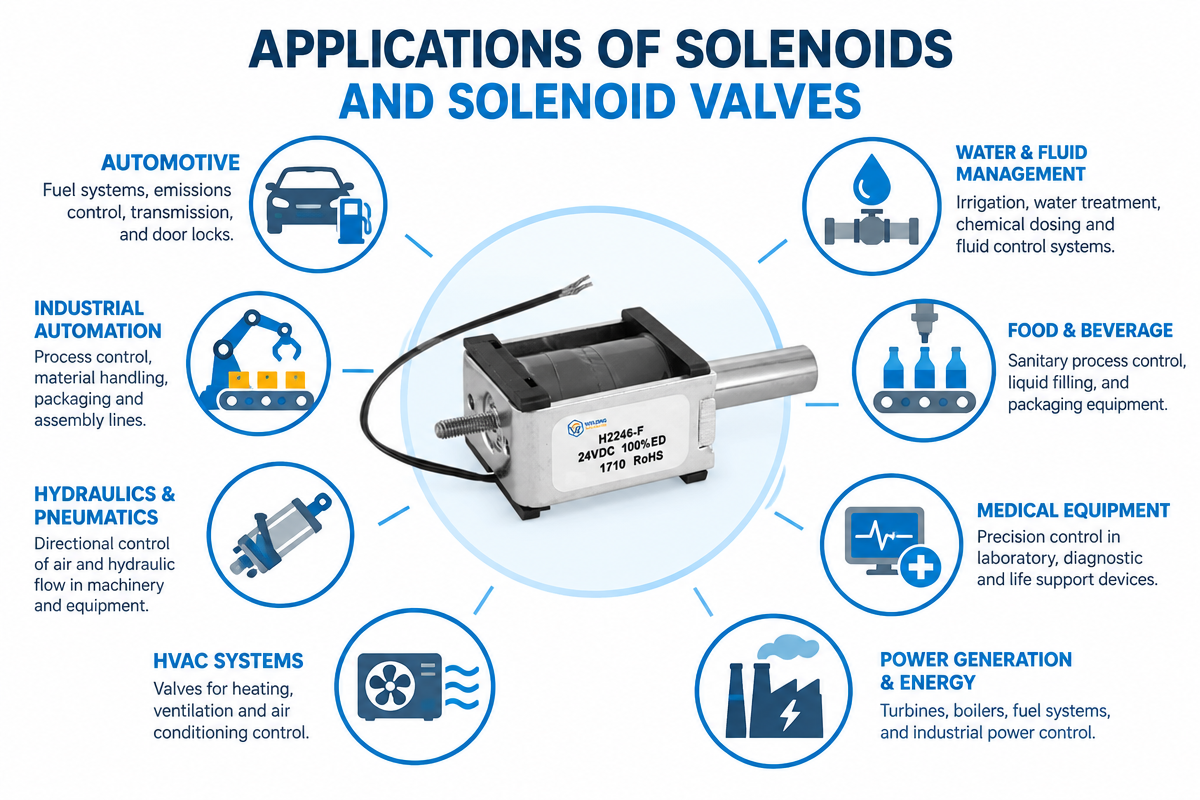
- APPLICATIONS OF SOLENOIDS AND SOLENOID VALVES
Currently solenoids and the solenoid valves are used in various fields.
9.1 Industry: Automation (industrial).
It is used for:
pneumatic control.;
production equipment;
robotic systems;
assembly machines.
9.2 Industry: Automotive
Applications are:
fuel systems.;
transmission control;
emission systems.
9.3 Water control systems
Applications of:
irrigation systems;
water coolers;
pumps;
filtration equipment.
9.4 Medical supplies
It is used in:
oxygen systems;
diagnostic devices;
lab devices.
- About Weilong: Professional Solenoid Valve Manufacturer
Weilong Technology company has 20 years experience in electromagnetic control technologies focusing on the research, development and manufacturing of high-quality solenoid valves and solenoid products for customers all over the world.
Weilong is always dedicated to providing reliable solenoid valves products to industries as follow:
industry of automation,
water treatment facilities,
electrical appliances,
medical supplies,
automotive systems,
fluid control applications.
The use of advanced production technology, strict quality assurance and engineering expertise allows our company to provide the solenoid valve products in order to meet:
high reliability;
the extended life cycle;
consistent performance;
individual customer needs.
The control of the entire process of production from design of the electromagnetic coil, precise production and assembling up to the checking of performance guarantees high product quality of Weilong.
Weilong offers professional technical support and manufacturing abilities for standard and customized solenoid valves and solutions. For the additional information please visit Weilong company's website: http://www.smartsolenoid.com or contact Weilong sales team: weilongsolenoid@gmail.com
Phone and WhatsApp: 86 136 4298 0378
- Conclusion
In order to produce reliable solenoids it is necessary to possess not only experience, knowledge and precision in manufacturing process but also the strict quality control.
Each step of the process of manufacturing from design of the coil to assembling and checking of the valve performance affects the final quality of the product.
With further improvement of automation technologies the solenoid valves will always remain an essential element of managing the fluid and mechanical motion in different fields.
Using the services of the qualified solenoid valve producer such as Weilong will allow achieving higher performance, service life and reliability.
- FAQson on Solenoid and Solenoid Valve manufacturing
12.1 What is the solenoid valve and how is it differs from the solenoid?
The solenoid is the electromagnetic actuator which generates the linear motion.
Solenoid valve is the valve which is operated by the solenoid valve.
12.2 How does the solenoid valve work?
An electrical energy generates a magnetic field in a solenoid valve. This magnetic field moves the internal plunger which opens or shuts the valve passage.
12.3 What materials are used in the solenoid valves' production?
Typically they are:
bronze;
stainless steel;
aluminum;
engineering plastics;
rubber-sealing materials.
The choice of materials depends on the application as well as type of the fluid.
12.4 How long does a solenoid valve operate?
The right design, manufacturing and maintenance of a high quality solenoid valve allows the valve operate millions of cycles.
12.5 Is it possible to tailor the solenoid valve?
Yes. The manufacturer can tailor:
the voltage (v);
port size;
materials and methods;
ratio of pressures;
connector type;
service environment.
12.6 How to choose the right solenoid valve?
Think about the following things:
fluid type:
working pressure;
heat;
flow requirements;
voltage (v);
installation environment;
professional manufacturer will assist in picking the right model.
12.7 Why Weilong for solenoid valve solutions?
Weilong has 20 years experience in business of the solenoids and solenoid valves and offers professional solenoid valve manufacturing with high-quality control, engineering support and tailored solutions for different industrial
Media Contact
Weilong Intelligent TechnologyCo., Ltd. *****@gmail.com +86 136 4298 0378 Building 1, No. 2 Jingxiang Road, Dongcheng District, Dongguan City, Guangdong Province, China (Zip code:523128) http://www.smartsolenoid.com/