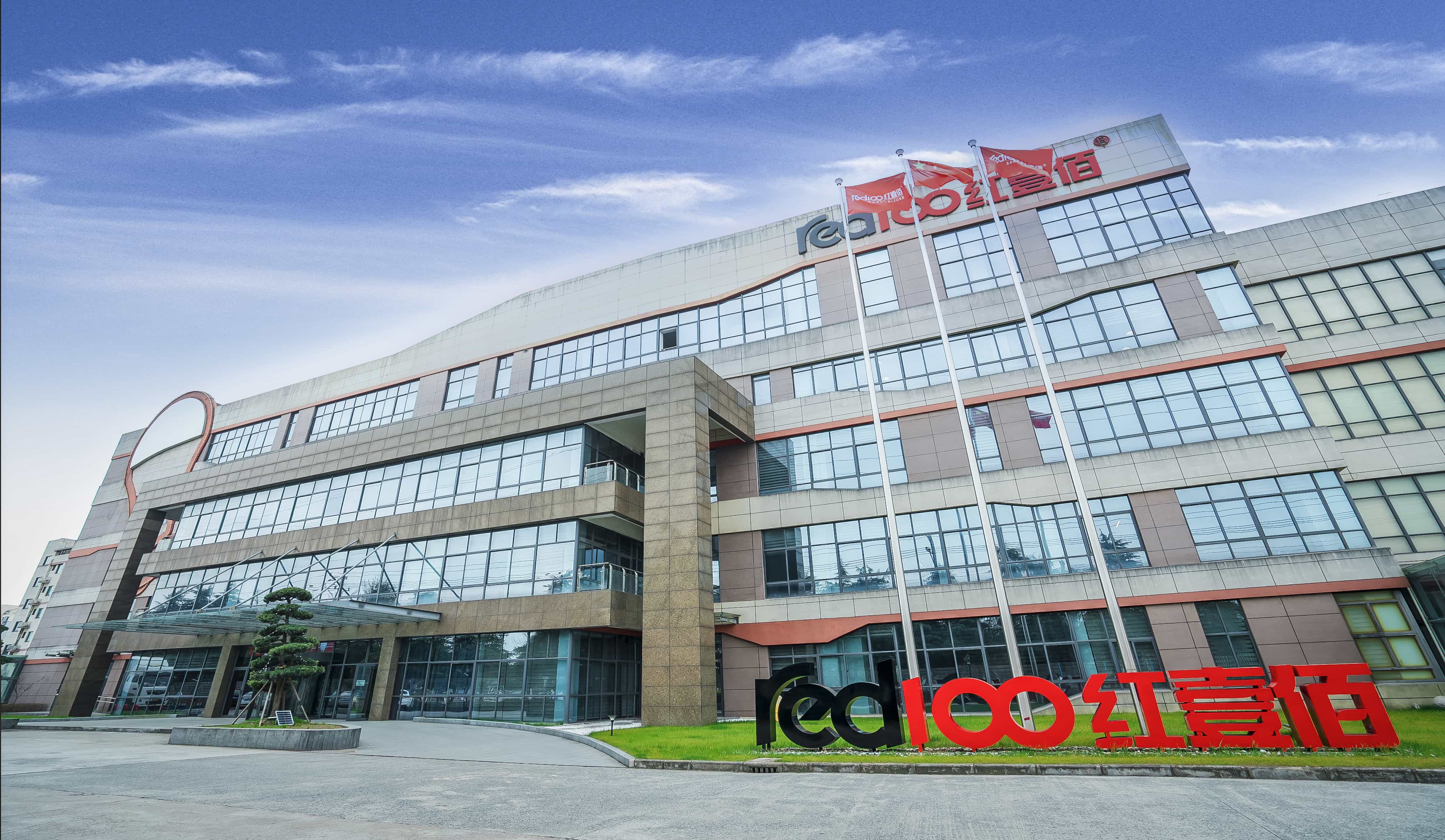
Taicang, Jiangsu Dec 24, 2025 (Issuewire.com) - The transition to Light-Emitting Diode (LED) technology in the industrial sector represents one of the most significant shifts in operational efficiency and sustainability witnessed in recent decades. For project managers, procurement specialists, and facility operators, selecting a reliable and capable Industrial LED Lighting Supplier is a critical decision that directly impacts long-term energy savings, maintenance costs, and overall workplace safety. The global push towards decarbonization and smart factory initiatives has intensified the need for robust, high-performance lighting solutions. Navigating the complex market of manufacturers requires a keen understanding of what truly differentiates a high-caliber partner from a simple vendor. It is not enough to look at initial price; a comprehensive evaluation must consider the supplier’s history, expertise in high-power applications, commitment to quality standards, and capacity for large-scale, international projects. A prudent choice minimizes risks and ensures the installed system delivers on its promise of superior illumination and longevity in demanding industrial environments.
The Foundation of Trust: Experience and Specialization in High-Power Applications
In the specialized field of industrial lighting—which encompasses vast spaces like warehouses, factories, ports, and outdoor heavy-duty areas—the demands placed on lighting fixtures far exceed those of commercial or residential settings. These environments often require extremely high luminous flux (high wattage), resilience against dust, moisture, and temperature fluctuations, and often operate for extended, continuous periods. This is where a supplier's history and core focus become paramount.
An established history provides a tangible measure of reliability and commitment to the industry. For instance, a company like Red100 Lighting Co.,Ltd., with a heritage dating back to 1995, offers three decades of dedicated experience. This longevity is particularly telling in the rapidly evolving LED market, demonstrating an ability to adapt and sustain quality over time. More importantly, when evaluating an Industrial LED Lighting Supplier, one must scrutinize their area of specialization. Red100 has consistently focused on the manufacturing technology and process of high-power lighting products. This niche focus is crucial; high-power LEDs require advanced thermal management, precision optics, and robust power supply design to maintain efficiency and prevent premature failure, a core competency often missing in general lighting manufacturers.
Furthermore, a supplier’s manufacturing footprint speaks volumes about their capability and risk mitigation strategy. Having multiple production bases, such as Red100’s facilities in Yantai and Suzhou, alongside a cooperative factory in Vietnam, demonstrates a substantial capacity to handle large orders and provides geographical diversity, enhancing supply chain resilience. This distributed manufacturing capability is a strong indicator that the supplier can scale production to meet the needs of major industrial projects without compromising quality or delivery timelines.
Navigating Quality and Compliance: The Critical Role of Certification and R&D
For any industrial project, compliance with international safety and energy efficiency standards is non-negotiable. The chosen Industrial LED Lighting Supplier must demonstrate an unwavering commitment to quality assurance, backed by globally recognized certifications and a proactive research and development (R&D) program.
A key factor in assessing this commitment is the ownership of professional, internationally licensed testing laboratories. Laboratories licensed by bodies such as German TUV, Swiss SGS, US UL, and France BV are evidence that a supplier’s products are rigorously tested against the most stringent global benchmarks before leaving the factory. These certifications are not merely stamps of approval; they are proof that the lighting fixtures meet critical safety parameters (e.g., electrical isolation, fire resistance) and performance metrics (e.g., light output, color consistency, lifetime). Choosing a supplier with these credentials significantly reduces the risk of non-compliance issues during installation and operation in various international markets.
Beyond external validation, the internal commitment to innovation is vital. Look for evidence of a strong R&D program, as demonstrated by the number of patents owned. With over 170 patents, a company like Red100 is actively contributing to the technological advancement of high-power LED solutions. This continuous investment in R&D ensures that the products offered are not based on outdated technology but incorporate the latest advancements in LED chips, drivers, optical design, and heat dissipation, translating into higher efficacy (lumens per watt) and longer operational life for the end-user. The involvement of the supplier in the formulation of national standards, such as Chinese LED energy efficiency standards and smart lighting-related national standards, further underscores their position as a technical authority and thought leader in the industry.
Product Portfolio and Application Expertise: Matching the Solution to the Environment
Industrial applications are highly diverse, ranging from low-bay lighting in clean assembly plants to high-mast lighting in exterior port facilities. A competent Industrial LED Lighting Supplier must offer a comprehensive product portfolio that covers this spectrum and, crucially, possess the application expertise to recommend the precise solution for each specific scenario.
High-power lighting products inherently cater to the most demanding industrial environments. Key applications for these products include:
-
Manufacturing Facilities and Warehouses: Requiring high lumen packages for safety and task visibility over large areas, often with high ceiling clearances (High Bay, Linear High Bay).
-
Outdoor Industrial Sites: Such as mining operations, container yards, and oil refineries, which demand extreme durability (IP ratings), shock resistance (IK ratings), and powerful, focused illumination (Flood Lights, High Mast Lights).
-
Specialized Areas: Including explosive environments (Explosion-Proof Lighting) or areas with extreme temperatures.
A quality supplier will not simply sell a fixture, but will partner with the client to conduct thorough lighting audits and use photometric analysis (such as Dialux studies) to design a system that optimizes light distribution, uniformity, and glare control, directly impacting employee productivity and safety. For a supplier with the reputation as “An Expert in High-power LED Lighting,” the emphasis is on providing solutions that perform reliably under duress, a testament to their deep understanding of various industrial use cases.
The global reach of a supplier is also an important indicator of their capacity to handle diverse project scales and requirements. Exporting products to over 80 countries, as Red100 does, signifies an ability to navigate complex logistical challenges, comply with regional electrical and safety codes, and service a wide array of industrial clients internationally. This global experience ensures that the supplier understands the nuances of different client needs, whether they are working with a major logistics firm in Europe or a heavy industrial client in South America.
The Future-Proof Factor: Integration with Smart Lighting and Energy Management
The discussion around industrial LED lighting has moved beyond simple energy savings to include the integration of intelligent control systems. Today, selecting the right Industrial LED Lighting Supplier means choosing a partner capable of delivering future-proof lighting infrastructure. Smart lighting systems, which incorporate sensors for occupancy and daylight harvesting, as well as control protocols like DALI or wireless mesh networks, can further enhance energy efficiency by up to 30% beyond the savings realized by the LED fixture itself.
A supplier's involvement in setting national standards for smart lighting is a clear signal of their commitment to and expertise in this technological trajectory. These capabilities allow industrial facilities to transition from static illumination to dynamic lighting management. This not only saves energy but also enables predictive maintenance, real-time energy monitoring, and the creation of task-specific lighting environments—a key component of the Industry 4.0 paradigm.
When evaluating potential suppliers, ask about their experience with:
-
Integrated Sensors: The ability to embed photocells, motion sensors, and presence detectors directly into the high-power fixtures.
-
Lighting Control Protocols: Offering compatibility with major centralized building management systems (BMS).
-
Data and Analytics: Providing a platform for monitoring lighting system performance and energy consumption.
This level of technological integration transforms the lighting system from a simple utility into an active component of the facility’s overall energy and operational strategy.
The Commercial and Operational Partnership: Beyond the Product
The true value of an Industrial LED Lighting Supplier is not solely in the product itself, but in the operational support and partnership offered throughout the project lifecycle. A thorough selection process must evaluate factors related to customer service, warranty, and long-term support.
-
Warranty and Product Lifespan: Given the high cost of maintaining industrial lighting (often requiring specialized lift equipment), a long, comprehensive warranty (typically 5 to 10 years) is a necessity. The warranty should be backed by the supplier's financial stability and history. The expected operational life, often quoted at $L_70$ or $L_80$ (meaning the time until the light output drops to 70% or 80% of its initial value), should be transparent and documented by independent testing.
-
Customer Case Studies and Client Recognition: Evidence of successful project execution provides confidence. While specific client names may be proprietary, look for general recognition from the industry. Red100’s recognition as “An Expert in High-power LED Lighting” after 30 years of focus speaks volumes about sustained customer and industry acknowledgment. A track record of servicing major industrial clients across diverse global regions suggests a high degree of adaptability and reliability.
-
Logistics and Project Management: For large-scale industrial retrofits or new construction, a supplier must have robust logistics capabilities to ensure timely, coordinated delivery to the site, particularly for international projects. This includes understanding customs procedures and offering flexible delivery options.
In conclusion, the decision to partner with an Industrial LED Lighting Supplier is a strategic investment that must be underpinned by due diligence. The right partner should possess a deep, specialized history in high-power solutions, demonstrate rigorous quality control through international certifications and R&D investment, offer a product line matched to diverse industrial needs, and provide a clear pathway to smart, future-proof lighting management. By focusing on these core criteria—experience, specialization, quality assurance, global capability, and smart technology integration—project stakeholders can select a supplier that will deliver not just light, but long-term operational excellence and significant return on investment.
To explore high-power LED lighting solutions tailored for the most demanding industrial environments, you can find more information at https://www.red100-lighting.com/
Media Contact
Red100 Lighting Co., Ltd. jh@red100.com.cn http://www.red100-lighting.com