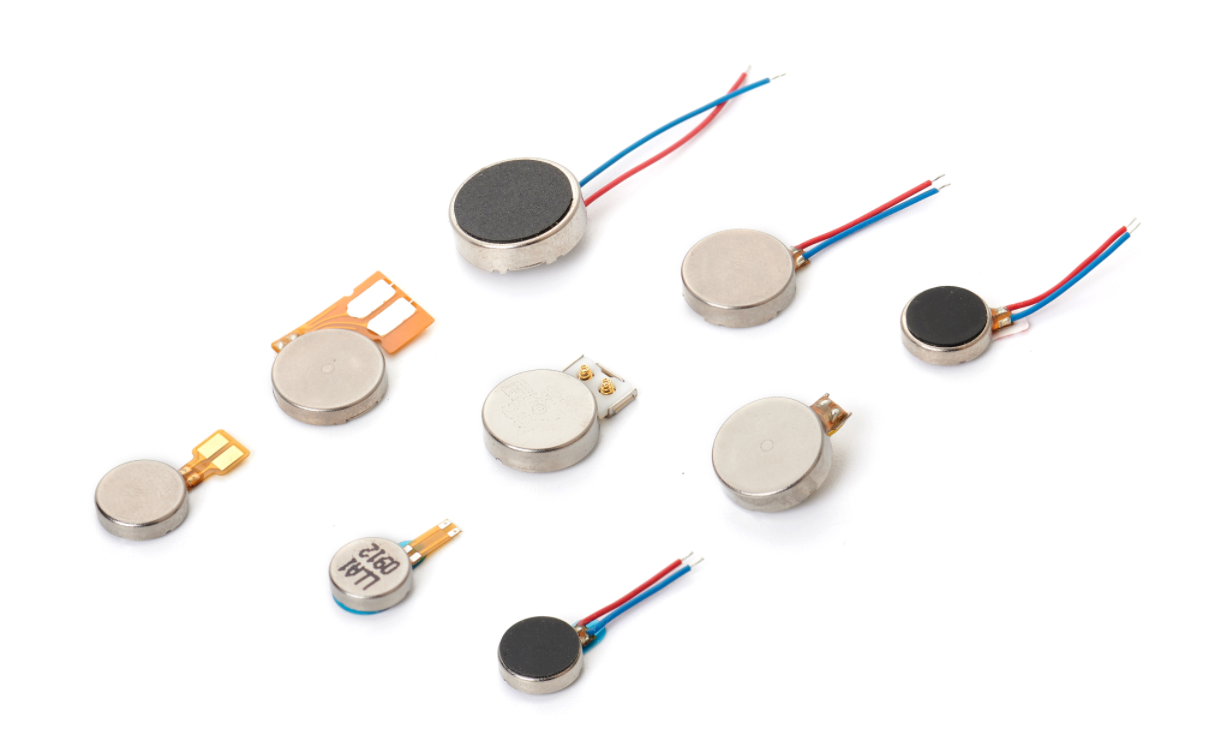

Huizhou, Guangdong Jun 10, 2026 (Issuewire.com) - In the competitive landscape of modern consumer electronics, hardware engineers often face a silent yet critical challenge: maximizing tactile feedback within increasingly constrained internal architectures. Imagine designing a sleek, next-generation smart fitness band or a minimalist electronic cigarette. The device must feel premium, respond instantly to user interactions, and maintain a slim profile. Yet, during late-stage prototyping, the engineering team realizes that the allocated space for the haptic component is highly restricted. Selecting an improper vibrating component can lead to weakened physical feedback, excessive power drain, or even structural failure. To overcome these complex engineering bottlenecks, working with a Top Rated Coin Vibration Motor Solutions Provider becomes essential for turning design blueprints into flawless physical products.
As consumer demand shifts toward ultra-thin wearables, precise medical instruments, and specialized haptic devices, the selection of the eccentric rotating mass (ERM) component has evolved past simple dimensions. It is no longer a matter of a generic comparison. Instead, it requires a comprehensive understanding of how physical boundaries influence mechanical output. This article examines how hardware developers can navigate strict structural parameters to select the optimal hardware integration, ensuring the device delivers perfect performance without compromising internal space.
Space and Thickness Limits
When engineering a compact device, the physical volume allocated for haptic feedback is strictly bound by the overall product layout. The structural footprint of a coin motor is defined by two primary dimensions: its diameter and its total thickness. In micro-engineering, even a fraction of a millimeter alteration completely changes the internal dynamic. The chosen coin vibration motor size directly governs the underlying physics of the kinetic output, impacting the internal mass, the internal electromagnetic coils, and the electrical properties of the component.
For highly compact consumer devices with strict weight limits, a 7mm coin vibration motor represents the limit of miniature engineering. These components are typically selected when the available circular diameter is minimal, allowing haptics to be placed in tight locations like AI voice recorder card, electronics cigarette or small medical sensors. However, moving down to a 7mm footprint involves technical trade-offs. Because the internal eccentric mass and internal rotor are smaller, the total kinetic force generated is naturally lower than that of larger models. To achieve a noticeable physical alert, a 7mm model must often operate at higher rotational speeds, which alters the felt frequency and shifts the power requirements. Engineers choosing this micro-size must carefully balance the voltage and current configuration to ensure the feedback remains perceptible to the end-user without draining the battery.
When design requirements expand slightly, an 8mm coin vibration motor offers a balanced technical middle ground. It provides a reliable compromise between overall physical volume and mechanical force. This diameter is widely utilized in modern electronic cigarettes, slim healthcare trackers, and portable notification devices. Within an 8mm footprint, the internal rotor has a larger surface area, allowing for a heavier internal mass. This structural change means the component can deliver a distinct, satisfying pulse at lower operational frequencies compared to 7mm models. Furthermore, the 8mm configuration is often available in multiple thickness variations, giving engineers the flexibility to prioritize either horizontal circuit space or vertical stack height depending on how the internal printed circuit board (PCB) is arranged.
For applications where clear, immersive tactile feedback is paramount, a 10mm coin vibration motor is the standard industry choice. Found frequently in heavy-duty massagers, industrial handheld instruments, and advanced wearable hardware, the 10mm diameter accommodates a larger internal magnet and a wider coil arrangement. This physical increase directly translates to a much stronger vibration amplitude and a lower, more comfortable frequency that resonates effectively through larger device housings. However, integrating a 10mm model requires a spacious internal volume. Beyond the physical 10mm diameter, engineers must account for the structural housing clearances, the mounting adhesive thickness, and the routing paths of the lead wires or spring contacts, ensuring that the heavy vibration does not cause acoustic noise or interfere with nearby sensitive sensors like accelerometers or microphones.
Understanding the Physics: Why Scale Influences Performance
To make an accurate component selection, engineering teams must evaluate why changing physical dimensions modifies the overall user experience and device stability. The performance of these micro-components relies on fundamental mechanical principles:
- Vibration Amplitude and Mass:The physical force generated by a rotating component is determined by the eccentric mass and its distance from the rotational axis. As the diameter drops from 12mm to7mm, the internal mass decreases significantly. This requires developers to use higher operational speeds to maintain acceptable force, which changes the tactile feel from a deep pulse to a higher-frequency buzz.
- Power Consumption Efficiency:Smaller components require precise electrical calibration. While a larger motor can leverage its rotational momentum to maintain kinetic output, a micro-sized alternative often requires higher current bursts to overcome initial inertia, affecting the overall battery life of portable electronics.
- Mounting and Integration Options:The physical size dictates the available connection methods. Larger configurations easily accommodate spring contacts or flexible printed circuits (FPC) for automated assembly. Conversely, smaller components often rely on manual lead-wire soldering or specialized double-sided adhesives to isolate the vibration, preventing unwanted harmonic resonance within the product housing.
Engineered Manufacturing Excellence
Successfully integrating micro haptic components requires more than just choosing catalog specifications; it demands a manufacturing partner capable of maintaining strict quality control across millions of units. Established in 2007, LEADER Micro Electronics (Huizhou) Co., Ltd. has developed into a national high-tech enterprise that seamlessly integrates advanced research and development, automated production, and global sales of high-performance micro vibration motors.
Specializing in the development of coin motors, linear resonant actuators (LRA), brushless motors, and cylindrical coreless motors, the company maintains an annual production capacity approaching 80 million units. With nearly one billion vibration motors delivered worldwide, the company's hardware solutions are integrated into approximately 100 different product categories across multiple industries, including consumer wearables, electronic cigarettes, personal massagers, and smart home hardware.
Operating under stringent international standards, the production facilities are certified under ISO9001:2015 for quality management, ISO14001:2015 for environmental management, and OHSAS18001:2011 for occupational health and safety. Supported by a specialized 12-person R&D team—with key members possessing over 16 years of industry experience—the enterprise operates an in-house tooling and jig workshop. This specialized capability allows for rapid prototyping and custom structural modifications, ensuring that custom mounting brackets, specific lead-wire lengths, or tailored electrical parameters can be designed to match any complex product configuration.
Choosing the proper component scale involves balancing physical space, power efficiency, and user experience. By understanding the mechanical differences between micro-sized solutions and working with an experienced manufacturing partner, engineering teams can optimize their hardware architecture, reduce development timelines, and deliver reliable tactile performance to end-users worldwide.
To learn more about advanced haptic configurations and micro-motor solutions, visit the official enterprise website at https://www.leader-w.com/.
Media Contact
Leader Micro Electronics (Huizhou) Co., Ltd. leader@leader-cn.cn