Chicago, Illinois Jul 10, 2026 (Issuewire.com) - Somewhere today, a teenager will stop believing tomorrow can be better. She is not alone: more than half of US teen girls report persistent sadness or hopelessness, and hopelessness predicts loneliness, anxiety, depression, violence, self-harm, and suicide. But new peer-reviewed research delivers stunning news: Hope is not a personality trait or a lucky break. It is a skill, it is teachable, and this is a crisis we can solve.
That is why iFred, which led years of advocacy to establish the UN International Day of Hope, is inviting the world to act on July 12: become a Certified International Day of Hope Champion, download the free toolkit, plant a Sunflower Garden, host a workplace Hope Hour, and share your story with #BeTheSunflower.
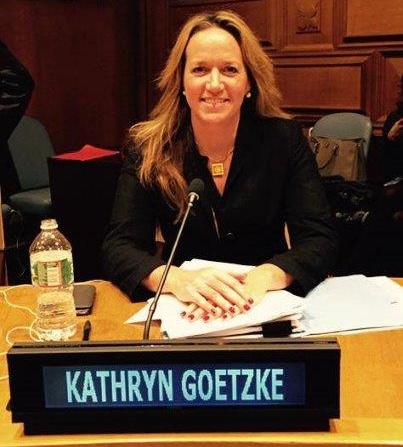
“We are never taught what hopelessness is. It is not a diagnosis. It is not a disease. It is a moment in time, and that moment can always be managed, but only if we are taught how,” said Kathryn Goetzke, MBA, Hope Scientist, founder of iFred, and study co-author.
“Hope is the belief that the future can be better than today, and that I/we have the power to make it so,” Goetzke continued. “Anyone, at any age, can learn it. We cannot afford a single person sitting on the sidelines. The global Hope movement starts July 12, and it starts with you.”
The Case for Hope
Across 57 studies reviewed in the International Journal of Mental Health Systems (Goetzke & O'Brien, 2026), the evidence is overwhelming: Hope changes everything it touches. Full study: link.springer.com/article/10.1186/s13033-026-00699-9
HEALTH: Hope is associated with reduced all-cause mortality, fewer chronic conditions, better sleep, greater treatment adherence, and faster recovery from illness and surgery. Hope protects against anxiety, depression, and suicide.
FAITH: Hope lives in every faith tradition on earth, and 85 percent of the world identifies with a religion. Yet Hope is also secular, a unifying force connecting people of all faiths and beliefs.
VIOLENCE: Hopelessness is a key driver of violent behavior, predicting weapon carrying, youth violence, and self-harm. Hope reverses it, with reduced recidivism, safer communities, and a documented path to peace in intractable conflicts.
PROSPERITY: Hope predicts who rises out of poverty and predicts academic achievement above intelligence alone. It accounts for 14 percent of work productivity, makes employees 69 times more likely to be engaged, drives climate action, and underpins all 17 UN Sustainable Development Goals.
One skill. Every outcome. iFred's programs teach the Five Keys to Shine Hope: Stress Skills, Happiness Habits, Inspired Action, Nourishing Networks, and Eliminating Challenges.
The medical community agrees. Dr. Myron Belfer, MD, MPA, Professor of Psychiatry at Harvard Medical School and Harvard Catalyst, and adviser to iFred, whose career includes work with the World Health Organization, witnessed the power of Hope early in his career alongside Dr. Joseph E. Murray, the Nobel Prize-winning surgeon who performed the world's first successful organ transplant.
“Working with Dr. Murray, I saw firsthand that Hope was not a luxury for our patients. It changed their outcomes,” said Dr. Belfer. “Decades of research now confirm what we witnessed at the bedside: Hope improves recovery, treatment adherence, and survival. Teaching Hope is one of the most important public health interventions of our time.”
At Amen Clinics, brain imaging research on thousands of patients is revealing what Hope looks like inside the brain.
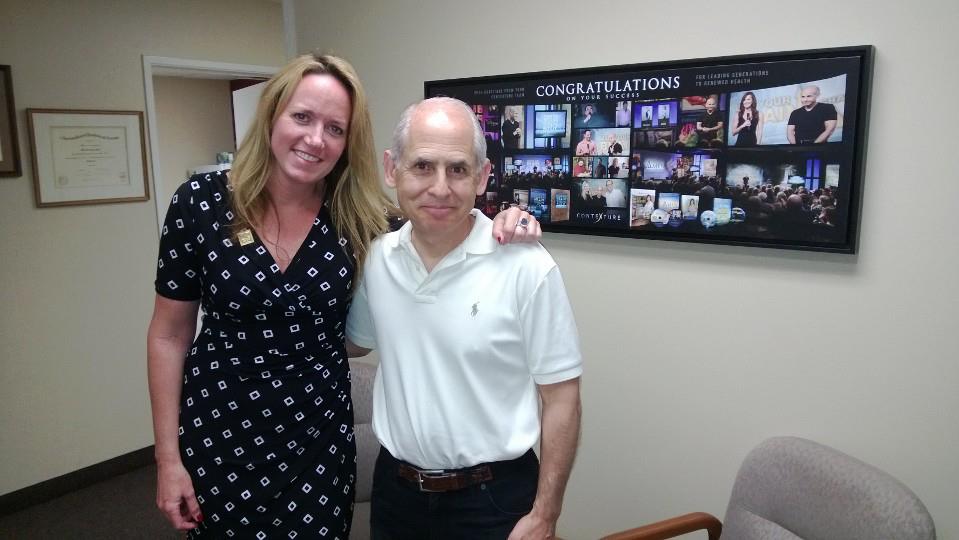
“Hope is not just good for the soul. It is good for the brain, and now we can see it,” said Daniel Amen, MD, double board-certified psychiatrist, founder of Amen Clinics, and 12-time New York Times bestselling author. “In our research, lower Hope was associated with lower blood flow in brain networks for motivation, decision-making, and self-control, along with reduced resilience, mood regulation, cognitive performance, and social connection. Building Hope may be one of the most powerful things you can do for your brain.”
If you are interested in enrolling in Dr. Amen's Brain Health Coaching Certification Programs, you can access the courses here and save with code HOPE15 at checkout.
Your move. July 12.
- Become a Certified International Day of Hope Champion
- Download the free activation toolkit
- Plant a Sunflower Garden with seeds from Back to the Roots and post the official sign:
- Host a workplace activation
- Be the Sunflower online: measure your Hope at myhopescore.org, then tag @ifredorg with #BeTheSunflower and #InternationalDayOfHope
Learn more at www.internationaldayofhope.org/idoh2026
Sunflowers follow the light. In darkness, they turn toward each other. On July 12, be the sunflower.
About iFred
iFred, the International Foundation for Research and Education on Hope, is a 501(c)(3) nonprofit established in 2004, working to rebrand mental health by normalizing hopelessness as a human moment we all experience and equipping everyone with the skills to Hope. iFred leads the global activation of the International Day of Hope, observed July 12 as designated by the United Nations.
Media Contact:
Olivia Posz
olivia@theshinehopecompany.com
About Amen Clinics
Amen Clinics is a network of specialty clinics focused on brain health, offering comprehensive approaches to evaluating and treating emotional, behavioral, cognitive, and learning challenges. With locations across the United States and telehealth services available, Amen Clinics uses a brain-based approach to help patients understand the underlying drivers of their symptoms and create personalized strategies to improve brain health and overall well-being.
Media Contact:
Jordyn Dean
jdean@amenclinics.com
If you or someone you love is in crisis, call or text 988 in the US, or find international resources at ifred.org/suicide-hotlines.
Media Contact
Olivia Posz olivia@theshinehopecompany.com http://www.ifred.org




