Shaoxing, Zhejiang Jun 14, 2026 (Issuewire.com) - Definition and Legal Framework
Imagine a bustling European port where customs officials conduct meticulous inspections on incoming industrial freight. A container arriving from an overseas textile machinery manufacturer is flagged. Inside are advanced, fully computerized double cylinder socks knitting machines destined for a high-output textile factory. However, upon reviewing the compliance documentation, the officials discover a fatal flaw: the machinery lacks a valid CE marking, or its Declaration of Conformity is structurally deficient. Under stringent regional regulations, the entire shipment is impounded, facing costly delays, severe administrative fines, or mandatory destruction at the exporter's expense. For international buyers, partnering with an uncertified Fully Computerized Double Cylinder Socks Knitting Machine Supplier represents a catastrophic operational risk. In modern textile manufacturing, regulatory compliance is no longer a bureaucratic afterthought; it is a rigid prerequisite that separates stable market leaders from high-risk operations.
As global textile markets demand higher precision, efficiency, and automated flexibility, the double cylinder socks knitting machine has become a vital asset for manufacturing premium ribbed and patterned hosiery. Yet, as technical complexity increases, so too do the latent operational risks related to mechanical failure, electrical safety, and ergonomic hazards. This comprehensive analysis examines the critical role of CE certification in the textile machinery supply chain, exploring what the standard entails, why it serves as an essential market entry barrier, and how premium manufacturers leverage rigorous engineering standards to protect global investors.
I. Understanding the CE Marking
The CE (Conformité Européenne) marking is a mandatory compliance emblem required for specific products sold within the European Economic Area (EEA). It signifies that a manufacturer has verified the product's compliance with essential health, safety, and environmental protection requirements set out in various European Directives and Regulations. For complex industrial equipment like a fully automatic computerized double cylinder socks knitting machine, the certification process is exhaustive and legally binding.
Rather than a generic quality seal, the CE mark denotes adherence to strict legislative frameworks. For textile machinery, compliance typically intersects with multiple directives simultaneously:
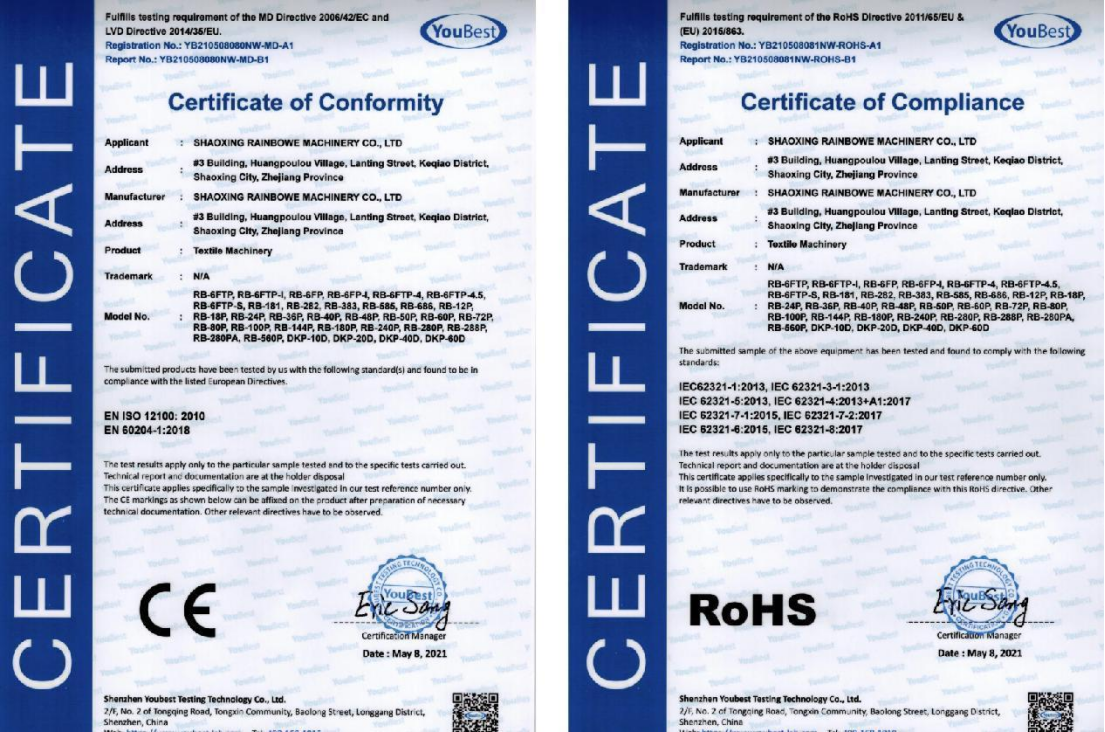
- The Machinery Directive (2006/42/EC):Focuses on the structural integrity, mechanical safety, guarding mechanisms, and emergency systems of the machine to prevent workplace injuries.
- The Low Voltage Directive (2014/35/EU):Ensures that all electrical components, wiring, and power units operate safely within specified voltage limits, eliminating risks of electrocution or electrical fires.
- The Electromagnetic Compatibility Directive (2014/30/EU):Guarantees that the computerized control systems of the machinery do not emit excessive electromagnetic interference that could disrupt neighboring industrial equipment, and that the machine itself is resilient against external electronic disturbances.
To legally affix the CE mark, a manufacturer must compile a comprehensive Technical File, perform systematic risk assessments, and issue an official EC Declaration of Conformity. This process binds the supplier to strict accountability, assuring international buyers that the machinery has been engineered to the highest preventative safety standards.
II. The Technical Architecture of CE Assessment: What Is Inspected?
The verification of a fully computerized double cylinder sock machine involves rigorous engineering audits across several critical domains. Because these machines operate at exceptionally high speeds and utilize intricate mechanical needles, sync systems, and automated cutters, the scope of safety verification is highly specialized.
First, mechanical safety and enclosure dynamics are analyzed. Examiners scrutinize the physical guarding around the double cylinder assembly, the yarn feed mechanisms, and the driving motors. The machinery must feature interlocking physical barriers that instantly cut power to moving parts if an operator opens a protective panel during operation. Additionally, emergency stop buttons must be strategically placed, highly responsive, and capable of bringing the high-speed cylinders to a safe halt without causing mechanical failure or projectile hazards from broken needles.
Second, the electrical and control architecture undergoes comprehensive stress testing. Industrial sock machines rely on advanced computerized control units to manipulate stitch patterns, cylinder speeds, and sizing parameters. Inspectors test insulation resistance, grounding continuity, and the resilience of the electronic circuit boards against voltage fluctuations. This ensures that the automated programming remains stable under prolonged industrial loads and does not cause dangerous malfunctions due to thermal buildup or power surges.
Third, ergonomic integration and operational risks are evaluated. This includes assessing noise emission levels during high-RPM knitting cycles, ensuring stable structural vibration limits, and validating that routine maintenance procedures—such as oiling, needle replacement, and lint clearing—can be conducted safely without exposing technicians to hazardous contact points.
III. Operational Realities: The Consequences of Non-Compliance
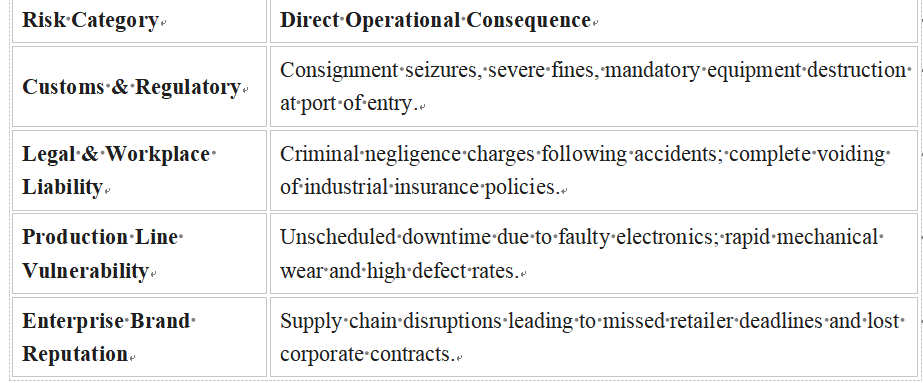
Investing in textile equipment that bypasses standardized CE protocols introduces severe operational, financial, and legal vulnerabilities to a manufacturing business. When an enterprise purchases from a supplier that cannot verify its conformity, the long-term liabilities frequently overshadow any initial capital savings.
From a regulatory standpoint, non-compliant machinery face immediate seizure by market surveillance authorities. If an uncertified machine slips through customs and is later involved in a workplace accident, the factory management faces severe legal exposure, including criminal negligence charges and the immediate forfeiture of industrial insurance coverage. Most corporate insurance underwriters explicitly state that policies are void if the industrial equipment involved does not possess valid, regionally mandated safety certifications. Furthermore, non-compliant machines often suffer from substandard component choices, resulting in persistent electrical faults, high yarn breakage rates, and erratic cylinder synchronization that degrade product quality and drive up operational waste.
IV. Strategic Harmonization: Choosing a Globally Certified Supply Partner
Ultimately, opting for a CE-compliant fully computerized double cylinder sock machine is a strategic decision that safeguards an enterprise's capital investment. It minimizes geopolitical customs risks, ensures a secure and productive environment for factory operators, and guarantees consistent, high-speed manufacturing output. By prioritizing certified engineering excellence, textile manufacturers secure a clear, uncompromised path toward sustainable international commercial success.
For more detailed product portfolios, technical breakdowns, and corporate compliance details, please visit the official enterprise repository at Shaoxing Rainbowe Machinery Co., Ltd..
Media Contact
SHAOXING RAINBOWE MACHINERY CO., LTD ophelia@sxrainbowe.com