Dongguan, Guangdong Jun 25, 2026 (Issuewire.com) - The Special Equipment Market Association (SEMA) Show remains the ultimate battleground for automotive innovation, drawing thousands of global industry professionals, elite installers, and top-tier distributors. Amidst the sea of cutting-edge automotive aftermarket solutions, the window film sector drew immense interest this year, fueled by escalating consumer demand for superior thermal regulation, optical clarity, and energy efficiency. Among the international exhibitors, a frequent point of discussion among trade visitors was the performance criteria required to establish a truly top-tier supply line. "The global market is flooded with brands that prioritize marketing over manufacturing consistency," remarked a European automotive styling franchise owner during a live demonstration at the event. "What we look for at SEMA is a partner backed by a real factory, stable raw materials, and precision coating engineering that can support high-volume distribution without quality degradation."
This critical demand for manufacturing excellence directly spotlights the role of a premier High Quality Automotive Window Film Manufacturer. True manufacturing quality in this segment goes far beyond superficial aesthetics; it encompasses high-precision nano-layering, optical polyester purity, advanced ultraviolet radiation filtration, and long-term adhesive stability. As professional restylers and global distributors evaluated options at the show, the structural differences between marketing brands and authentic source factories became the focal point of strategic sourcing discussions.
The SEMA Show: A Proving Ground for Global Market Validation
For window film manufacturers, the SEMA Show serves as a rigorous, live proving ground where products are subjected to intense scrutiny by professional installers who handle automotive films daily. Buyers at this level assess technical metrics such as Infrared Rejection (IRR), Visible Light Transmission (VLT) stability, and structural shrinkability under heat guns during complex glass curves.
Throughout the event, live installation exhibitions provided clear visual and physical proof of how different films behave under tension. Attendees observed that while lower-grade alternatives often suffered from severe distortion, uneven adhesive activation, or heavy structural haze under direct exhibition spotlights, premium-tier products maintained an optically clear, deep color profile with balanced shrinkage properties. Several international distributors noted that the ability to withstand extreme heat and sharp angles during wind-shield shaping without exhibiting "ghosting" or creasing is what separates high-volume commercial films from premium architectural and automotive solutions. This live validation from elite industry practitioners underscores why trade shows like SEMA are crucial for filtering out speculative brands and highlighting companies with deep operational and manufacturing roots.
KSB vs. Traditional Dyed Film Producers
To understand why advanced manufacturing structures excel in the modern market, it is essential to analyze how different product tiers compare across core performance categories.
The most fundamental comparison exists between advanced manufacturers like KSB and traditional dyed film producers. Traditional dyed films rely on organic dyes infused into the polyester base or adhesive layers to achieve color and basic glare reduction. While cost-effective for entry-level fleet applications, these films lack active infrared heat-blocking capabilities, offering minimal thermal protection. Under prolonged exposure to ultraviolet radiation, the chemical bonds of standard dyes break down rapidly, resulting in the common phenomenon of the film turning purple, bubbling, or delaminating from the glass matrix.
In contrast, an advanced OEM/ODM manufacturer utilizes continuous deep-dyeing techniques combined with multi-layer protective coatings that shield the color layer from UV-induced degradation. By managing the full production chain from raw PET film selection to proprietary adhesive synthesis, high-tier production lines ensure that the film retains its color stability, optical structural integrity, and adhesive bonding strength for years under extreme climate conditions. This fundamental shift from temporary cosmetic tinting to long-term performance engineering represents the first major point of divergence in manufacturer capabilities.
KSB vs. Standard Metallic Window Films
Another critical market comparison involves the choice between modern non-conductive technologies and standard metallic or hybrid window films.
Standard metallized films utilize a micro-layer of sputtered or evaporated metals (such as aluminum, nickel, or bronze) to reflect solar thermal energy. While metallized films deliver high solar heat rejection, they possess a significant structural drawback: electromagnetic shielding. The metallic lattice within the film acts as a barrier to high-frequency wireless signals. In the era of modern connected vehicles, electric vehicles (EVs), autonomous driving sensors, and widespread mobile communication, metallic films frequently interfere with internal GPS receivers, cell phone signals, tire pressure monitoring systems (TPMS), and electronic toll collection transponders. Furthermore, metallized films carry a highly reflective, mirror-like aesthetic that many modern car owners find unappealing, and they are susceptible to edge oxidation and corrosion over time when exposed to moisture and coastal salt air.
Advanced non-metallized engineering resolves this conflict entirely. By replacing metallic layers with non-conductive materials, premium manufacturers achieve equivalent or superior heat rejection without interrupting wireless communications. This ensures that all modern vehicular communication arrays operate at peak efficiency, creating a highly stable environment for modern electronic cockpits and electric vehicle architectures.
The Nano Ceramic Paradigm: KSB vs. General Ceramic Competitors
Within the premium window film segment, nano ceramic technology represents the current industry benchmark for high-end solar control. However, not all ceramic films are engineered equally, a fact that becomes highly obvious when comparing a tier-one specialist against general ceramic competitors.
Many standard ceramic films utilize basic ceramic particle sizes or lower-purity chemical compounds that lead to a common industry problem: low-angle haze. When sunlight strikes these films at a specific oblique angle, the larger ceramic particles scatter the light rays, creating a milky or cloudy appearance that compromises driver visibility and safety.
A leading manufacturing specialist solves this issue through advanced material processing. By utilizing premium, highly purified nano-ceramic compounds—such as precisely processed Tin Oxide or Tungsten Oxide particles—and distributing them uniformly via high-precision slot-die coating machinery, the resulting nano ceramic film achieves an ultra-clear visual profile with zero haze. This advanced material science allows the film to selectively block up to 99% of harmful ultraviolet rays and exceptional levels of near-infrared radiation, while maintaining maximum visible light transmission and structural clarity.
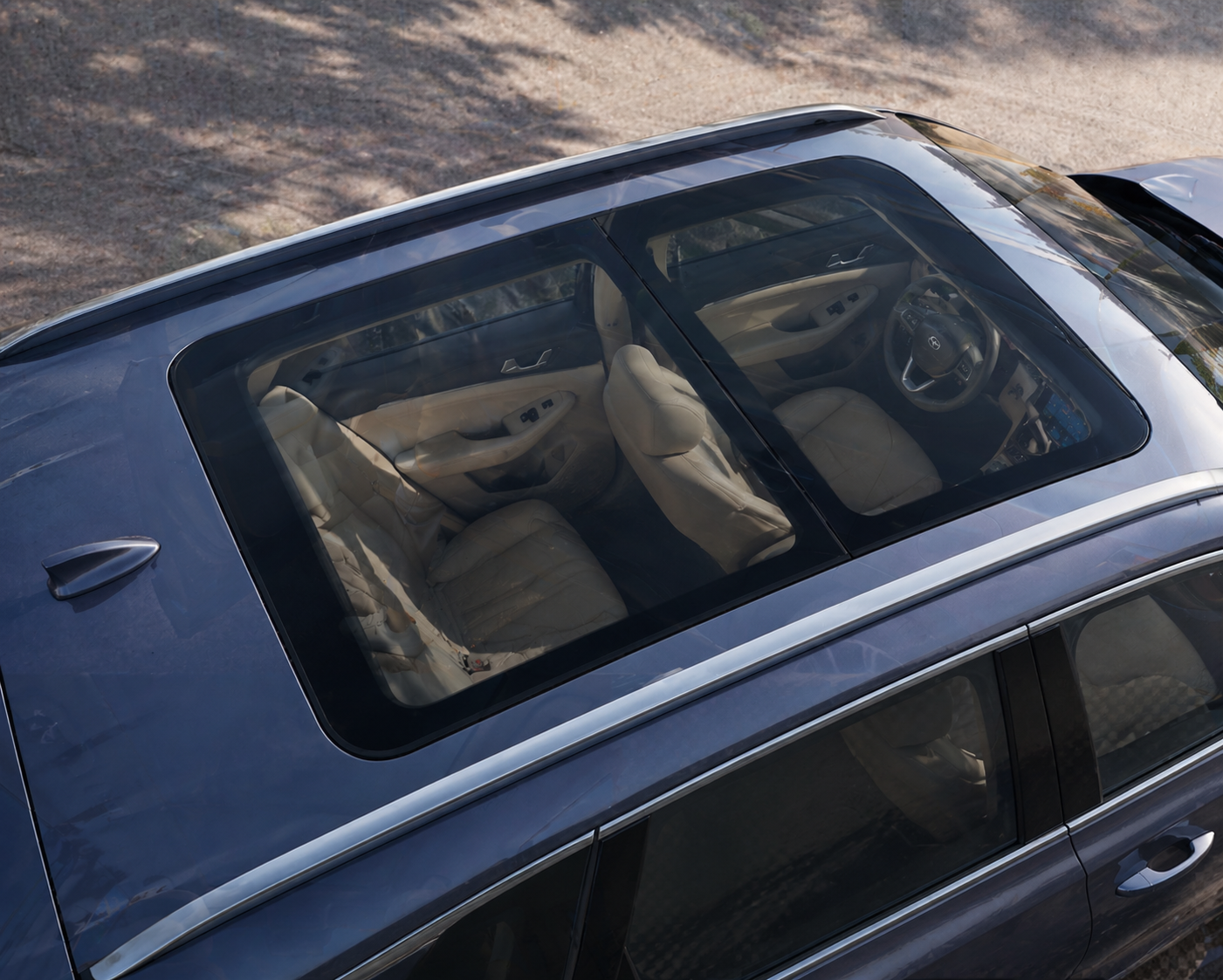
This specialized technology forms the foundation of advanced automotive product lines, including high-performance nano ceramic film variants designed for comprehensive cabin protection, specialized windshield film engineered for maximum front-window optical precision and heat rejection, and dedicated sunroof film optimized to handle the intense, vertical solar loads experienced by modern panoramic glass roofs. The structural uniformity of these nano ceramic matrices prevents heat accumulation within the glass, lowering localized thermal stress and drastically reducing the interior air conditioning workload.
Global Supply Chain and OEM/ODM Manufacturing Depth
Beyond the underlying science of the film layers, the ultimate differentiator among global suppliers is their operational manufacturing capacity and quality control infrastructure. Many exhibitors at trade events operate purely as conversion houses or private-label marketing companies that source raw master rolls from various unverified third-party factories, leading to severe batch-to-batch inconsistencies.
A true tier-one manufacturer operates as a comprehensive, vertically integrated global solution provider. Managing a production network that includes massive modern manufacturing bases, multiple advanced precision coating lines, and a dedicated internal research and development team allows for absolute control over every stage of production. From initial chemical formulation and PET base selection to precision coating, cleanroom lamination, curing, and global export packaging, every step is governed by international quality protocols like ISO and IATF standards.
This immense operational depth enables flexible, high-volume OEM/ODM manufacturing support for global distributors, franchise networks, and private labels across dozens of countries. Partners receive highly customized film solutions tailored to specific regional market trends, climate extremes, and tint compliance laws, backed by stable, repeatable factory-direct supply chains.
Conclusion
As the automotive aftermarket sector continues to evolve towards higher technical sophistication and digital integration, the reliance on unverified, non-factory suppliers presents a significant commercial risk for high-volume dealers and distributors. The insights gathered from global industry events like the SEMA Show clearly indicate that long-term market success belongs to companies that anchor their product lines in absolute manufacturing transparency and technological innovation. By consistently delivering zero-signal-interference nano ceramic matrices, exceptional optical clarity, and robust factory-direct OEM/ODM capabilities, a truly dedicated manufacturer establishes the definitive standard for premium automotive paint and glass protection solutions worldwide.
For more information regarding advanced global window film manufacturing solutions and wholesale product catalogs, please visit the official enterprise platform at https://www.ksbwindowfilm.com/
Media Contact
Dongguan Kashibang Film Materials Co., Ltd. ksbfilm@kashibang.com




