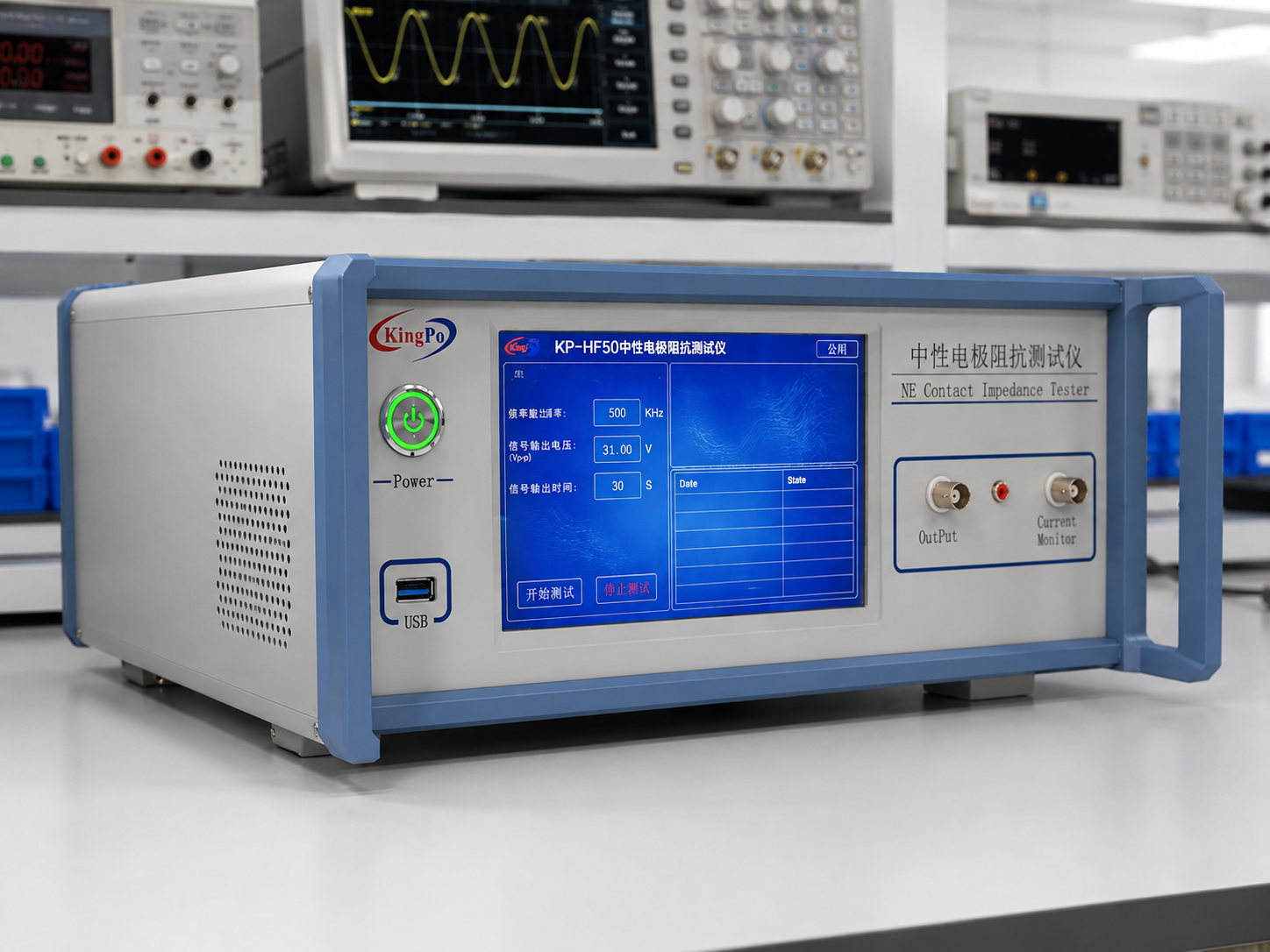
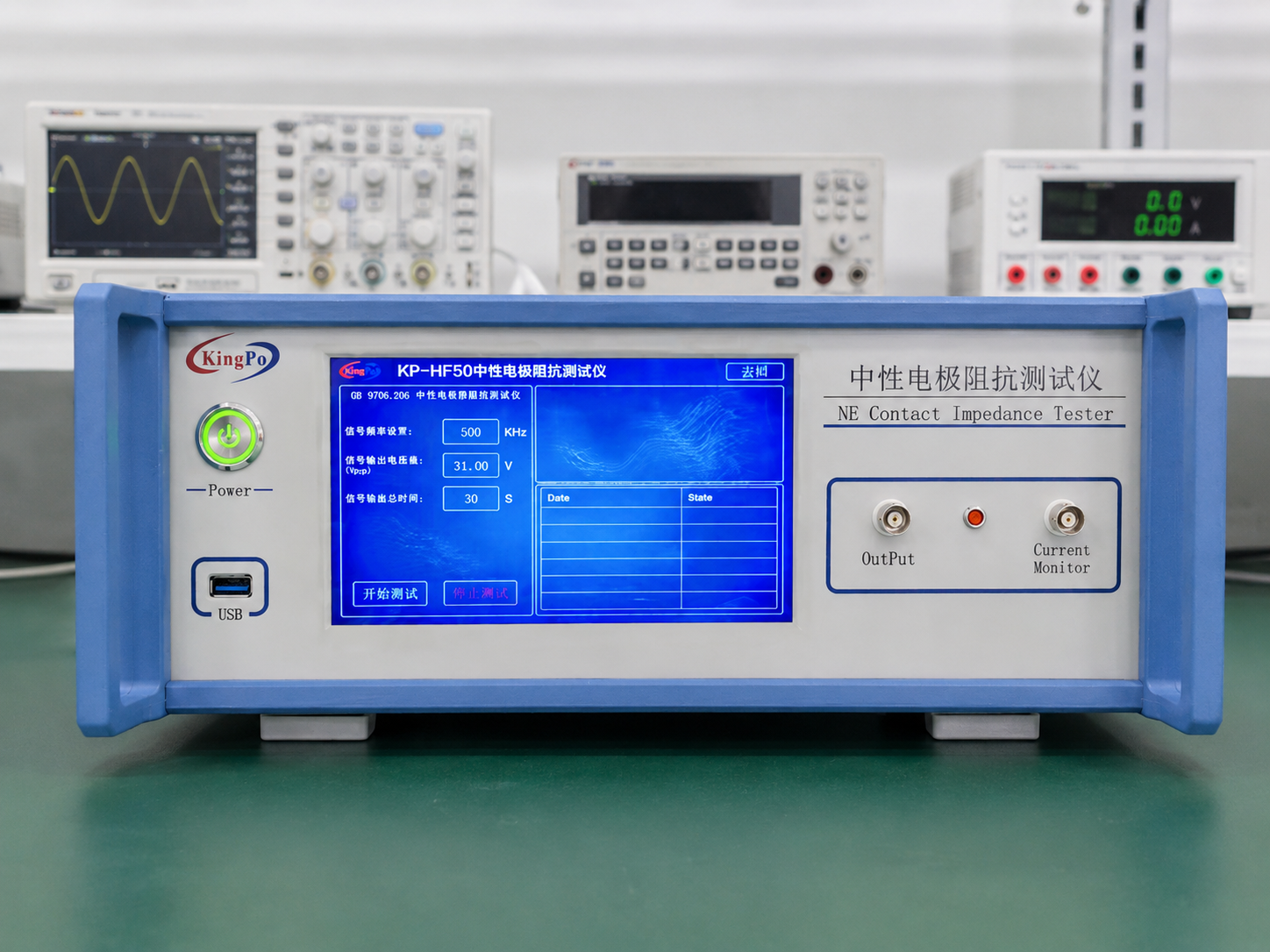
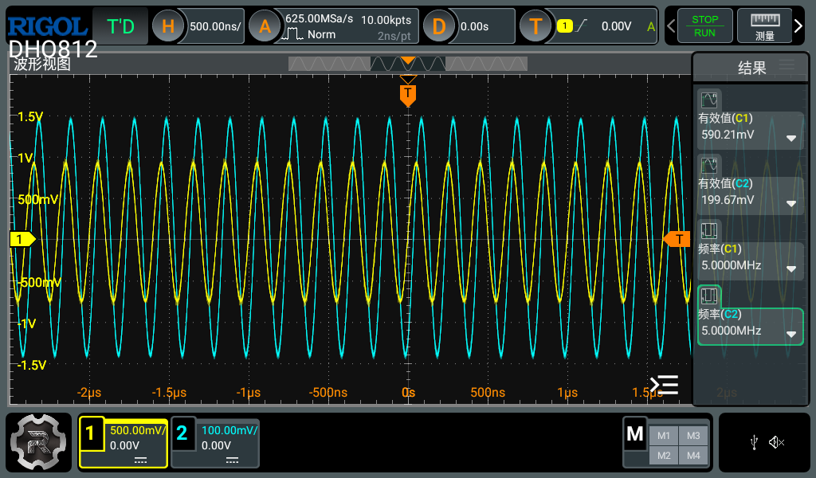
Dongguan, Guangdong Aug 27, 2026 (Issuewire.com) - KingPo Technology Development Limited has published a technical note examining the practical challenges involved in high-frequency contact impedance measurement of neutral electrodes used with high-frequency surgical equipment.
Neutral electrodes form part of the return-current path in electrosurgical applications. From a laboratory measurement perspective, however, their electrical behavior cannot always be represented adequately by a conventional DC resistance measurement.
At higher frequencies, electrode construction, cable capacitance, connection interfaces, fixture impedance, measurement bandwidth and parasitic effects can all influence the measured result.
For laboratories working with IEC 60601-2-2 testing and measuring equipment, the practical engineering question is therefore broader than simply selecting an ohmmeter:
How should a laboratory establish a repeatable high-frequency measurement chain for conductive and capacitive neutral electrodes?
Why DC Resistance Alone Does Not Describe High-Frequency Behavior
A neutral electrode and its associated connection system can be considered as a frequency-dependent electrical network rather than an ideal resistor.
In simplified form, electrical impedance may be represented as:
Z(f) = R + jX(f)
where resistance and reactance both contribute to the electrical behavior of the system.
For a predominantly capacitive element:
Xc = 1 / (2πfC)
As frequency increases, capacitive reactance decreases. Cable capacitance, electrode structure and the electrical connection between the conductive electrode area and its cable may therefore affect measurements differently at different frequencies.
A low-frequency or DC resistance measurement can still be useful for certain engineering checks, but it does not reproduce the high-frequency electrical conditions considered during neutral electrode contact impedance evaluation.
This distinction becomes important when laboratories attempt to reproduce a standards-based test method using general-purpose instrumentation.
Conductive and Capacitive Neutral Electrodes Require Different Evaluation
The required calculation also depends on the construction of the neutral electrode.
For a conductive neutral electrode, RMS high-frequency voltage and current can be used to determine contact impedance:
Z = V / I
For a capacitive neutral electrode, frequency must also be included when determining the corresponding contact capacitance.
In practical terms, laboratories should identify the electrode type before defining the measurement procedure.
Applying the same electrical parameter and calculation method to every neutral electrode design can result in misleading conclusions, particularly when the test object has significant capacitive characteristics.
The measurement chain should therefore be designed around the actual electrode construction rather than around a single generic resistance measurement.
Why Multi-Frequency Testing Matters
High-frequency electrical behavior may change across the relevant frequency range.
A measurement performed at only one frequency may not reveal effects associated with:
-
cable capacitance;
-
electrode construction;
-
conductor-to-cable connection;
-
fixture impedance;
-
parasitic capacitance;
-
test lead routing;
-
frequency-dependent characteristics of the return-current path.
A practical neutral electrode evaluation may therefore involve several measurement frequencies.
For the test method associated with IEC 60601-2-2:2017 Clause 201.15.101.6, the principal test points used by the KP-HF50 Neutral Electrode Contact Impedance Tester are:
-
200 kHz
-
500 kHz
-
1 MHz
-
2 MHz
-
5 MHz
Comparing measurements across multiple frequencies provides engineers with a more complete view of the electrical behavior of the electrode connection than a single-frequency result.
The Measurement Chain Matters as Much as the Signal Source
A high-frequency generator alone does not define a reliable test system.
A typical measurement chain may include:
HF source → neutral electrode under test → conductive metal plate or fixture → voltage/current measurement → data acquisition → calculation
Each element can contribute uncertainty or measurement error.
Measurement Bandwidth
An instrument that provides excellent accuracy at low frequency does not necessarily provide equivalent performance at several megahertz.
The bandwidth and measurement method of the voltage and current instruments should therefore be reviewed against the intended frequency range.
Cable and Fixture Effects
At high frequencies, test leads and fixtures are no longer electrically insignificant.
Cable length, routing, shielding, connector construction and fixture impedance may influence the observed result.
The laboratory should maintain a consistent test configuration when comparing samples.
RMS Measurement
The ability of an instrument to perform “True RMS” measurements does not by itself confirm suitability for multi-megahertz testing.
Laboratories should verify the specified RMS measurement bandwidth and accuracy under the actual waveform and frequency conditions.
Grounding and Shielding
Ground loops, unwanted coupling and electromagnetic interference can introduce additional uncertainty into high-frequency measurements.
Grounding and shielding should therefore be treated as part of the measurement system rather than as secondary installation details.
Repeatability
Electrode placement, connection pressure, test plate condition, cable orientation and fixture arrangement should be controlled where they can affect the measurement.
A technically correct instrument does not compensate for an inconsistent physical test setup.
Manual and Automated Test Workflows
For occasional engineering evaluation, the measurement procedure may be performed manually.
A technician can:
-
install the neutral electrode on the specified conductive test arrangement;
-
apply the first high-frequency test signal;
-
measure RMS voltage and current;
-
record the measurement values;
-
calculate contact impedance or capacitance;
-
change to the next required frequency;
-
repeat the measurement sequence; and
-
compare the results against the applicable test criteria.
This approach is practical when sample quantities are low.
For manufacturers, certification laboratories or R&D departments performing repeated multi-frequency measurements, however, manual operation can become inefficient.
Repeated frequency changes, transcription of measurement data, manual calculations and report preparation also introduce opportunities for operator error.
Automation can therefore be used to support frequency switching, measurement acquisition, calculation, data storage and reporting.
The objective is not simply to automate one instrument. It is to improve repeatability throughout the complete measurement workflow.
Practical Implementation for IEC 60601-2-2 Related Testing
For laboratories requiring a dedicated high-frequency source, KingPo developed the KP-HF50 for neutral electrode contact impedance and contact capacitance evaluation.
The system provides selectable sine-wave test signals at 200 kHz, 500 kHz, 1 MHz, 2 MHz and 5 MHz.
Its test output capability exceeds 200 mA RMS at loads of 50 Ω or below, with a maximum output voltage of 12 Vrms, approximately 36 Vpp.
For conductive neutral electrodes, measured RMS voltage and current can be used to determine contact impedance.
For capacitive neutral electrodes, the corresponding measurement data and frequency can be used to calculate contact capacitance.
Touchscreen control is provided for laboratory operation, while optional PC-based software can support automatic frequency switching, data acquisition, impedance or capacitance calculation and test report generation.
The final test configuration should nevertheless be based on the applicable standard edition, electrode design, measurement instrumentation, required accuracy, calibration scope and laboratory test procedure.
No individual test instrument should be treated as a substitute for reviewing the requirements of the applicable standard and the complete measurement chain.
From One Test Item to a Broader Medical Electrical Safety Laboratory
Neutral electrode contact impedance represents only one element of high-frequency surgical equipment and medical electrical safety evaluation.
KingPo's medical electrical test equipment portfolio supports a wider range of laboratory applications, including:
-
IEC 60601 series medical electrical safety testing;
-
high-frequency surgical equipment evaluation;
-
electrosurgical output analysis;
-
neutral electrode impedance and thermal performance testing;
-
ECG electrode performance evaluation;
-
defibrillator and defibrillation-related testing;
-
dielectric strength and electrical safety testing;
-
active implantable medical device testing;
-
ISO 80369 medical connector testing; and
-
specialized medical device test fixtures and automated systems.
These applications frequently require more than a standalone instrument. A complete laboratory setup may involve signal sources, analyzers, mechanical fixtures, reference components, measurement instruments, software, calibration planning and application-specific integration.
Standards-Based Testing Beyond Medical Devices
KingPo's engineering scope is not limited to medical electrical equipment.
The company's broader IEC, ISO and UL testing equipment portfolio includes laboratory solutions for:
Ingress Protection Testing
IEC 60529 and ISO 20653 water and dust ingress testing, including IPX1 through high-pressure and high-temperature water testing applications.
Household Appliance Safety
IEC 60335 series probes, fixtures, mechanical tests, abnormal operation tests and other product safety equipment.
Electrical and Electronic Equipment Safety
Test solutions associated with IEC 62368, IEC 61010 and other electrical safety standards.
Automotive Component Testing
Environmental, water ingress, mechanical and electrical testing for automotive components, including ISO 16750-related applications.
Battery Safety Testing
Mechanical shock, vibration, impact and other battery safety test configurations.
EMC and Electrical Immunity Testing
IEC 61000-4 series equipment including surge and electrical transient test systems.
Environmental and Mechanical Testing
Temperature, humidity, water, dust, impact, mechanical strength and other environmental or physical test conditions.
KingPo also develops customized fixtures, integrated test stations and automated test systems when a standard test method cannot be implemented efficiently using a single off-the-shelf instrument.
About KingPo Technology Development Limited
KingPo Technology Development Limited develops and manufactures specialized testing equipment for international product safety and compliance standards.
The company serves testing laboratories, certification organizations, manufacturers, R&D departments and quality-control teams working with IEC, ISO, UL, EN and related technical requirements.
Its engineering activities cover individual test instruments, standard-specific fixtures, integrated test systems, automation, test-method implementation and customized laboratory configurations for medical electrical equipment, electronics, household appliances, automotive components, batteries, ingress protection and other regulated product categories.
Rather than focusing only on individual products, KingPo works with laboratories to translate standard requirements into practical, measurable and repeatable test configurations.
Media Contact
Dongguan Kingpo Instrument Co., Ltd. sale2@kingpo.hk 8681117871 No. 9 University Road, Songshan Lake, Dongguan City, Guangdong 523770, China https://www.dgkingpo.com/