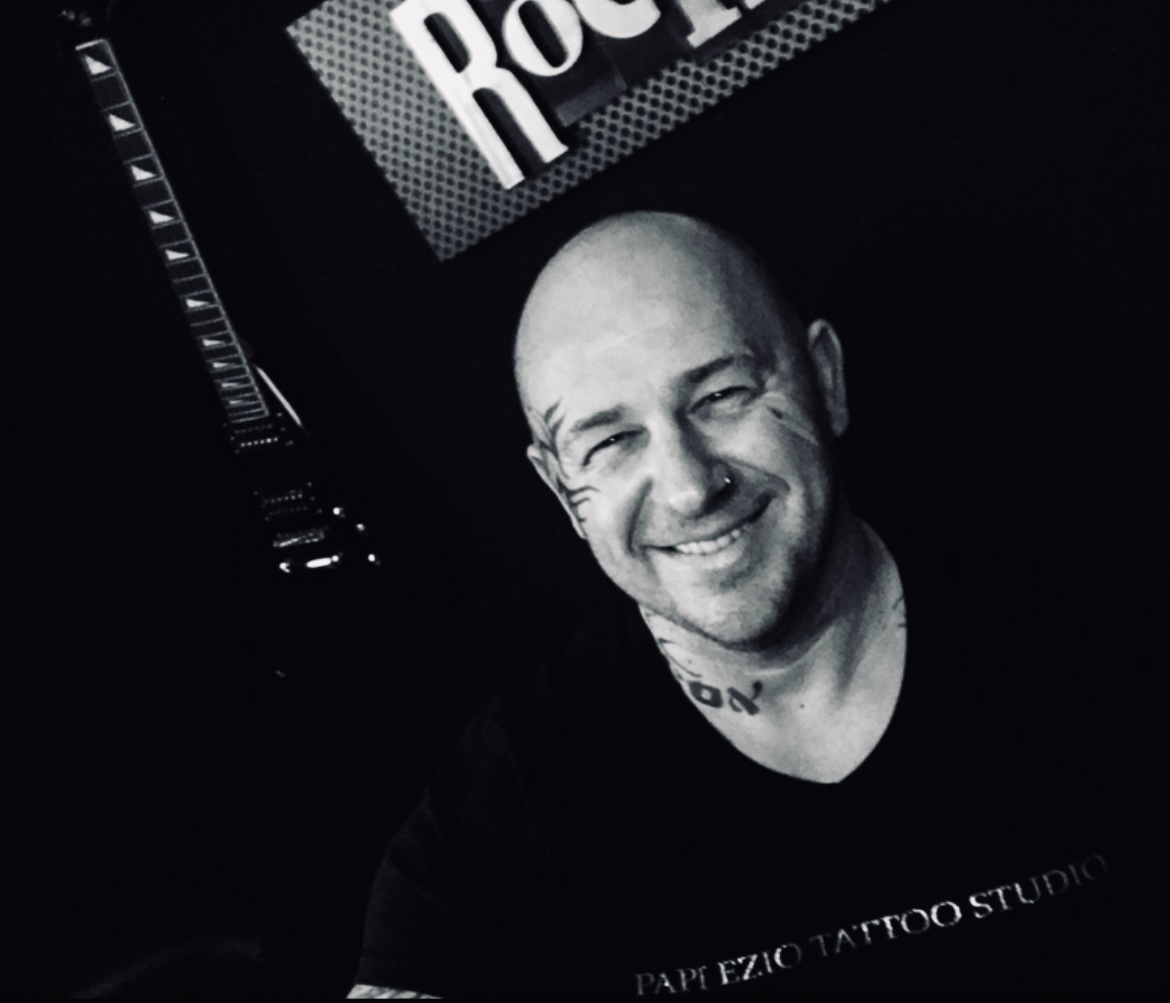
Toulouse, Haute-Garonne Oct 8, 2026 (Issuewire.com) - Indi Art Culture, the independent label dedicated to independent artists and their audiences, announces the release of "Deep Soul Tears," the new single by French composer and producer Laurent Oleff, and the lead single of his upcoming EP "Brothers," out November 6, 2026.
Some songs are written. This one was survived.
The record was born in the eye of an inner storm, after the death of Laurent Oleff's own brother: grief that stayed frozen for a long time, until it became fuel. Every piano chord, every measure, and every note was written to hold an impossible conversation with the one who is gone.
But the story does not end there. It turns.
To give his grief a voice, his own wouldn't be enough. He needed grain—a life story etched into the vocal cords. Digging through the archives of 1960s and 1970s Deep Soul, he found it in a recording history too often forgotten: "Poor Boy" by Clarence Murray. When he layered that voice over his composition, the connection was immediate, almost unsettling: a crack in the voice, naked vulnerability—the very sound of grief. That voice became the interpreter of his own feelings, and "Deep Soul Tears" was born.
Then came the discovery that no one could have scripted. Once the composition was complete, Oleff went back to the archives for the voices that would carry the rest of the EP, sifting through thousands of forgotten tracks. He refused to look at titles or artist names. He only wanted to feel. Four songs survived the cut. And when he finally read the name behind the fourth voice that had floored him, it was Mickey Murray—Clarence Murray's own brother.
Out of hundreds of thousands of recordings, a grieving brother in France had blindly chosen the voice of a soul singer's brother—reuniting, without ever knowing it, two forgotten brothers of Deep Soul inside the music of a man mourning his own.
"I was writing this EP to heal from losing my own brother—and without knowing it, I was reuniting in music the voices of two forgotten brothers of Deep Soul. Is that really a coincidence? I don't think so."
America knows these voices—even if it had forgotten where they came from. Clarence Murray, from Macon, Georgia—the same city that gave the world Otis Redding—sang gospel before turning to soul, leaving behind deep soul recordings like "Poor Boy," the very song at the heart of this tribute. His brother Mickey Murray, whose voice was often compared to Otis Redding's, scored a million-selling hit in 1967 with "Shout Bamalama"—a song Otis himself had written—opened for Aretha Franklin at the Apollo Theater and toured with the likes of Wilson Pickett and The Staple Singers before cutting the album "People Are Together" (1970), later rediscovered and reissued for a new generation of listeners. Clarence passed away in 2011. Through "Deep Soul Tears," France hands their legacy back to America—and the tribute is built with respect: the track is built on an officially licensed sample of Clarence Murray's "Poor Boy," cleared through Tracklib, with royalties flowing to the song's original writers, Willie Murray and Melvin Mims.
The tribute has already reached those it honors. When Laurent Oleff shared "Deep Soul Tears" with the Murray family, they listened—and received the song with deep emotion, hearing the voices of their own carried forward across the decades and across the ocean by an artist from France.
Musically, "Deep Soul Tears" is cinematic soul: sweeping orchestrations colliding with deep basslines and modern textures, carried by two voices etched by lived experience. Anger, melancholy, release—the architecture of grief, turned into timeless beauty.
Laurent Oleff is no newcomer chasing a trend: he has lived music for more than forty years, made his name composing for picture media, short films, and sound identities, and recently worked for the French daily La Dépêche du Midi, and steps out from behind the screen with this project, his story, and his own. Fully independent, he writes, produces, mixes and masters everything himself and even designed and animated the music video.
The song is already crossing borders—fast. In less than ten days, "Deep Soul Tears" found an audience in eight countries across four continents. In France, La Dépêche du Midi, a regional daily averaging 792,000 readers per print issue (ACPM-certified), ran a half-page feature on the loss behind the EP, hailing the composer as an "orfèvre du son"—a goldsmith of sound—whose work reaches an "almost mystical dimension." In the United States, Shindig Music (Arkansas) and Foxfire Magazine, which praised the track's intimacy and cinematic texture steeped in American musical culture, have already published features, with more to come from the Los Angeles scene: Breaking Sound Radio, Pump It Up Magazine, and its station KPIU. Across the English-speaking world, Lyrical Odyssey wrote that Laurent Oleff "faces loss without softening the edges." On the air, the track has been played in France (Radio Fajet, RCN), the United Kingdom (Good Music Radio, Raw Radio), Italy (Unica Radio, the country's first university radio station on DAB+), and Kampala, Uganda (Ejazz Radio). It also features in editorial playlists in Montreal (Baron Mag), Los Angeles (Pump It Up Magazine), and Italy (Salotto Musicale), alongside published coverage in Italy (SoundsGood WebZine) and Brazil (Revista Arte Brasileira), with more promised in Chile and across Brazil's independent music network.
From regional daily press to community and university radio, from independent blogs to web radio, this welcome proves the point: a soul song born from one brother's grief in France now carries the voices of two American brothers home—and the world is listening.
Discover "Deep Soul Tears" by Laurent Oleff.
And this is only the first chapter. The EP "Brothers" arrives on November 6, 2026: a universal story of love, loss and rebuilding oneself through music—and an invitation for every listener to sit with their own ghosts and let the voices of Clarence and Mickey Murray answer. To explore Laurent Oleff's wider work as a composer and producer, visit his artist website.
ABOUT THE LABEL :
Indi Art Culture is an independent media and label ecosystem bringing together an interactive cultural magazine, the international web radio InDi RaDio, and a community platform dedicated to independent artists and their audiences. Founded by Alexandra Debon (Mélodie Alex. Patrick), an independent artist who broadcasts internationally, Indi Art Culture promotes and defends the rights of independent artists worldwide. Its founder was welcomed at the Élysée Palace for an economic innovation and was named Role Model LGBTQI+ 2022 in the Executive category—a distinction awarded under the high patronage of the Presidency of the French Republic, together with the association L'Autre Cercle.
PRESS CONTACT :
Indi Art Culture—Press Office, Alexandra Debon
Email: presse@indi-art-culture.com
Phone: +33 4 81 09 51 52
Label website: www.indi-art-culture.com
For review copies, broadcast-quality downloads and interviews, contact the press office.
Media Contact
Whisper and Map - Indi Art Culture a.debon@whisper-and-map.com +33481095152 11 Ter Rue Jean Jaurès https://www.indi-art-culture.com