Shenzhen, Guangdong May 22, 2026 (Issuewire.com) - The rapid evolution of portable electronics, electric mobility, and renewable energy storage has led to a surge in demand for power sources. At the heart of this technological shift is the rechargeable battery—a sophisticated electrochemical system capable of multiple charge and discharge cycles. Driven primarily by lithium-ion, lithium polymer, and lithium iron phosphate (LiFePO4) chemistries, these power cells are the engines of modern innovation. As the world transitions toward a greener economy, the role of a Custom Rechargeable Battery Supplier from China has shifted from mere manufacturing to high-level engineering partnership. In this competitive landscape, the focus has moved beyond energy density and cost-efficiency to the most critical pillar of battery technology: safety. For global enterprises, sourcing from China is no longer just about scale; it is about finding a partner that integrates rigorous international safety standards into every stage of the customized production process.
The Global Perspective: Safety as the Foundation of Energy Innovation
In the contemporary energy market, the "safety first" mantra is more than a regulatory requirement—it is a fundamental business necessity. High-performance lithium batteries pack significant energy into compact volumes, making thermal management and structural integrity paramount. A single failure in a medical device or a 3C consumer electronics can lead to significant liability and irreparable brand damage.
Recognizing this, Shenzhen Pknergy Energy Co., Ltd (Pknergy) is a sophisticated energy solution specialist rather than a traditional high-volume manufacturer. Established in 1998, the company has spent over two decades navigating the complexities of lithium chemistry. By aligning its operational DNA with global compliance, the organization bridges the gap between the cost-advantages of Chinese manufacturing and the stringent safety expectations of the Western market. This strategic alignment ensures that custom battery packs are not only functional but are inherently resilient against the risks of Thermal Runaway—a dangerous state where an internal short circuit or physical damage triggers a self-sustaining increase in temperature, leading to fire or explosion. By understanding this phenomenon, Pknergy integrates multi-layered safety vents and fire-retardant materials to prevent a single cell failure from cascading into a systemic hazard.
Decoding the Value of UL Certifications in Battery Engineering
For a battery supplier, achieving Underwriters Laboratories (UL) certification is a testament to engineering discipline and safety leadership. In the North American market and increasingly worldwide, UL standards represent the gold standard for product safety. However, obtaining these certifications is an arduous process characterized by high technical barriers and significant R&D investment. The primary difficulty lies in the destructive nature of the testing; even a minor deviation in cell chemistry or internal resistance can lead to catastrophic failure during the "Abuse Tests," requiring a complete redesign of the battery architecture. Pknergy’s commitment to these benchmarks is reflected in its adherence to specific protocols that address different layers of battery architecture:
- UL 1642: Component-Level Integrity
This standard focuses exclusively on the safety of individual lithium battery cells. To achieve this certification, cells undergo extreme abuse testing, including external short circuits, abnormal charging, crushing, and impact tests. One of the inherent challenges here is the "Thermal Runaway" threshold; maintaining stability under such intense stress requires high-purity raw materials and precision manufacturing, as even microscopic impurities can act as latent defects that cause failure under test conditions.
- UL 2054: System-Level Protection
While UL 1642 covers the cell, UL 2054 applies to the entire battery pack. It evaluates the protective circuitry (BMS) and the synergy between all internal components. A common engineering bottleneck in UL 2054 is the "Single Fault Analysis," where the system must remain safe even if a critical component fails. This necessitates a sophisticated and redundant BMS design, significantly increasing the complexity of the custom engineering process.
- Risk Mitigation and Market Access
Beyond technical safety, these certifications serve as a vital business passport. By utilizing UL-certified batteries, original equipment manufacturers (OEMs) can significantly reduce the risk of catastrophic product failures and costly recalls. While the high cost and long lead times of the certification process can be a deterrent for some suppliers, they act as a filter that separates high-tier manufacturers from those with inconsistent quality control.
- Global Compliance Reliability
Integrating UL-certified components into custom designs provides a layer of legal and financial security. It lowers insurance liabilities for end-users and demonstrates a brand's commitment to international quality standards, fostering long-term trust between the supplier and the global enterprise.
Engineering Power: The Scope of Depth-Customization
Customization in the battery industry involves more than just changing the physical dimensions of a plastic casing. It requires a deep understanding of the application's duty cycle, environmental conditions, and discharge profiles. As a specialist in multiple lithium-based chemistries, Pknergy provides a versatile engineering palette for diverse industries:
- Lithium-Ion (Li-ion) and Polymer: Ideal for high-energy-density requirements in smart wearables, drones, and portable medical equipment where space is at a premium.
- Lithium Iron Phosphate (LiFePO4): Known for its exceptional thermal stability and long cycle life, this chemistry is the preferred choice for industrial equipment, light electric vehicles (LEV), and high-reliability backup power modules.
The customization process is a full-stack service. It begins with the selection of the chemistry and moves into the development of a tailored Battery Management System (BMS). The BMS acts as the brain of the battery, monitoring voltage, current, and temperature to ensure the pack operates within its Safe Operating Area (SOA). Whether it is a 3.7V 4400mAh pack for a handheld device or a high-capacity LiFePO4 bank for commercial storage, the integration of smart BMS technology ensures that the hardware remains protected against overcharge and over-discharge.
Vertically Integrated Production and Quality Assurance
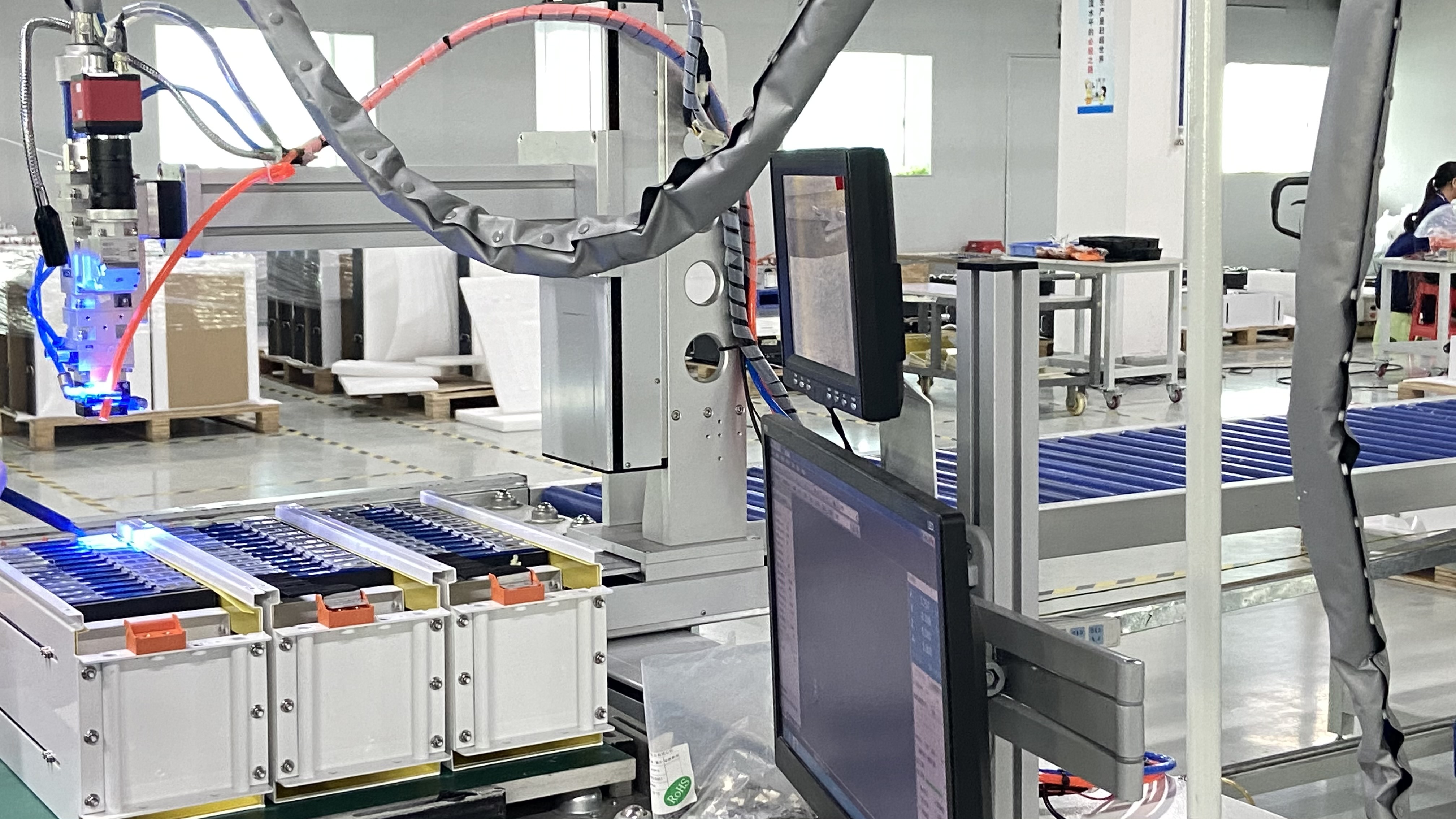
Maintaining the integrity of a UL-certified design requires absolute control over the manufacturing environment. Operating out of a massive 28,000-square-meter production base, the manufacturing philosophy is centered on vertical integration and automation. This scale allows for the consistent application of quality control measures that smaller, fragmented suppliers often struggle to maintain.
The quality assurance journey at Pknergy is defined by a 16-step inspection process, with the most critical factor being the exclusive use of Grade A cells. Unlike lower-grade alternatives (Grade B or C), which often exhibit a 20-30% faster capacity decay and significant internal resistance deviation, Grade A cells provide the uniformity necessary for complex packs. These premium cells maintain over 80% capacity even after 2,000 to 5,000 deep cycles (chemistry dependent), whereas lower-grade cells may fail prematurely due to "voltage imbalance," a leading cause of localized overheating in multi-cell configurations.
Strategic Trust in the Global Supply Chain
The modern supply chain demands a balance between technical excellence and economic viability. By leveraging the comprehensive ecosystem of the Chinese electronics industry while adhering to international safety frameworks, Pknergy offers a competitive advantage to its global partners. The company has evolved into one of the top lithium battery solution providers by focusing on long-term reliability rather than short-term gains.
Building a partnership with a custom battery supplier is an investment in the future of a product line. It requires a collaborator who understands that a battery is not just a component, but the lifeblood of the machine it powers. For businesses looking to navigate the complexities of renewable energy and portable power, the combination of two decades of experience, state-of-the-art production facilities, and a portfolio of international certifications provides a stable foundation for growth.
To learn more about tailored energy solutions and international safety standards, please visit: https://www.pknergy.com/
Media Contact
Shenzhen Pknergy Energy Co., Ltd sales@pknergy.com +86 13902461252 902, Tower B, Hongrongyuan North Station Center, North Station Community, Minzhi Street, Longhua District, Shenzhen, China http://www.pknergy.com




