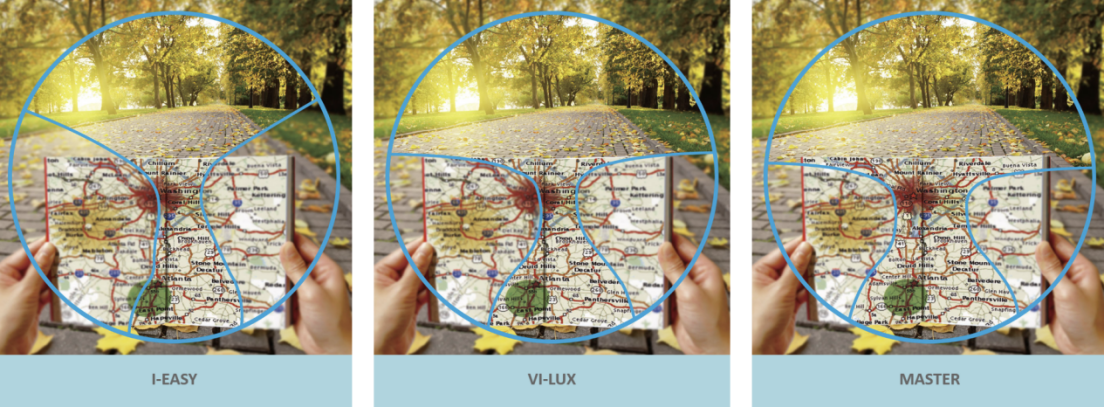

Zhenjiang, Jiangsu May 11, 2026 (Issuewire.com) - From lab to market , the transformation represents a sophisticated fusion of optical physics and real-time digital precision. At the heart of this evolution are Advanced Digital Progressive Lenses Solutions, which have redefined the visual experience for presbyopic patients across diverse demographics. By leveraging state-of-the-art freeform technology and high-purity polymers, modern optical laboratories can now produce lenses that offer seamless transitions across all focal points, ensuring that high-performance optics are accessible on an international scale without the compromise of traditional distortion patterns.
The Architectural Foundation of Digital Progressive Optics
The journey from a controlled laboratory environment to a wearer’s daily life involves a complex interplay of design philosophy and mechanical execution. Digital surfacing, often referred to as freeform technology, allows for the mathematical optimization of lens surfaces at thousands of individual coordinates. This microscopic level of control is what differentiates modern digital solutions from their mass-produced, semi-finished predecessors.
a. Theoretical Framework of Digital Surfacing and Point-of-Wear Optimization
The "Digital" aspect of these solutions refers to the CAD/CAM (Computer-Aided Design and Computer-Aided Manufacturing) processes that guide diamond-point cutting tools with sub-micron accuracy. Unlike traditional casting, which utilizes fixed molds, digital surfacing incorporates "Point-of-Wear" variables. This includes the unique physiological data of the wearer—such as vertex distance (the distance from the back of the lens to the cornea), pantoscopic tilt (the angle of the frame front), and the wrap angle of the chosen frame. By calculating the optical path for every angle of eye rotation, manufacturers ensure that the "Lab" quality is maintained even when the product reaches a "Global Market" with varying frame styles and facial structures.
b. The Progression of Multi-Focal Geometry and Aberration Control
Progressive lenses have historically struggled with peripheral astigmatism, often manifesting as a "swim effect" that causes discomfort during lateral head movements. The evolution of progressive geometry focuses on a sophisticated distribution of power. Advanced algorithms now allow for the "softening" of the lens design, where the transition between distance, intermediate, and near zones is fluid rather than abrupt. By managing the rate of change in surface curvature, digital solutions minimize non-functional astigmatism at the edges of the corridor, creating a wider, more stable viewing field that mimics the eye's organic visual process.
Technical Innovation and Manufacturing Excellence
Achieving consistent quality in high-volume production requires a rigorous adherence to international engineering standards. Universe Optical has established a benchmark in this sector by integrating German technical rigor with global logistics capabilities. The synergy between high-end raw materials and precision surfacing equipment determines the ultimate clarity, weight, and longevity of the lens.
c. Core Competencies in Precision Engineering and Hardening Systems
The manufacturing cycle utilizes world-class infrastructure from industry leaders such as Schneider, SCL, Leybold, and MEI. These systems are essential for executing the Eyeplus and Vi-Lux series, which require extreme surface regularity. For instance, the high-vacuum thin-film deposition process provided by Leybold equipment allows for the application of multi-layered AR (Anti-Reflective) coatings. These layers are engineered to manage light transmission at specific wavelengths, reducing glare while increasing the contrast of digital screens and night driving environments. Furthermore, the integration of automated SCL cleaning systems ensures that substrates are free of microscopic contaminants before the bonding process, virtually eliminating the risk of coating delamination.
d. Performance Parameters, Refractive Indices, and Material Science
The efficacy of a digital progressive lens is heavily dependent on its material properties, specifically the balance between refractive index and the Abbe value. Utilizing authorized PPG CR39 materials and premium high-index polymers—ranging from 1.61 and 1.67 to the ultra-thin 1.74—these solutions offer significantly reduced center and edge thickness. A higher refractive index allows for a flatter lens profile, which is aesthetically preferable and reduces the magnification effect on the wearer's eyes. Additionally, technical enhancements such as Blue-cut monomers are integrated directly into the lens matrix rather than applied as a surface coating, providing permanent protection against high-energy visible (HEV) blue light. Coupled with advanced photochromic technology, these lenses react dynamically to UV intensity, ensuring consistent visual comfort in both indoor and outdoor environments.
Global Integration and Quality Assurance
The transition to a global market necessitates more than just technical capability; it requires a robust quality management framework that translates across borders. Adherence to ISO 9001, CE, and FDA standards ensures that every lens batch meets the stringent safety and performance requirements of top-tier eyewear brands. By maintaining a Rodenstock-certified RX lab and acting as a primary distributor for PPG materials, a manufacturer bridges the gap between raw chemical innovation and the finished medical device.
Through continuous investment in Research and Development, the industry is moving toward "AI-driven" lens design, where machine learning analyzes millions of wearer data points to predict the most comfortable progression corridors for specific age groups. The focus remains on shortening the adaptation period—often reducing it from weeks to hours—and providing specialized solutions for modern lifestyle needs. As digital precision continues to evolve, the boundary between the specialized laboratory and the global consumer continues to shrink, resulting in vision correction that is as unique as the individual.
For more information on advanced lens technologies and global distribution, please visit: https://www.universeoptical.com/
Media Contact
UNIVERSE OPTICAL MFG. CO., LTD Info@universeoptical.com