Xianggang, China Jul 24, 2026 (Issuewire.com) - How modern financial infrastructure helps businesses build better payment experiencesThe way businesses deliver financial services is changing.In the past, companies often depended on traditional financial institutions for accounts, payment tools and card services. Building these capabilities internally required significant resources, technical expertise and compliance knowledge.Today, more businesses are looking for a faster and more flexible approach.Through modern financial infrastructure, companies can integrate payment, account and card capabilities directly into their own products and services. This allows businesses to create better financial experiences for their customers without building every financial function from the ground up.This shift is commonly known as embedded finance.From Traditional Banking to Embedded Finance
Traditional financial services usually follow a direct relationship:Bank → Business or IndividualBanks provide accounts, payment services and financial products directly to customers.Embedded finance introduces a different model:Financial Infrastructure → Business → End UserIn this model, businesses remain the main point of interaction with customers, while the underlying financial capabilities are supported by infrastructure providers.For example:
- A digital wallet can provide payment cards to its users.
- A fintech platform can offer account services within its application.
- A Web3 company can connect digital assets with everyday payment experiences.
The user interacts with a familiar platform, while the financial infrastructure operates behind the scenes.Why Businesses Need Financial InfrastructureAs businesses become more global, their financial needs are becoming more complex.Companies may need to support customers across different countries, manage multiple currencies, provide payment access and connect traditional financial systems with digital assets.Building these capabilities independently can be challenging. Businesses need to manage areas such as:
- Payment connections
- Account management
- Card issuance
- User verification
- Compliance requirements
- Transaction monitoring
For many companies, developing these capabilities internally requires significant investment and ongoing operational effort.This is why more businesses are adopting Banking-as-a-Service (BaaS) and Card-as-a-Service (CaaS) solutions.Instead of building every financial function themselves, businesses can work with infrastructure providers and focus on their own products, customers and growth.Supporting Businesses That Serve Their Own Users
Interlace is designed for businesses that want to build and manage financial products more efficiently.Interlace works with businesses, including fintech companies, digital platforms and Web3 companies that want to add financial capabilities to their products.However, the users of these products can also be individuals.For example, a digital wallet company may want to provide payment cards to its users. A fintech platform may want to create account services inside its application. A Web3 company may want to connect digital assets with real-world payment solutions.This creates a B2B2C (Business-to-Business-to-Consumer) model, where in a typical Gateway or Distributor setup, Interlace provides the underlying financial infrastructure, while the business operates the customer-facing platform and manages its downstream relationships under the agreed onboarding and compliance model.
This approach allows companies to launch financial services without building every regulated and technical component from the ground up. Compliance, fund management and end-user onboarding responsibilities vary by integration model and jurisdiction.
How Interlace Enables Embedded Financial Experiences
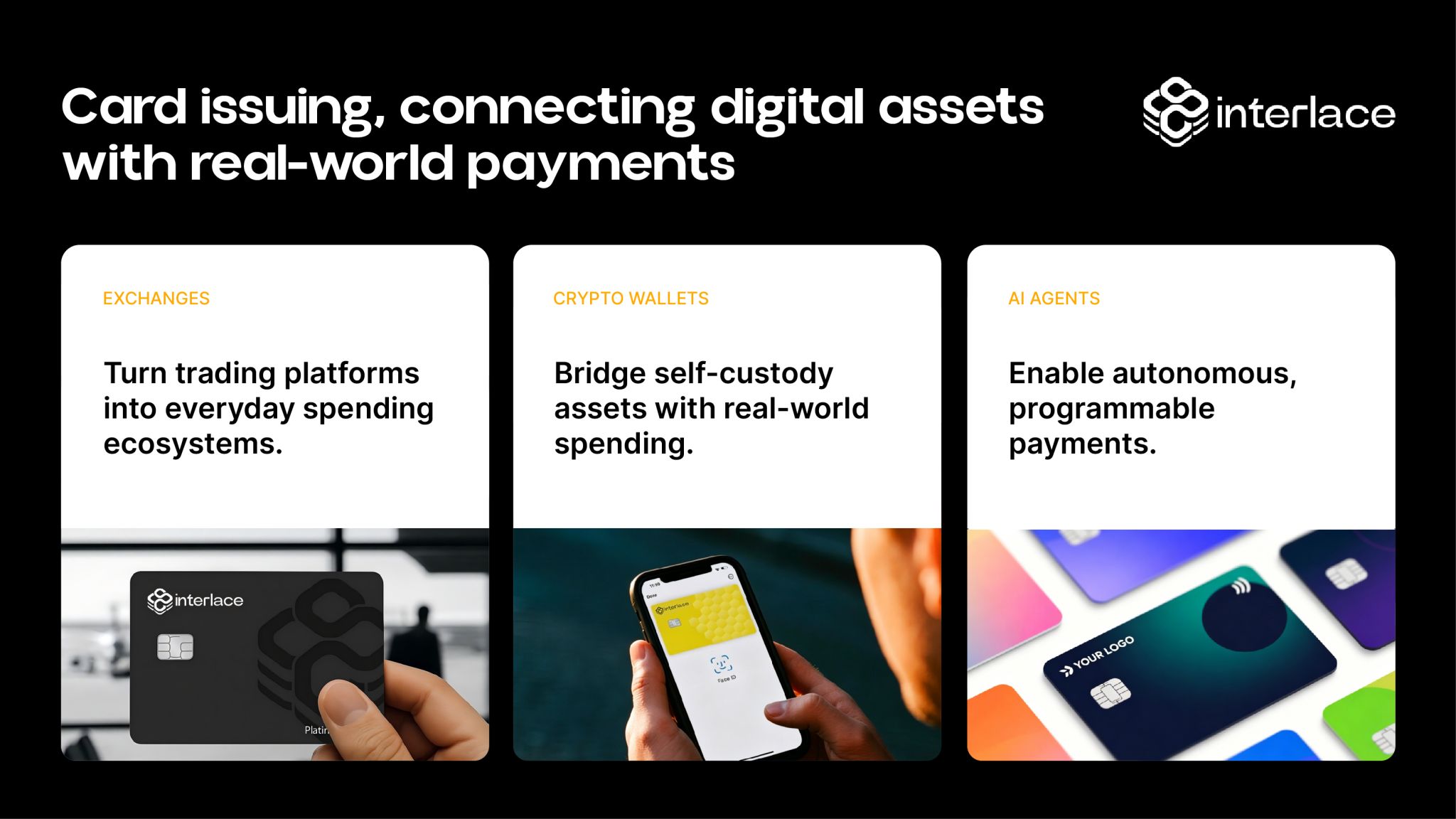
Interlace provides businesses with the infrastructure needed to build modern payment experiences.Through Interlace Infinity, businesses can issue and manage physical and virtual cards with spending controls and real-time visibility. Through Interlace’s broader BaaS and CaaS infrastructure, companies can also integrate account, payment and card capabilities into their own products. This gives companies more flexibility when designing financial services. Instead of relying on disconnected solutions, businesses can build more complete payment experiences through a unified infrastructure.For companies operating across multiple markets, this can help simplify financial operations and create more consistent payment experiences.The Future of Financial ServicesFinancial services are becoming more connected and accessible.In the future, many users may not think about the financial infrastructure behind the products they use. They may simply use a wallet, platform or application that already includes payment and account capabilities.For businesses, the opportunity is not only about offering payment services. It is about creating better products by integrating financial functions into everyday experiences.Companies that can provide simple, secure and flexible financial solutions will be better positioned to serve global customers.Key TakeawayEmbedded finance is changing how businesses deliver financial services.Companies no longer need to build every financial capability internally. With the right infrastructure partner, they can integrate accounts, cards and payment services into their own products.Through its global financial infrastructure, Interlace helps businesses integrate accounts, cards and payment capabilities into their platforms, making it easier to build and scale financial services across markets.
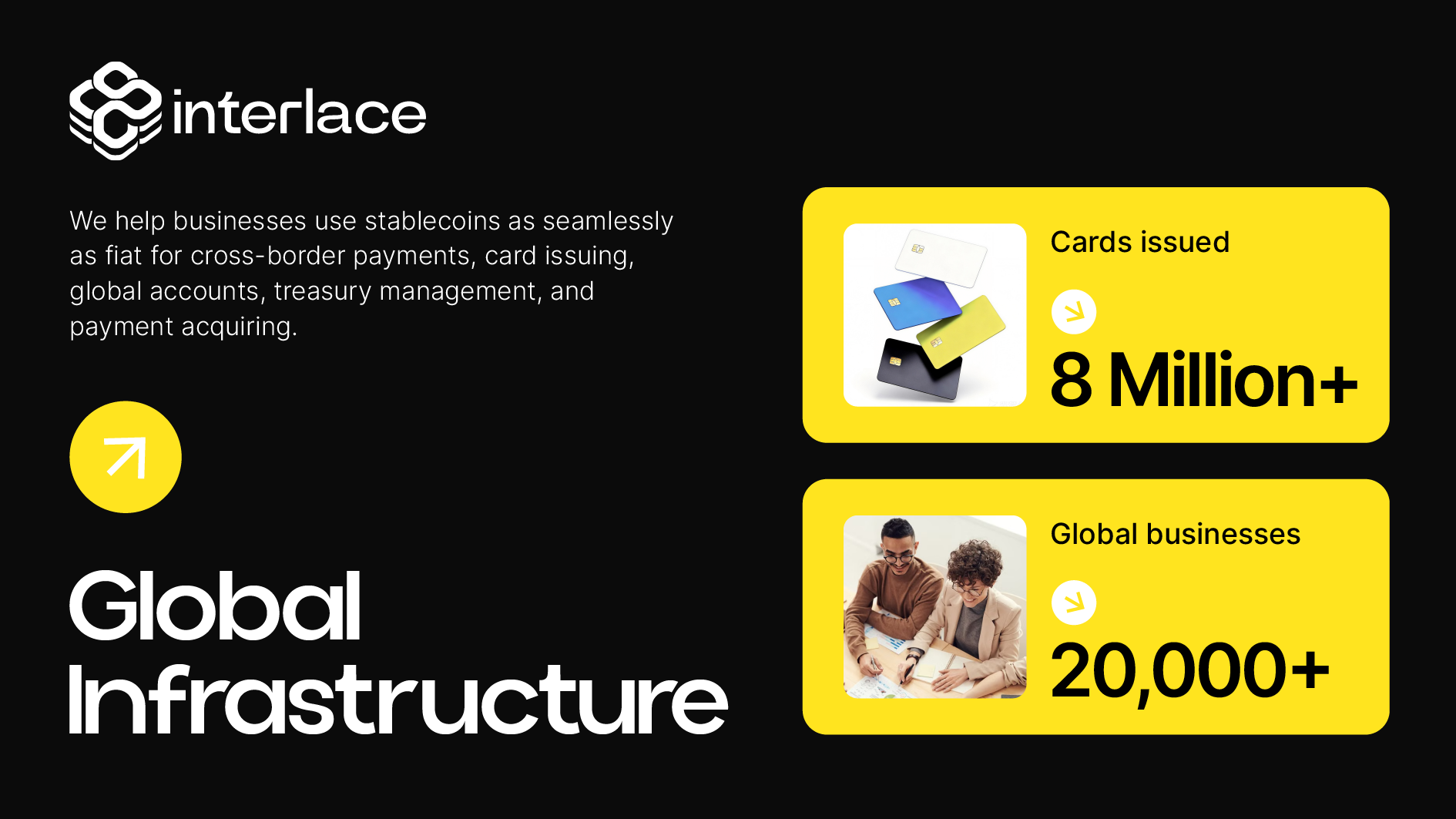
About InterlaceInterlace is building stablecoin banking infrastructure that connects on-chain assets with real-world financial rails. We help businesses use stablecoins as seamlessly as fiat for cross-border payments, card issuing, global accounts, treasury management, and payment acquiring. Our core strength is card issuing infrastructure. As a principal member of major card networks, Interlace enables exchanges, wallets, fintech platforms, brokers, and financial institutions to launch white-label card programs through API in weeks rather than months. We support customized card design, virtual and physical cards, Apple Pay, Google Pay, and flexible program setup. Founded in 2019, Interlace now has more than 120 employees across Singapore, Hong Kong, the U.S., and Japan. We process over US$10 billion in annual volume, serve more than 20,000 business customers, and have issued over 8 million cards globally.
Website: https://www.interlace.money
LinkedIn: https://www.linkedin.com/company/interlace-money/
X: https://x.com/InterlaceMoney
Media Contact
Interlace brand@interlace.money