Barnet, Hertfordshire Jul 16, 2026 (Issuewire.com) - The pharmaceutical industry generates more oncology data each year than previous generations of researchers could have imagined. New treatments emerge from clinical trials. Pipeline assets multiply. Market models grow more sophisticated with each planning cycle. Yet in many organisations, the professionals responsible for building commercial forecasts and the scientists who understand disease mechanisms occupy separate functions and speak different languages. The result is a category of market planning that is technically precise but biologically thin.
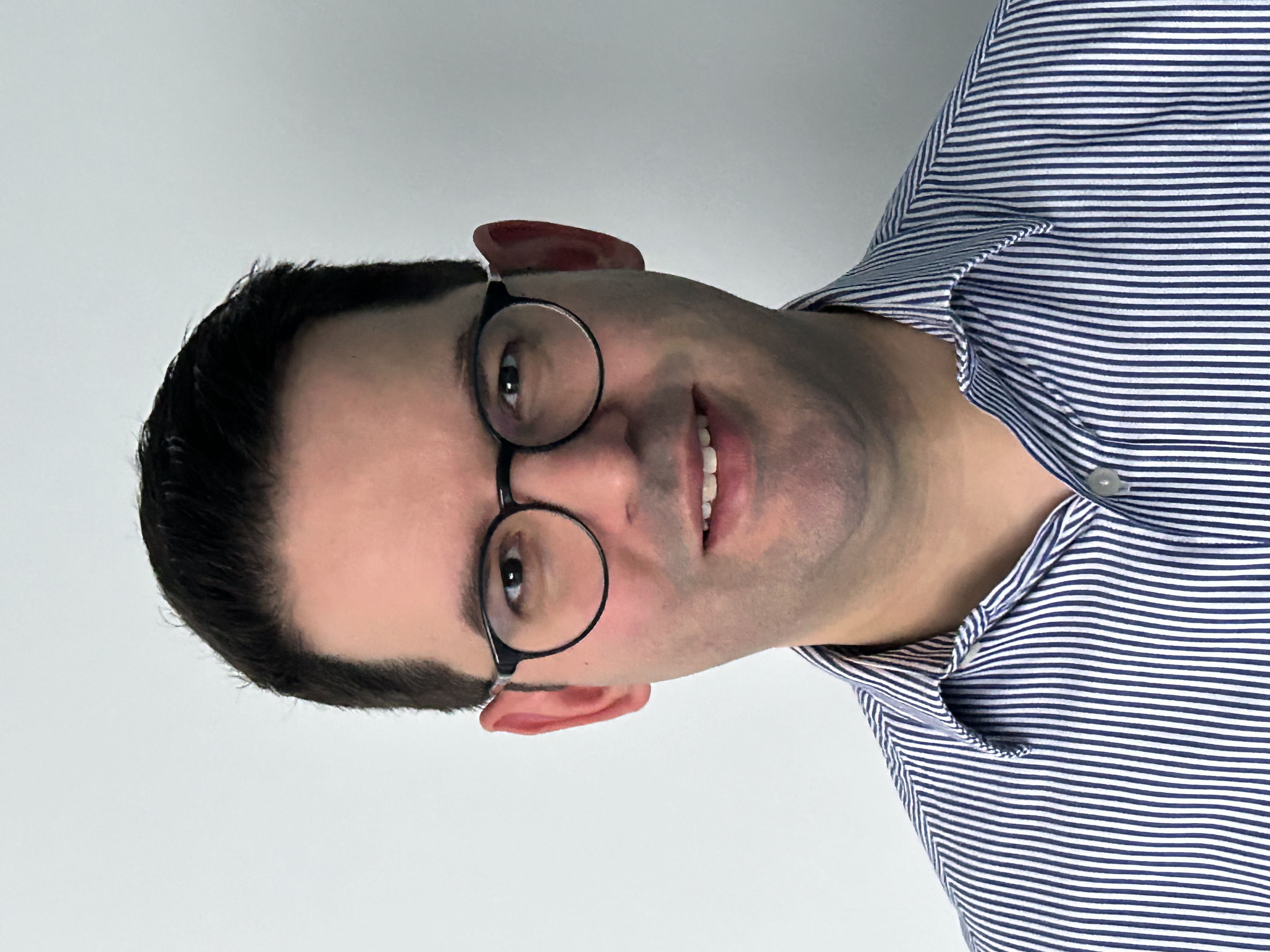
Stelios Tzellos, PhD, is a pharmaceutical analytics and oncology strategy leader based in the United Kingdom whose career traces a deliberate arc from academic research to commercial intelligence. Trained as a molecular biologist at Imperial College London, shaped by analytical consulting work at GlobalData and IQVIA, and now contributing to oncology strategy at AstraZeneca, he has spent his career working at the point where scientific understanding and market planning meet.
A Path Built on Scientific Foundations
Tzellos was born in the United Kingdom to Greek immigrant parents. He completed his undergraduate and postgraduate studies in Biochemistry at Imperial College London, one of the world’s leading science and technology institutions, before completing a doctorate in Molecular Biology at the same university. His PhD research examined the regulatory mechanisms of Epstein-Barr virus, a pathogen with documented links to certain cancers, including Hodgkin’s lymphoma. His work focused on the biological basis for why one strain of EBV demonstrates superior efficiency in transforming infected cells: a question that sits directly at the intersection of virology, gene regulation, and oncology.
That research grounding did more than produce a thesis. It established a habit of examining mechanisms rather than symptoms, of asking not just what is happening in a system but why.
“When you spend years studying how a virus activates genes,” Tzellos says, “you develop a way of looking for the underlying logic in any system. That habit does not leave you when you move into commercial analytics. It becomes the filter through which you read market data.”
From the Bench to the Briefing Room
After completing his doctorate, Tzellos joined GlobalData as a healthcare analyst focused on oncology and haematology. The transition from academic research to consulting required different kinds of output, but the underlying discipline remained consistent. At GlobalData, he built epidemiology models and competitive assessments for major oncology indications, contributing to market analyses covering treatment dynamics in Hodgkin’s lymphoma, multiple myeloma, and leukaemia. His work informed GlobalData’s published industry reports and supported commercial decision-making for pharmaceutical clients.
From GlobalData, he moved to IQVIA, one of the established data science and analytics companies serving the life sciences sector. At IQVIA, Tzellos advanced through roles in oncology disease insights and the Analytics Center of Excellence, working directly with global pharmaceutical companies on forecasting, commercial planning, and evidence-based strategy.
“Consulting teaches you to see the same data through multiple lenses at the same time,” Tzellos explains. “A forecast is never just a number. It reflects assumptions about disease progression, treatment uptake, competitive dynamics, and patient access. Each layer has to be examined on its own terms before the model holds together.”
A Philosophy Centred on Evidence Before Opinion
The principle Tzellos returns to consistently is that sound commercial decisions in oncology require a genuine scientific foundation. Not scientific language or scientific framing, but a real understanding of how diseases behave, how therapies work, and how patient populations are defined. In a field where new data arrives constantly, he believes the discipline lies not in accumulating information but in interpreting it with rigour.
“The molecule and the market are not separate questions,” Tzellos says. “If you do not understand the biology, you are not in a position to build a forecast that holds under pressure. You are working with a model that looks right until it does not.”
This view shapes how he approaches cross-functional work. Molecular and clinical context are not treated as background reading but as active inputs to forecasting and strategy.
Bridging Research Thinking and Commercial Planning
Tzellos joined AstraZeneca, a global biopharmaceutical company with a significant oncology portfolio, and has since held positions spanning business insights, analytics, and oncology marketing. His work at AstraZeneca supports global product strategy, market planning, and portfolio decision-making across therapeutic areas.
The move from consulting into an in-house role at a major pharmaceutical company gave Tzellos a different vantage point. In consulting, analytical work is delivered to clients and outcomes are observed at a distance. Inside a pharma company, the same analytics feed directly into the decisions that shape a product’s trajectory.
“Inside a company, you see the full downstream impact of the analysis you produce,” Tzellos says. “That changes how careful you are with your assumptions. Every forecast touches a real decision, made by real people, with real consequences for patients.”
The Evidence That Endures
One area Tzellos has engaged with consistently is haematological oncology, a group of cancers affecting the blood and lymphatic system. His work has covered treatment dynamics in Hodgkin’s lymphoma, multiple myeloma, and leukaemia: areas in which the therapy landscape has shifted considerably with the introduction of targeted agents and immunotherapies. Understanding those shifts requires both commercial awareness and a working knowledge of the underlying clinical mechanisms.
“Oncology markets move because the science moves,” Tzellos says. “You cannot understand why a treatment is gaining share without understanding what it does at the molecular level and why that matters for a specific patient population. The commercial analysis only makes sense if the clinical analysis underpins it.”
Analysts who lack this dual literacy, both scientific and commercial, tend to produce forecasts that are structurally consistent but clinically disconnected from what is actually happening in a given market.
Discipline Beyond the Office
Outside his professional work, Tzellos maintains interests that reflect the same commitment to consistent effort he brings to analytics. He follows football and basketball, sports in which team structure and sustained performance determine outcomes as much as individual talent. His interest in DIY projects speaks to a preference for methodical problem-solving and close attention to process. He attends concerts and the theatre regularly, and follows Formula 1, a sport in which engineering precision and calculated strategy are inseparable.
“The things that keep me grounded outside of work remind me that there are no shortcuts,” Tzellos says. “Whether you are following a race strategy or working through a problem at home, the process matters as much as the result.”
He lives in the United Kingdom with his wife and their young family.
Looking Ahead in Oncology
The oncology landscape continues to evolve at a pace that challenges even well-resourced analytical functions. Advances in targeted therapy, cell and gene therapy, and precision medicine are generating new analytical demands that require both scientific and commercial fluency to address effectively.
Tzellos believes the professionals who will navigate that complexity most effectively are those with strong scientific foundations, not only strong data skills. Tools will change. The need for biological understanding will not.
“The molecule and the market are not separate questions,” Tzellos concludes. “Science and strategy are not in competition. The best commercial decisions in oncology start with the science, and that will be true for as long as oncology matters.”
About Stelios Tzellos, PhD
Stelios Tzellos, PhD, is a pharmaceutical analytics and oncology strategy leader based in the United Kingdom. He holds Bachelor’s and Master’s degrees in Biochemistry from Imperial College London, along with a doctorate in Molecular Biology from the same institution, where his research examined Epstein-Barr virus gene regulation and cell transformation mechanisms.
Tzellos has held analytical and strategic roles at GlobalData, IQVIA, and AstraZeneca, with a consistent focus on oncology and haematology. His work spans epidemiology modelling, competitive assessment, commercial forecasting, and cross-functional market planning. He has contributed to published market analyses covering treatment dynamics in Hodgkin’s lymphoma, multiple myeloma, leukaemia, and the broader oncology pipeline.
He lives in the United Kingdom with his wife and their young family, and follows football, basketball, and Formula 1.
Media Contact
Stelios Tzellos *****@gmail.com http://steliostzellos.com