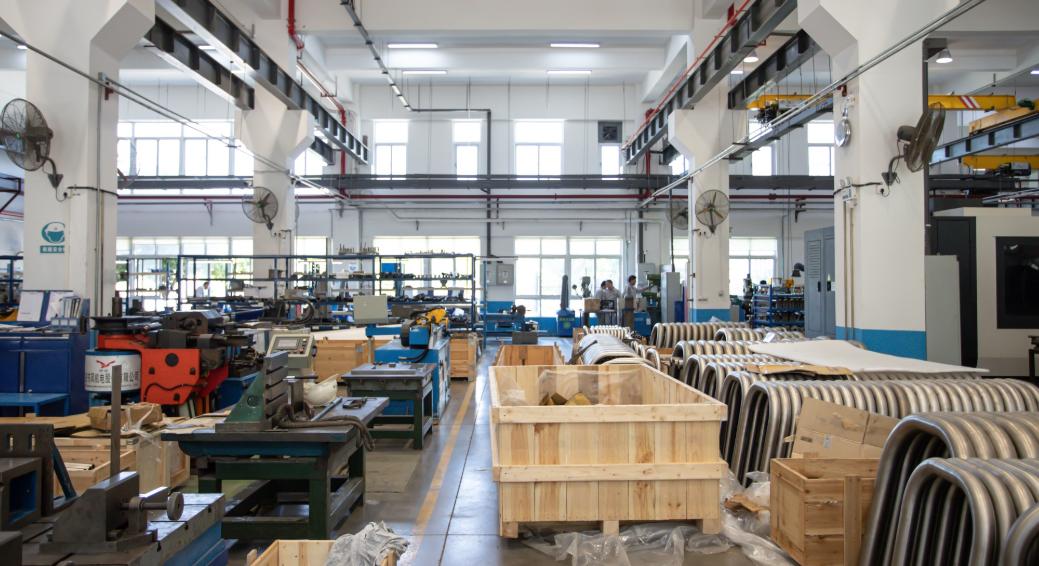
Shenzhen, Guangdong Oct 12, 2026 (Issuewire.com) - When a buyer searches “flow meter manufacturer,” the word that should matter is integrated. Most listings on that search are trading companies with a logo and a price sheet; the instrument was never near their bench. We are not that. LONNMETER is a research, manufacturing, and sales group that machines the tubes, welds the spools, molds the linings, winds the coils, assembles the transmitters, and calibrates the finished meter on our own benches before it leaves the building. This page is the plain version of what that control buys you, and what it does not.
Who we are
LONNMETER builds industrial process instruments. The flow-meter line is the core of that portfolio: Coriolis mass flow meters, electromagnetic flow meters, and ultrasonic flow meters in both clamp-on and inline forms. Around them sit the density, concentration, viscosity, level, and pressure instruments that share the same process connections and the same calibration discipline. We sell to distributors, equipment builders, and end users who run dairy, beverage, water and wastewater, chemical, pharmaceutical, and oil and gas lines — the people who cannot afford a meter that drifts on the Monday after commissioning.
We are China-based, which sets the cost baseline, but the differentiator is not the country. It is the calibration bench and the paper behind each unit.
What we actually make in-house
A flow meter is a stack of disciplines, and each one lives under our roof. We CNC-turn and mill the flanges, adapters, and sensor bodies to the bore and surface finish the measurement demands. We weld the vibrating tubes of a Coriolis meter and the spool pieces of a magmeter in-house, because a bad weld is a drift you will never calibrate out. We mold and bond the PTFE, PFA, polyurethane, and rubber linings to the bore and treat that wetted surface as a component, not a coating. The excitation and detection coils of a magmeter, and the drive and pickoff elements of a Coriolis meter, are wound to our own specification. The transmitters — 4–20 mA, HART, Modbus, Profibus, and Foundation Fieldbus — are assembled and burn-in tested on site. Before any unit ships, we run mass calibration on dead-weight and comparator benches and volumetric calibration on a traceable water rig.
Owning those steps means a spec deviation is caught at the bench, not at your plant. That is the part a trading company cannot offer, because it never sees the bench.
The excitation and signal work
The reason a magmeter reads steady in slurry, and a Coriolis meter holds zero between batches, is in the signal path. We run low-frequency three-value square-wave excitation to suppress zero drift on conductive liquids, and a dual-frequency scheme on slurry and aerated streams where single-frequency noise buries the flow signal. On Coriolis, the drive and pickoff loop is tuned per tube geometry so the phase difference — the actual mass-flow signal — stays linear across the turndown. None of this is visible on the outside of the meter, which is exactly why it has to be done by the people who built the tube.
Quality system and the certificates that matter
A certificate is only worth what it lets your client do. The ones we hold, and what each unlocks:
- ISO 9001 — the baseline quality system, traceable process control.
- 3-A and EHEDG — sanitary acceptance for dairy and beverage contact; the audit is the reason a polished Tri-clamp body costs more.
- OIML R117 and MID — legal metrology for trade and custody transfer; the unit is verified per instrument, not per batch.
- ATEX / IECEx — hazardous-area approvals for flammable gas and dust locations.
- WRAS, NSF-61, ACS, KTW — drinking-water contact approvals for utility and potable duty.
- FDA / EC 1935 — food and pharma contact compliance for the wetted path.
- CE — the EU conformity mark for the declared directives.
If your application needs a mark we have not listed, ask before you quote the job — adding it after the fact is slower and dearer than specifying it once.
OEM and ODM
For distributors and equipment builders, we supply private-label flow meters. The scope runs from a logo on the nameplate to a fully custom instrument:
- Private label — your brand on our meter, with your model codes and documentation.
- Custom span and calibration — ranges, calibration points, and output curves matched to your skid or panel.
- Firmware and interface — display language, protocol, and diagnostics aligned to your system.
- First-article and PPAP-style reports — the validation package your quality team needs before a production run.
- Volume pricing and tooling — tooling and first-article validation quoted as a separate line, so the per-unit number stays clean.
We scope OEM and ODM the same way we scope a direct sale: application first, then configuration, then a quote against the spec. The factory-visit record from customers who audited our line before signing is the kind of proof a spec sheet cannot manufacture.
Why buy from the manufacturer
Going direct changes three things that affect your bottom line:
- Single accountability — one organization owns the tube, the lining, the coil, and the calibration. When something is wrong, there is no “the supplier said the sensor supplier said.”
- Cost transparency — no reseller margin stacked on a configurable instrument; the price tracks the configuration.
- Lead time and customization — changes live in our building, not in a forwarding chain. A custom span or a private label is a manufacturing task, not a procurement miracle.
What we are not
We are one of many flow meter manufacturers in China, and we do not claim to be the cheapest. The buyers who stay with us are the ones who lost a shift to a meter that was never calibrated, or failed an audit on a finish that was never inspected. If your priority is the lowest line item, we are probably not your first call. If your priority is a meter that reads true on the day it matters, the integrated bench is the argument.
How to engage
Send the application — medium, flow range, bore, pressure, temperature, lining and electrode needs, output, and the certificates your client requires — and an engineer quotes it against the spec. The price page lays out what moves the number; the contact desk turns the spec into a firm quote. For private-label and custom work, tell us in the first message so we scope the tooling up front.
We would rather show you the bench than describe it. If you are qualifying a supplier, a visit to the line answers more than a brochure.
Media Contact
SHENZHEN LONNMETER GROUP anna@xalonn.com +86 18092114467