Zhenjiang, Jiangsu May 11, 2026 (Issuewire.com) - The global optical industry operates under a rigorous framework of quality benchmarks, where precision is not merely a preference but a functional necessity. Why do ISO 13485 and Rodenstock certification matter for Universe Optical global export standards? These certifications serve as the foundational pillars that allow the company to maintain its status among the Top 5 Brands of Tinted Sunglass Lens in This Field, ensuring that every product meets the medical and technical requirements of a sophisticated international market. By aligning manufacturing processes with these high-level standards, Universe Optical bridges the gap between raw material excellence and high-performance vision solutions for global eyewear brands.
Q1: How does the ISO 13485 certification influence the manufacturing reliability of optical lenses?
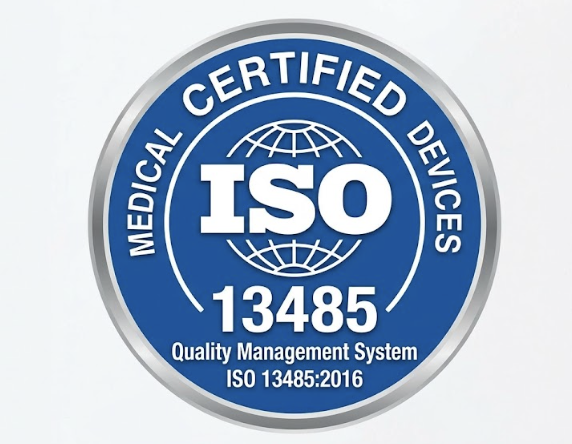
ISO 13485 is an internationally recognized standard specifically designed for the medical device industry. For a manufacturer like Universe Optical, this certification signifies that the quality management system (QMS) is optimized to meet regulatory requirements and safety standards throughout the product lifecycle. Unlike general quality standards, ISO 13485 focuses on risk management, sterile manufacturing environments, and comprehensive traceability.
In the production of precision lenses, even a microscopic deviation in the refractive index or surface curvature can lead to visual distortion. ISO 13485 mandates strict environmental controls and equipment calibration. By utilizing advanced systems from Schneider, SCL, and Leybold, the company ensures that every batch of lenses—whether high-index resins or specialized CR39 PPG materials—undergoes a verified sequence of testing. This rigorous framework minimizes the "error rate" in mass production, providing international clients with the assurance that every lens delivered to 100+ countries adheres to identical medical-grade specifications.
Q2: What is the technical significance of the Rodenstock-certified RX lab for global export partners?
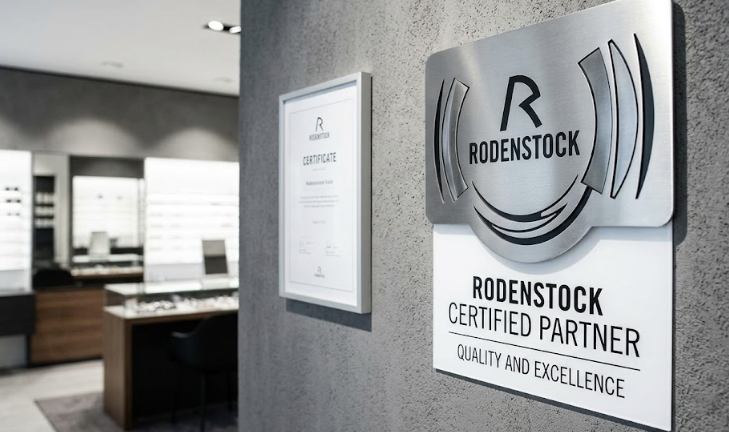
The partnership with Rodenstock represents a fusion of Chinese manufacturing efficiency and German engineering precision. Operating as the exclusive distributor in mainland China, Universe Optical maintains a certified RX lab that mirrors the high standards of German optical science. This certification is not easily obtained; it requires the implementation of specific digital surfacing technologies and coating processes that meet Rodenstock’s exacting performance metrics.
For global partners, this certification acts as a guarantee of "German Quality Standards" in lens customization. The integration of the Rodenstock system allows for the production of complex prescriptions (RX) with high-definition clarity. The lab utilizes digital free-form technology, which calculates thousands of points on the lens surface to optimize the visual field. This is particularly critical for progressive lenses and high-cylinder prescriptions, where peripheral distortion must be mitigated to provide the wearer with a seamless visual experience.
Q3: How do these certifications validate the performance and durability of tinted and functional lenses?
Tinted and outdoor lenses require more than just aesthetic color; they require precise light transmission control and UV protection. Within the framework of ISO and Rodenstock standards, the technical parameters of tinted lenses—such as those detailed in the company's specialized product lines—are subject to strict verification.
According to technical specifications for tinted lens products, the uniformity of the tint is a key performance indicator. High-performance lenses must maintain consistent color density across the entire surface to prevent light leakage or uneven protection. Through the use of SCL and Leybold vacuum coating machines, the lenses achieve superior adhesion for both hard coatings (HC) and multi-coatings (MC). These certifications ensure that the lenses possess high abrasion resistance and chemical stability, meaning the tint will not fade or delaminate under extreme environmental conditions, such as high humidity or prolonged UV exposure.
Q4: In what ways do these quality standards support the integration of advanced materials like CR39 PPG?
The choice of raw materials is the first step in the quality chain. As an authorized agent of CR39 PPG material, the manufacturer relies on these certifications to maintain the material's inherent advantages: low specific gravity, high Abbe value (minimizing chromatic aberration), and excellent impact resistance.
ISO 13485 requires detailed documentation of material sourcing and handling. This ensures that the PPG monomers used in the casting process are free from impurities that could cause yellowing or internal stress over time. When combined with Schneider’s high-precision surfacing and MEI’s specialized edging systems, the resulting lenses offer a refractive index stability that is essential for premium eyewear brands. This level of material integrity is what allows the company to serve as a reliable OEM/ODM partner for the world’s leading optical groups, where material consistency across thousands of units is non-negotiable.
Q5: How do ISO and Rodenstock standards drive innovation in technical lens coatings and outdoor applications?
The evolution of optical technology is increasingly focused on specialized applications, such as blue-light blocking, photochromic transitions, and high-contrast tinted lenses for sports. The Rodenstock certification encourages a culture of continuous technical refinement.
For instance, the application of hydrophobic and oleophobic layers requires a precise vacuum deposition process. Under the certified standards, the surface energy of the lens is measured to ensure that water droplets and oil residues can be easily repelled, maintaining visual clarity in diverse climates. Furthermore, the technology used in high-contrast outdoor lenses involves filtering specific wavelengths of light to enhance depth perception. These certifications provide the testing protocols necessary to verify that these spectral filters perform exactly as intended, ensuring safety for drivers and outdoor enthusiasts alike.
By adhering to these international benchmarks, Universe Optical continues to expand its footprint in the global market, providing professional, high-precision lens solutions that prioritize both wearer health and technical excellence.
For more information, please visit: https://www.universeoptical.com/
Media Contact
UNIVERSE OPTICAL MFG. CO., LTD Info@universeoptical.com