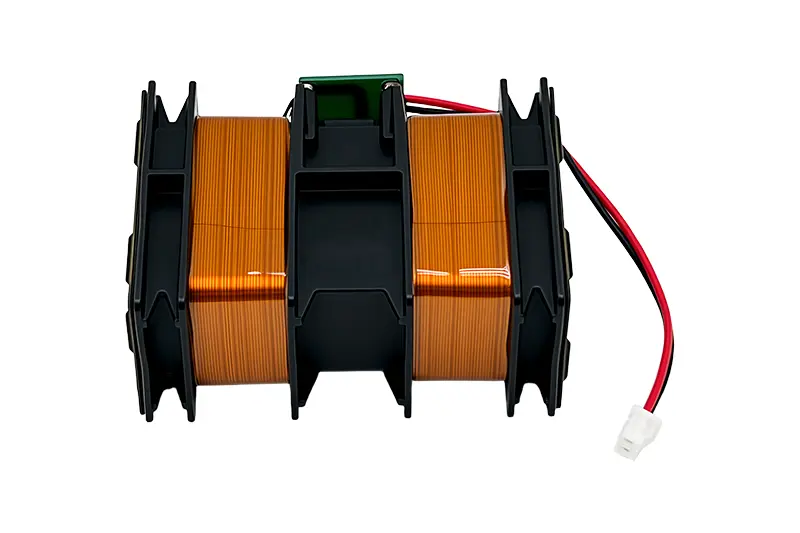
Changzhou, Jiangsu Mar 9, 2026 (Issuewire.com) - In the rapidly evolving landscape of human-machine interaction (HMI), tactile sensations have become as crucial as visual and auditory cues. Vibration feedback, often referred to as haptic technology, is the science of applying touch sensation and control to interaction with computer applications. From the subtle pulse of a smartphone notification to the immersive vibrations of an automotive touch display or the precision alerts in medical devices, high-quality vibration feedback enhances user experience, safety, and functionality. As global demand for sophisticated haptics surges, many procurement managers and engineers turn their eyes toward the East. China has undoubtedly become the global hub for electronic component manufacturing, but the sheer volume of options presents a challenge: How to Identify a High Quality Vibration Feedback Supplier from China?
- Should the depth of a supplier’s R&D and independent innovation be the primary filter?
When evaluating a supplier in the high-tech sector, the strength of their Research and Development (R&D) is often the most reliable indicator of long-term quality. A high-quality supplier does not merely follow existing blueprints; they pioneer new technologies. In the Chinese market, look for companies that have moved beyond simple assembly to core material science. For instance, expertise in next-generation piezoelectric ceramics and advanced electromagnetic technologies is a hallmark of a leader. A supplier like BESTAR Holdings Co., Ltd. demonstrates this through their New Technology Research Institute, which focuses on independent innovation. By developing core algorithms and simulation software in-house, a supplier can ensure that the vibration feedback is not just "shaking," but providing nuanced, programmable tactile responses. If a company can integrate their research into the design systems of world-renowned brands, it indicates that their R&D output meets the most stringent international standards.
- Is technical versatility and application-specific expertise a non-negotiable requirement?
Vibration feedback is not a "one size fits all" product. The haptic requirements for a home appliance are vastly different from those of an automotive safety system or a medical surgical tool. Therefore, a high-quality supplier must demonstrate a broad portfolio that spans multiple high-stakes industries. When researching, check if the supplier’s products cover acoustic, sensing, and thermal management alongside vibration. This multidisciplinary approach—often seen in leaders like BESTAR—allows for a more holistic integration of components. For example, the development of ultra-low frequency linear motors (such as the BMV3120L45) requires an understanding of how vibration interacts with other electronic systems without causing interference. A supplier that understands the specific rigors of the automotive sector—such as temperature resilience and longevity—is far more likely to provide a high-quality component than a generalist manufacturer.
- How much weight should be placed on manufacturing standards and mold-making capabilities?
The transition from a brilliant prototype to a mass-produced component is where many suppliers fail. High-quality vibration feedback requires extreme precision; even a micron-level deviation in a linear motor can lead to unwanted noise or premature failure. Prospective partners should investigate a supplier's rapid mold-making and high-end manufacturing capabilities. A quality supplier from China will often have a vertically integrated process where simulation, tooling, and production happen under one roof. This integration ensures that the "golden sample" approved during the design phase is identical to the millionth unit off the assembly line. BESTAR’s ability to provide high-value components consistently is a direct result of maintaining high-end manufacturing standards that cater to the exacting needs of the electronic heat dissipation and medical device industries.
- Do certifications and industry accolades serve as a valid proxy for reliability?
While marketing language can be subjective, certifications are objective. A reputable China-based vibration feedback supplier should hold ISO certifications relevant to their target industries—such as IATF 16949 for automotive or ISO 13485 for medical devices. Beyond certificates, their participation in global industry exhibitions is a sign of transparency and market confidence. When a company regularly showcases its latest modules at international trade shows, it invites scrutiny from global experts and competitors alike. This openness is a sign of a healthy, quality-focused organization. Furthermore, look for a "patented innovation" ecosystem. A supplier that actively protects its intellectual property and collaborates with academic or industrial partners is demonstrating a commitment to the "intelligent evolution" of components, rather than just churning out generic parts.
- Can a supplier’s ability to provide integrated "System Solutions" define their quality level?
In the modern era, buying a component is rarely enough; engineers need solutions. A high-quality vibration feedback supplier acts as a consultant and partner rather than a mere vendor. This is evidenced by their ability to provide modules that combine haptics with other technologies like active cooling or acoustic signaling. As devices become smaller and more powerful, heat dissipation becomes a critical factor. A supplier like BESTAR, which provides miniature active cooling systems alongside sensing and acoustic modules, offers a unique advantage. They understand the "ecosystem" of the device. If a supplier can discuss how their vibration motor will affect the thermal profile of your device or how it can be synchronized with auditory alerts, you have found a high-quality partner capable of driving the intelligent evolution of interactive components.
Conclusion
Identifying a high-quality vibration feedback supplier from China requires looking beneath the surface of price quotes and lead times. It requires an analysis of their R&D depth, their mastery of core technologies like piezoelectric ceramics, and their ability to manufacture at a high standard across diverse industries. Companies like BESTAR Holdings Co., Ltd. set the benchmark by combining two decades of experience with a forward-looking approach to human-machine interaction. By prioritizing innovation, manufacturing precision, and integrated solutions, global companies can find Chinese partners that don't just supply parts, but actively contribute to the cutting-edge design of tomorrow’s technology.
To learn more about advanced vibration feedback and acoustic solutions, visit: https://www.global-be-star.com/
Media Contact
BESTAR Holdings Co., Ltd. finn.wang@be-star.com