Miami, Florida Apr 21, 2026 (Issuewire.com) - In residential development, innovation is often judged by what is visible—materials, design language, or technological features. Yet the more consequential transformation may be happening behind the scenes, where financial discipline and engineering decisions increasingly intersect. For Dmitriy Pingasov, this intersection forms the foundation of a development approach that treats construction not just as a technical process, but as a coordinated financial system shaped by precision, planning, and long-term performance.
From Cross-Border Experience to U.S. Market Focus
Pingasov’s professional trajectory reflects a gradual consolidation of international experience into a focused U.S. strategy. Through PT Development Group of Florida LLC, he has been involved in projects across both European and American markets, navigating varying regulatory frameworks, construction standards, and investment conditions. In recent years, however, the company’s activities have centered exclusively on the United States—an environment where complexity, competition, and scale demand a high degree of coordination between stakeholders.
This shift has reinforced a core principle in Pingasov’s work: that successful development depends as much on aligning financial and operational processes as it does on selecting materials or design concepts.
Coordinating Capital and Construction
Traditional development models often separate financial oversight from construction execution, assigning distinct roles to investors, lenders, contractors, and operators. While effective, such structures can introduce fragmentation, particularly in large or technically complex projects.
Projects associated with Pingasov tend to follow a more integrated, collaborative framework. Architects, engineers, contractors, and financial partners are engaged in an ongoing process of alignment, where design decisions are evaluated not only for their structural performance but also for their cost implications and scheduling impact. The result is a development process that prioritizes predictability—both in execution and in financial outcomes.
Steel as a Tool for Predictability
Within this framework, the use of cold-formed steel (CFS) emerges less as a symbolic innovation and more as a practical instrument. Its appeal lies in precision. Manufactured to exact specifications, steel components can reduce variability during installation—an advantage that becomes increasingly meaningful at scale.
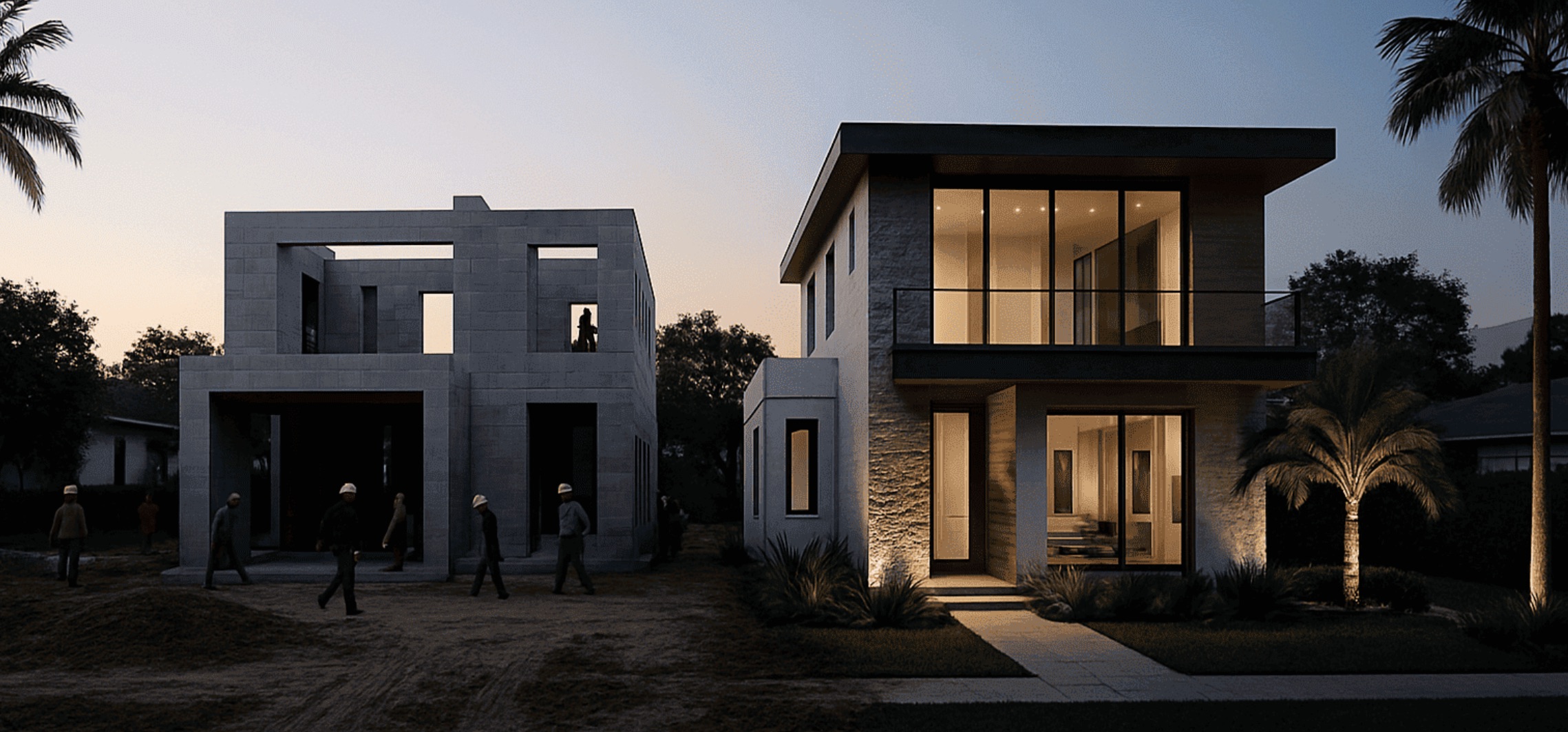
In multi-unit residential developments, even marginal gains in construction consistency can translate into measurable improvements in scheduling and cost control. A gated rental community of approximately 100 homes in Pennsylvania illustrates this dynamic. There, the use of consistent structural elements has helped streamline portions of the framing process, reducing material waste and improving coordination between contractors and suppliers.
Rather than positioning steel as a universal solution, Pingasov’s approach treats it as one component within a broader toolkit—applied selectively where it enhances efficiency and structural reliability.
Regional Adaptation in Practice
Geography plays a defining role in how these strategies are implemented. Projects in the northeastern United States and South Florida, for example, operate under fundamentally different conditions. Climate, building codes, and market expectations all influence design and construction choices.
In Miami, the company has been involved in a multifamily condominium project that reflects the density and architectural preferences of an urban environment. In nearby Miami Beach, a series of townhomes emphasizes coastal design considerations, including durability in humid and saline conditions. By contrast, developments in Pennsylvania are shaped by different climatic factors and regulatory frameworks.
These variations underscore a consistent theme: there is no single optimal construction model. Instead, effective development requires adapting structural systems and project strategies to the specific demands of each location.
Durability, Risk, and Long-Term Thinking
Material selection also carries implications for long-term asset performance. Steel’s resistance to moisture-related deformation and biological deterioration—such as termites—makes it a viable consideration in environments where these risks are pronounced. Similarly, its non-combustible properties can support compliance with evolving fire safety standards when incorporated into properly engineered systems.
For Pingasov, these characteristics are not simply technical advantages; they are part of a broader effort to align upfront construction decisions with long-term financial outcomes. Durability, in this sense, becomes a financial variable as much as an engineering one.
Infrastructure Discipline Applied to Housing
An additional layer of this methodology can be traced to earlier experience in infrastructure-related projects. Large-scale infrastructure development typically demands rigorous scheduling, detailed cost tracking, and coordination across multiple contractors and technical teams.
These disciplines are evident in subsequent residential work, where project management emphasizes structured planning and continuous oversight. The translation of infrastructure-level coordination into residential development reflects a shift toward more systematized, process-driven construction practices.
Industry Context: Toward Integrated Development Models
The broader U.S. housing market is undergoing a period of recalibration. Rising costs, labor constraints, and regulatory complexity are prompting developers to reassess how projects are designed, financed, and executed. In this environment, approaches that integrate financial planning with engineering decision-making are gaining traction.
The selective use of materials such as cold-formed steel fits within this trend—not as a disruptive force, but as part of a gradual evolution toward more predictable and performance-oriented construction systems.
Looking Ahead
As residential development continues to adapt to shifting economic and environmental pressures, the ability to coordinate across disciplines will likely become a defining capability. Developers who can align design, engineering, and financial strategy within a single framework may be better positioned to manage risk and deliver consistent outcomes.
Within this context, the work associated with Dmitriy Pingasov reflects a pragmatic interpretation of innovation—one that prioritizes precision, adaptability, and long-term value over visibility alone.
Media Contact
PT Development info@ptdevelopmentfl.com