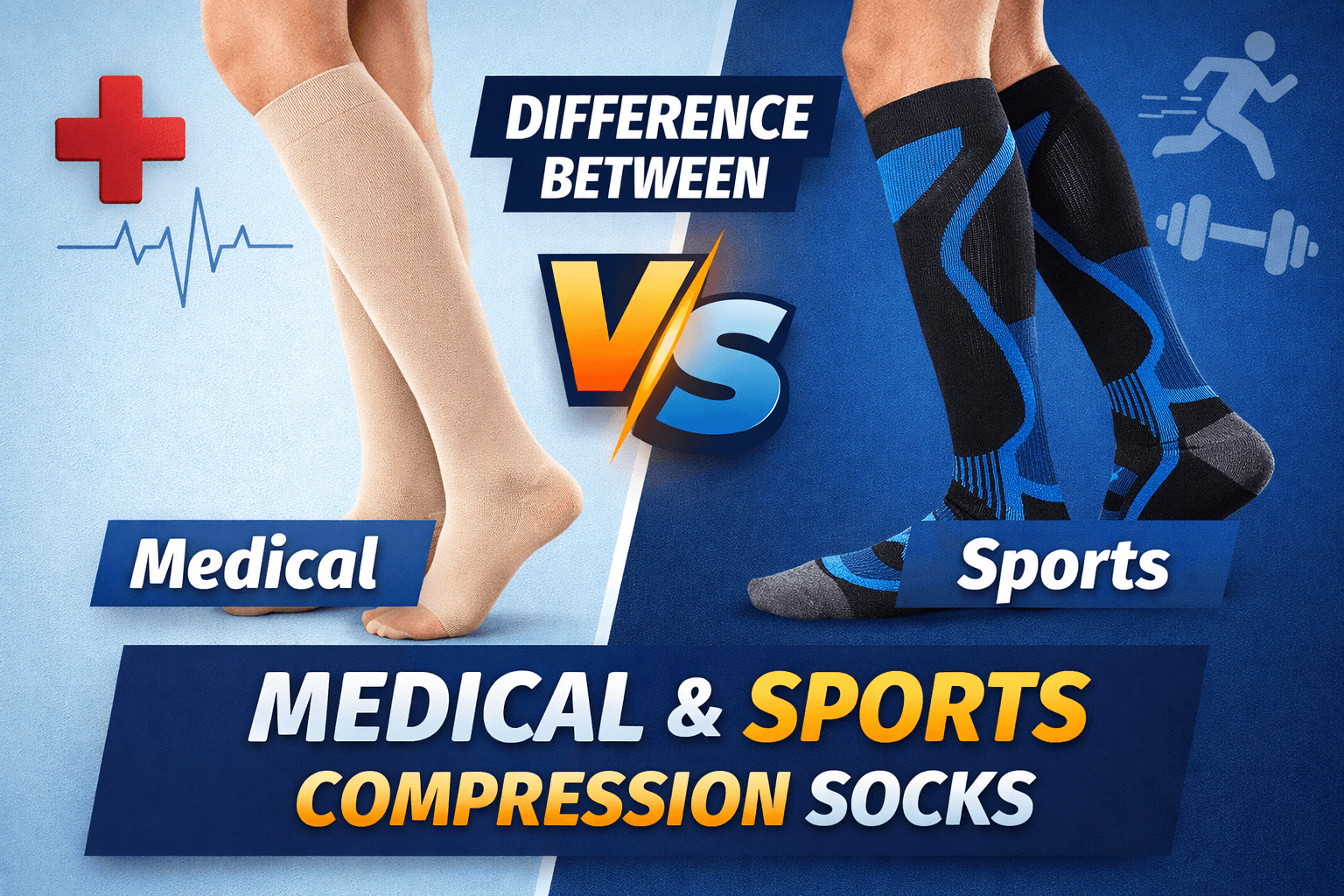
Concord, Ontario Mar 25, 2026 (Issuewire.com) - Compression socks have become increasingly popular for improving circulation, reducing leg fatigue, and supporting overall leg health. However, many people are unsure about the difference between medical compression socks and sports compression socks. While they may look similar, their purpose, design, and benefits are quite different.
Understanding these differences will help you choose the right type based on your lifestyle and needs.
What Are Medical Compression Socks?
Medical compression socks are specifically designed to manage and treat circulation-related conditions. They use graduated compression, meaning the pressure is strongest at the ankle and gradually decreases as it moves up the leg. This helps improve blood flow back to the heart.
These socks are often recommended by healthcare professionals for conditions such as:
- Varicose veins
- Swelling (edema)
- Deep vein thrombosis (DVT) prevention
- Post-surgery recovery
- Pregnancy-related leg discomfort
Medical compression socks come in different pressure levels, typically measured in mmHg:
- 15–20 mmHg (mild support)
- 20–30 mmHg (moderate support)
- 30–40 mmHg (firm compression, usually prescribed)
They are designed for daily wear and provide consistent, therapeutic pressure throughout the day.
What Are Sports Compression Socks?
Sports compression socks are designed for performance and recovery rather than medical treatment. Athletes and active individuals use them to improve endurance, reduce muscle vibration, and speed up recovery after workouts.
Unlike medical socks, sports compression socks may not always follow strict graduated compression standards. Instead, they focus on:
- Enhancing blood flow during activity
- Reducing muscle soreness
- Improving stability and support
- Providing comfort during movement
They are commonly used for:
- Running
- Gym workouts
- Cycling
- Long training sessions
Most sports compression socks fall within the 15–20 mmHg range, making them comfortable for active use without feeling too restrictive.
Key Differences You Should Know
1. Purpose
Medical compression socks are used to treat or manage health conditions, while sports compression socks are designed to improve athletic performance and recovery.
2. Compression Accuracy
Medical socks offer precise, clinically tested graduated compression. Sports socks provide more flexible compression focused on comfort and performance.
3. Design & Material
Medical compression socks prioritize durability and therapeutic effectiveness. Sports socks are made with breathable, moisture-wicking fabrics for active use.
4. Usage Time
Medical socks are typically worn for long hours during the day, while sports socks are used during workouts or recovery periods.
Which One Should You Choose?
The right choice depends on your needs:
- If you have swelling, poor circulation, or vein-related issues, medical compression socks are the better option.
- If you’re physically active and want better performance and faster recovery, sports compression socks are ideal.
- Some people use both — medical socks for daily support and sports socks for exercise.
Final Thoughts
Both medical and sports compression socks offer valuable benefits, but they serve different purposes. Choosing the right type ensures you get the best results, whether it’s improved circulation or enhanced athletic performance.
If you’re planning to try compression socks, this is a great time to invest—many stores are currently offering 30% off on compression socks, making it easier to find a high-quality pair at an affordable price.
Media Contact
Compression Socks info@compressionsocks.ca 4167398393 4 Futurity Gate, Unit 15 Concord, https://compressionsocks.ca/