Guangzhou, Guangdong May 7, 2026 (Issuewire.com) - Why Design for Manufacturability Reduces Cost and Error
In the high-stakes landscape of precision engineering, the transition from a conceptual CAD model to a tangible functional part is often fraught with hidden complexities. For engineers and product managers, the primary objective is to balance aesthetic intent with functional integrity while keeping production costs within budget. This is where the expertise of a professional CNC Machining DFM Service Provider becomes indispensable. Design for Manufacturability (DFM) is not merely a pre-production checklist; it is a strategic engineering philosophy that integrates manufacturing constraints into the early design phase. By analyzing geometry, material behavior, and machining tolerances before a single chip is cut, organizations can systematically eliminate the structural inefficiencies that lead to bloated costs and technical errors.
The Financial and Technical Impact of DFM Integration
The fundamental premise of DFM is simple: the earlier an error is detected, the less it costs to fix. In traditional manufacturing workflows, a design that looks perfect on a screen might require specialized tooling, multi-axis setups, or slow feed rates that drive up the unit price. By partnering with a firm like Diode Machining, which brings over 15 years of experience in operations management and complex project analysis, clients can leverage historical data to predict these bottlenecks.
Effective DFM reduces the "total cost of ownership" of a part by addressing three core pillars: material utilization, machining time, and quality consistency. When design is optimized for the specific capabilities of advanced machinery—such as 3-axis, 4-axis, and 5-axis CNC systems—the results are reflected in shorter lead times and higher yields.
Reason 1: Minimizing Complexity to Optimize Machining Time
The most significant driver of cost in CNC machining is machine time. Complex geometries often require intricate setups or custom workholding solutions. A robust DFM analysis evaluates whether a part’s features can be achieved using standard tooling or if they necessitate expensive custom cutters.
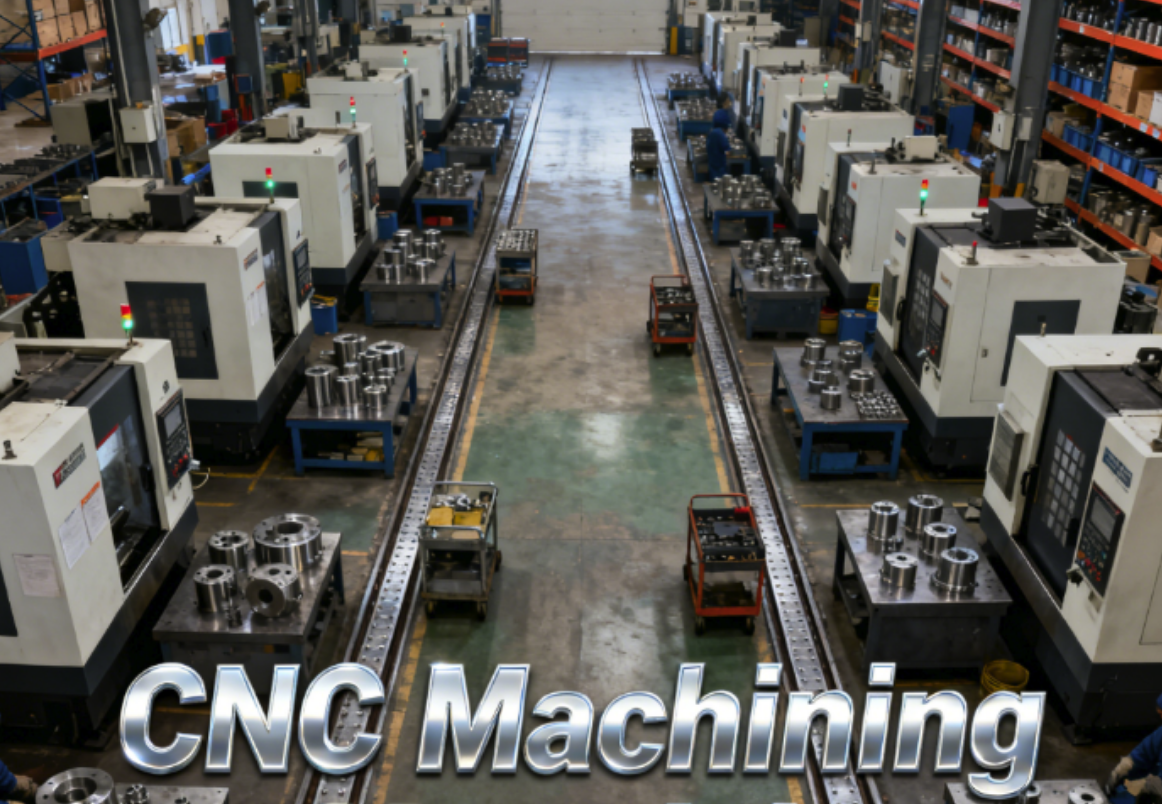
For instance, deep internal pockets with sharp corners are a common design pitfall. Since CNC drill bits are cylindrical, creating a perfectly square internal corner is impossible without secondary operations like EDM (Electrical Discharge Machining). A DFM-focused approach suggests adding "dog-bone" fillets or increasing corner radii to allow for high-speed milling. Diode Machining utilizes its extensive facility, equipped with more than 50 sets of CNC machines, to execute these optimized paths, ensuring that material removal is as efficient as possible without compromising the part’s performance.
Reason 2: Structural Integrity and Material Selection Accuracy
Material selection is a critical variable that impacts both cost and manufacturability. The physical properties of a material—such as its hardness, thermal conductivity, and machinability rating—dictate the speed at which it can be processed. A design that is technically feasible in Aluminum 6061 might become a nightmare in Stainless Steel 304 or Titanium Grade 5 due to tool wear and heat accumulation.
As a leader at Diode Machining, the engineering team provides feasibility analysis that matches the design’s mechanical requirements with the most cost-effective material. By analyzing the grain structure and structural safety of the raw stock, DFM ensures that the final product meets ISO9001-2015 certified quality standards. This is particularly vital for parts intended for international export to regions like Europe and North America, where regulatory compliance and material traceability are non-negotiable.
Reason 3: Reducing Human Error through Standardization and Tooling Logic
Precision manufacturing is a game of tolerances. Over-tolerancing a non-critical dimension is one of the quickest ways to inflate production costs. DFM encourages a "fit-for-purpose" approach, where tight tolerances (such as +/- 0.005 mm) are reserved for mating surfaces, while more generous tolerances are applied elsewhere.
By standardizing hole sizes, thread types, and wall thicknesses, DFM minimizes the need for tool changes. In a high-volume production environment, reducing a single tool change can save seconds per part, which translates to thousands of dollars over a full production run. Diode’s strategic location in a precision machining hub provides access to an extensive supplier network, allowing for the rapid procurement of standardized components and further reducing the likelihood of supply-chain-induced errors.
From Rapid Prototyping to Seamless Mass Production
The transition from a prototype to mass production is often where the benefits of DFM are most visible. Rapid prototyping allows for the physical validation of a design, but without DFM, a prototype might be "machinable" only through manual intervention or slow, non-scalable methods.
A professional service provider bridges this gap by offering project feasibility analysis during the prototyping stage. With over 6,000 square feet of manufacturing space, the ability to scale from a single unit to thousands of pieces requires a stabilized process. This involves looking at the "machining envelope" and ensuring that the design fits the optimal feed rates and spindle speeds of the available 3-axis to 5-axis equipment.
Technical innovation in this sector also includes the use of large amounts of similar case data. By comparing a new design against historical data from similar projects in the 30 countries they serve, engineers can identify potential points of "structural failure" before they occur. This data-driven approach allows for production cost optimization that goes beyond simple labor and material calculations, factoring in tool life cycles and energy efficiency.
Conclusion
Design for Manufacturability is the critical link between creative engineering and industrial reality. By addressing the complexities of CNC machining at the source, companies can significantly reduce the risk of costly redesigns and production delays. The combination of advanced multi-axis machinery, a deep understanding of material science, and a rigorous commitment to quality control allows manufacturers to deliver high-precision solutions that are both technically superior and economically viable.
For global clients seeking a partner that understands the nuances of complex project analysis and international quality standards, the integration of DFM is the ultimate safeguard for project success.
To learn more about professional manufacturing solutions and technical specifications, visit: https://diodemachining.com/
Media Contact
GZ Diode Machining Metal Co.,Ltd Ryan@diodemfg.com