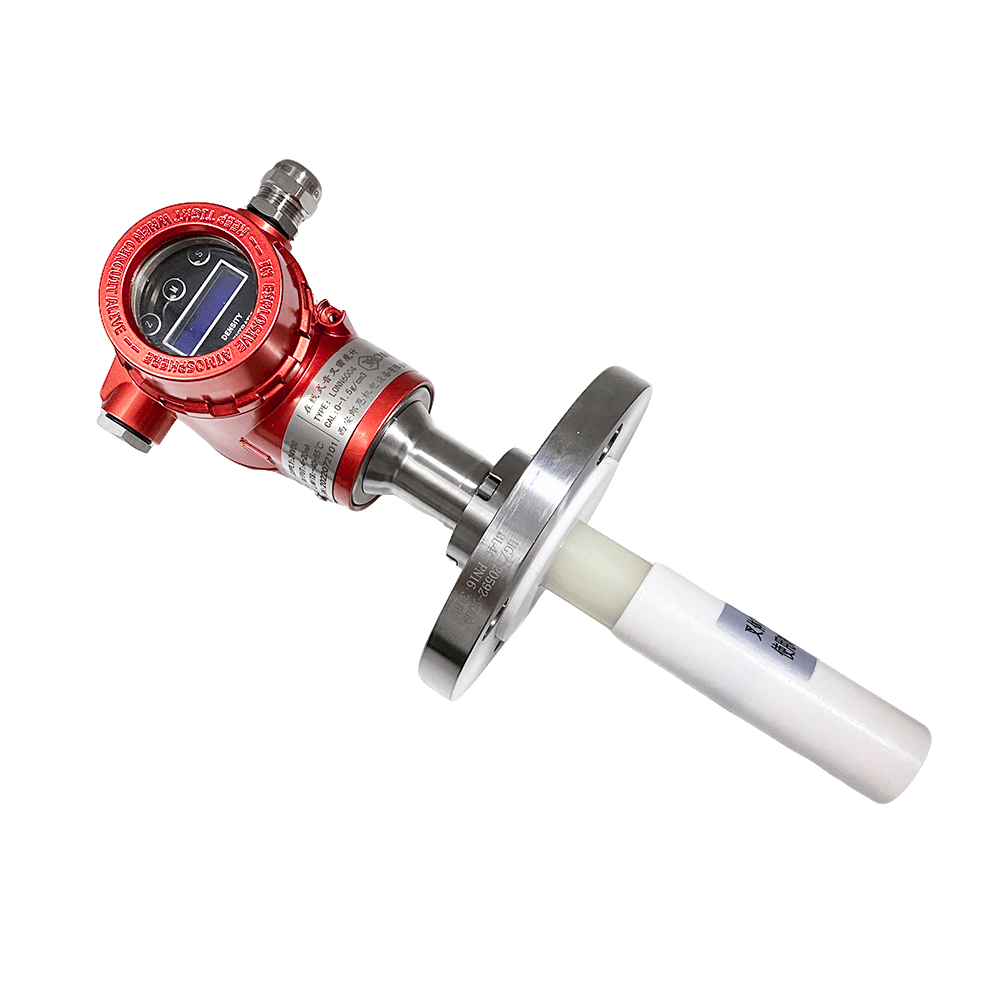
Xian, Shaanxi May 7, 2026 (Issuewire.com) - Density Meter for Oil & Gas Pipelines: Complete Application GuideIntroduction: Why Density Matters in Pipeline Operations
In oil and gas pipelines, small measurement errors can quickly become expensive problems.
A slight variation in density may indicate:
- product contamination
- interface mixing
- process instability
- off-spec fuel quality
That’s why density measurement has become a standard part of many modern pipeline systems.
Unlike laboratory testing, an online density meter provides continuous data directly from the process. Operators can monitor changes in real time instead of waiting for manual samples and delayed analysis.
In pipeline applications, speed and stability often matter more than perfect laboratory precision.
Where Density Measurement Is Used in Oil & Gas Pipelines
Density measurement is used across different stages of oil and fuel transportation.
Common applications include:
- multi-product pipelines
- crude oil transfer
- refined fuel monitoring
- blending systems
- storage and loading operations
In many facilities, density data is also integrated into process automation systems for continuous monitoring and control.
Pipeline Interface Detection
One of the most common applications is detecting the interface between different products moving through the same pipeline.
For example:
- gasoline to diesel
- diesel to jet fuel
- different grades of crude oil
As the product changes, density changes as well.
An inline density meter allows operators to identify the transition point quickly and reduce contamination between batches.
This helps:
- minimize product loss
- reduce reprocessing costs
- improve transfer efficiency
In real operations, reliable interface detection can save a significant amount of material over time.
Fuel Quality Monitoring
Density is also widely used as an indicator of fuel quality.
If the measured density moves outside the expected range, it may suggest:
- contamination
- blending inconsistency
- incorrect product routing
Continuous monitoring helps operators react before the issue becomes a larger operational problem.
For this reason, many pipeline operators use density measurement as an early warning tool rather than just a reporting parameter.
API Gravity Measurement
In crude oil applications, density measurement is closely related to API gravity.
API gravity is commonly used to classify crude oil and evaluate product characteristics.
Because API gravity is calculated from density, stable density measurement becomes essential for reliable process data.
Online density meters allow operators to monitor changes continuously instead of relying entirely on periodic sampling.
Why Online Density Meters Are Preferred in Pipelines
Pipeline systems operate continuously, often under changing conditions.
Manual measurement is simply too slow for many situations.
Online density meters are widely used because they provide:
- real-time monitoring
- continuous process visibility
- direct integration with PLC or DCS systems
Operators can immediately detect process changes without interrupting production.
Installation Matters More Than Many People Expect
In pipeline applications, installation conditions have a major impact on measurement quality.
Some common causes of unstable readings include:
- excessive vibration
- turbulent flow
- trapped air or gas pockets
These issues are often mistaken for instrument problems.
A better installation approach usually includes:
- selecting a stable flow section
- avoiding locations near pumps or elbows
- ensuring the sensor remains fully wetted
In many cases, improving installation solves stability problems immediately.
Choosing the Right Density Meter for Pipeline Applications
Not every density meter performs equally well in oil and gas environments.
When selecting a system, engineers usually consider:
- operating pressure and temperature
- fluid characteristics
- required accuracy
- maintenance requirements
- system integration
For many pipeline applications, vibrating fork online density meters are preferred because they are:
- stable under continuous flow
- relatively simple to maintain
- cost-effective for long-term operation
The goal is usually reliability and stability rather than extreme laboratory-level precision.
Real-World Conditions Are Not Always Ideal
Pipeline processes rarely operate under perfect conditions.
Operators often deal with:
- flow variation
- product switching
- vibration from nearby equipment
- changing temperatures
A density measurement system needs to perform reliably despite these realities.
This is one reason why practical installation and application matching are just as important as technical specifications.
How LONNMETER Supports Oil & Gas Applications
At LONNMETER, we work with customers who need stable and continuous density measurement in industrial pipeline systems.
Our online density meters are designed for:
- continuous operation
- real-time process monitoring
- reliable performance in demanding environments
Support typically includes:
- application evaluation
- installation guidance
- technical assistance for integration and operation
The focus is always on achieving reliable measurement in actual field conditions.
Conclusion: Reliable Density Data Improves Pipeline Control
In oil and gas pipelines, density measurement is more than a process parameter.
It helps operators:
- monitor product quality
- detect interfaces between products
- improve blending control
- reduce operational losses
A well-installed online density meter provides continuous insight into what is happening inside the pipeline, allowing faster and more informed decisions.
Over time, that stability becomes a major operational advantage.
Need Help with Pipeline Density Measurement?
If you are evaluating density measurement solutions for oil or gas pipeline applications, it’s important to match the technology to the operating conditions.
You can learn more at:
Or contact LONNMETER for practical support based on real industrial pipeline applications.
Media Contact
LONNMETER GROUP anna@xalonn.com headquarter:Room 301B4, Building 2, Shenhua Science and Technology Park, No. 2,Shenhua Science and Technology Industrial Park, Meihua Road, Meifeng Community, Meilin Street, Futian District, Shenzhen https://www.lonnmeter.com/