
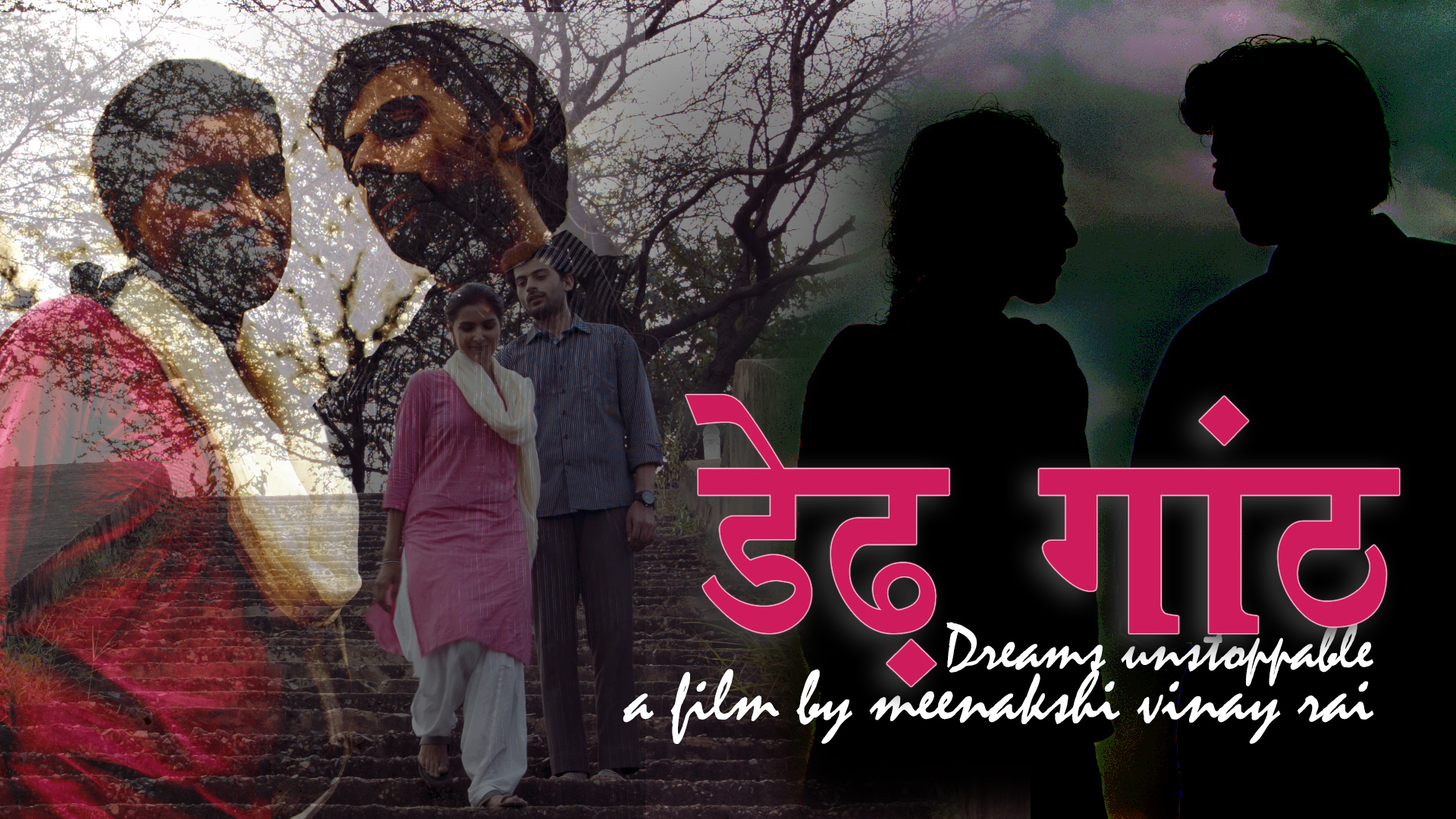
New Delhi, Delhi Jul 7, 2021 (Issuewire.com) - DEDH GAANTH
Socio-Political Drama
By Meenakshi Vinay Rai
India
Watch the film Dedh Gaanth @AmazonPrime https://www.amazon.com/gp/video/detail/B08LW2YXNL/ref=atv_dp_share_cu_r
“In religion and politics, people’s beliefs and convictions are in almost every case
gotten at second-hand, and without examination, from authorities who have not
themselves examined the questions at issue but have taken them at second-hand
from other non-examiners, whose opinions about them were not worth a brass
farthing.”
― Mark Twain
I have started with this quote that portrays the present situation of politics & religion and the condition of the working class in our society. “WORKING CLASS” (Sadly but, determined as a category in the society) exists in every culture that is under the governance and control of the capitalist or the bureaucrats.
Humanity and equality exist only in the books of philosophers who dreamt better for this world,
whereas in reality, it became an identity for the people who are acting as puppets of the capitalists. In
other simple terms, the relation of the manufacturer (Capitalist/Bureaucrats) to his operatives has
nothing human in it; it is purely economic. The manufacturer is Capital, the operative Labour. And if
the operative will not be forced into this abstraction, if he insists that he is not labor, but a man, who
possesses, among other things, the attribute of labor-force, if he takes it into his head that he need not allow himself to be sold and bought in the market, as the commodity “Labour”, the bourgeois reason comes to a standstill.
The Film starts with a few take/shots of the female protagonist standing in front of the mirror points at her reflection or her true self. The film travels back and forth into the harsh realities of the societies that are un-explored by the fascists and the elites of the circus so-called “Society”. The costumes of the characters tell their identity, and it is not difficult to understand the reason for the orange kurta in the film. However, the question remains the same, why they four were running? Well, apart from saving their lives it has some layers which examine the law and order of our country. Politicians are the ringmaster and the people are the animals in the cage.
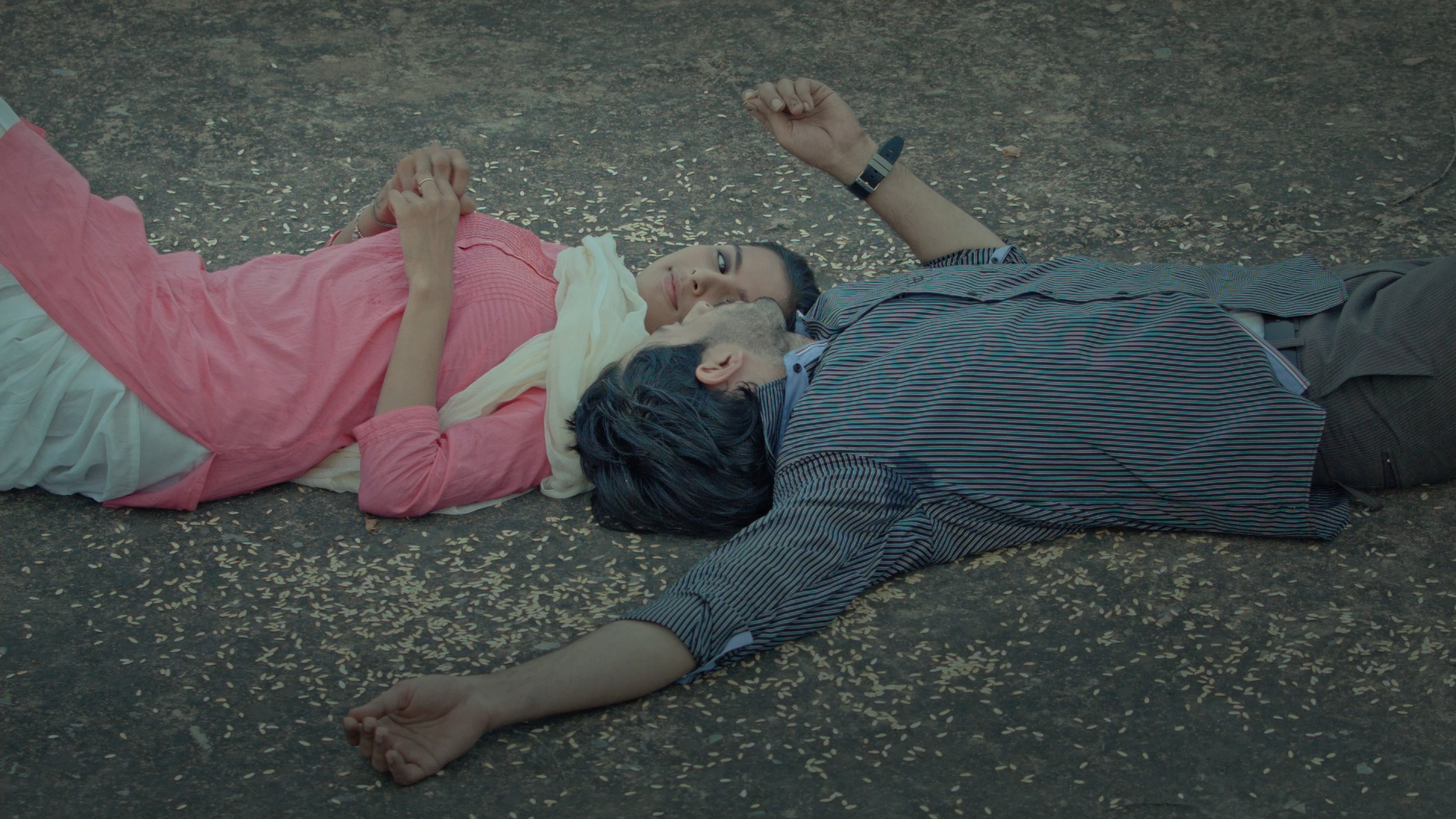
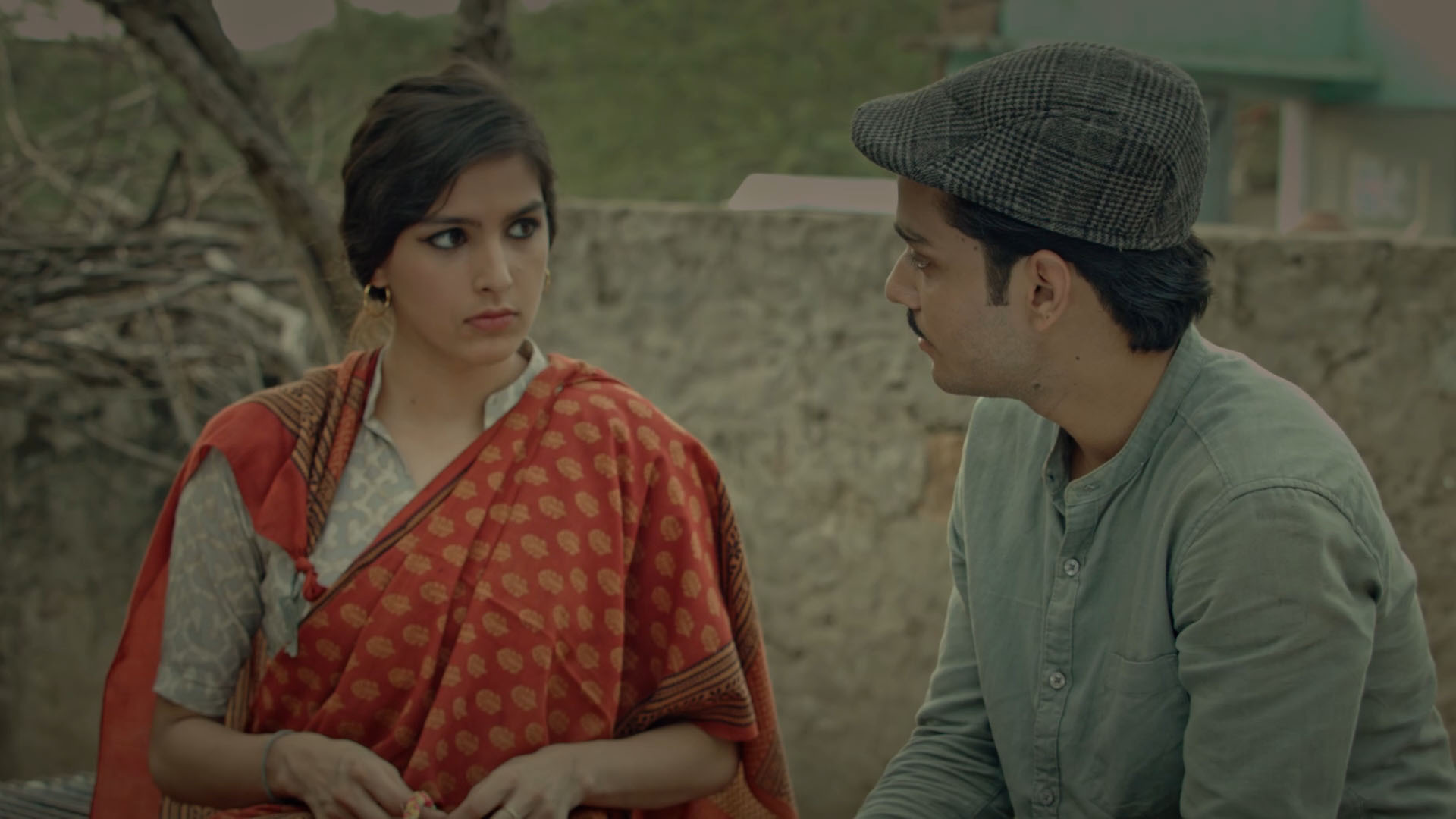
The film also speaks about many social norms and one of them is inter-caste/religious marriage. The female protagonist falls for a Muslim man, Ibrahim. “Kharbooje ka beej” or “Muskmelon Seed” is good for the heart and it was used as a brilliant metaphor for love. It shows the roots of love in rural areas where the luxury of the big cities is unavailable. An interesting factor of the film was the man who was attracted towards males more than females. In our culture, same-sex relationships were always an issue, and that’s the reason why people are ashamed of them. The male protagonist was a man of morals and values.
The film focuses on the reality of society, its ethics, and the norms. This analysis relies on some of these meanings but focuses mainly on its use as a word and truth, essence.
It is also worthwhile considering the semantic richness of the ‘Dedh’- an important aspect of Dedh
Gaanth. We can understand it as the word ‘one and a half (as in literary or academic texts), or in the
broader sense of words that anticipate other words, more than one but not enough to complete two. Both are present in this film and play an inherently functional role.
The film does have a lot of background music (which I think, was not required at all) but has few good songs, which created a sense of rhythm and has the elements of continuity, now why I am saying it? It plays on the same rhythm, which made me feel like that the act, which is still going on, the routine of people and the way film progress, is continuous on daily basis. The film shows the political and social reality in our country (but it can be considered universal). It screams about the difficulties and struggles of the working class, that they face every day in order to earn their living.
The film is universal in terms of context, as it is the dark truth of each culture and society. The film is left open-ended by the director, which maybe reflects the truth that the politics on religion and people doesn’t end, in fact, it continues to increase over time.
The Director’s dialectical, self-questioning mode of representation is a central concern of my reading of Dedh-Gaanth. ‘Self-questioning’ and ‘self-reflection gather another meaning in it. At first, one might expect something graspable (a ‘conclusion’ or solution), from this film. But as the short run time comes to an end, one might wonder whether this ‘story’ is much more about oneself and one’s relation to what is on screen, as opposed to any content or ‘message’.
I would like to end the analysis with a quote too,
“Those who believe religion and politics aren't connected don't understand
either.”
— Mahatma Gandhi
Media Contact
Chinh Studio chinh_india@yahoo.co.in