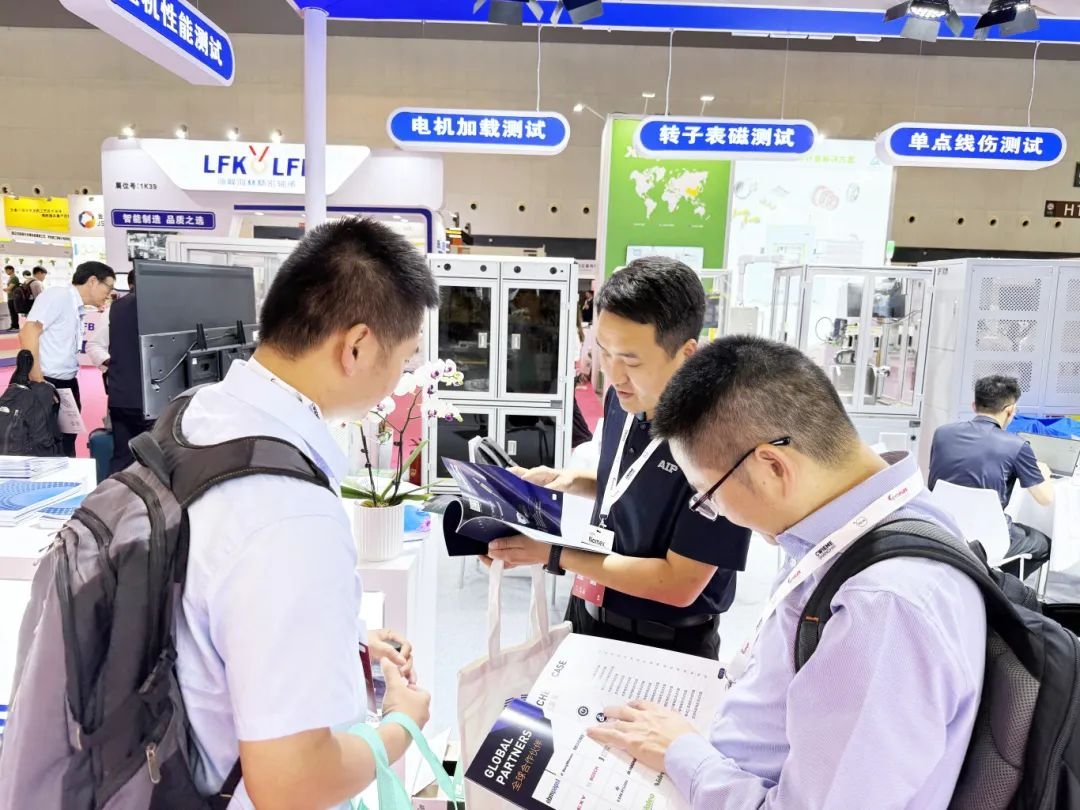
Qingdao, Shandong Jul 10, 2026 (Issuewire.com) - The global electrical manufacturing industry is facing an unprecedented turning point in electrification, with international markets accelerating their transition towards advanced automation and sustainable electric mobility. At the heart of this industrial transformation is CWIEME Berlin 2026—Europe’s leading trade fair for coil winding, motor manufacturing and transformer technology. Within the bustling halls of the Berlin Exhibition Centre, Europe’s Tier 1 automotive suppliers and heavy machinery manufacturers have gathered to address critical production bottlenecks. These manufacturing experts are actively seeking advanced motor testing equipment to ensure the absolute reliability of motor components under higher operating voltages. Amidst these intensive industrial exchanges, China AIP Instrument Company has attracted significant attention from global procurement managers by showcasing its highly stable motor testing systems. This standout participation highlights a growing trend: international manufacturers are directly integrating Asian expertise in motor testing technology into high-volume motor production lines in the West. By transparently demonstrating modern testing processes, the exhibition demonstrated how robust technical partnerships can successfully mitigate complex global supply chain risks. Global motor manufacturers can thus upgrade their production lines with reliable testing equipment, ensuring operational excellence.
Innovation Insights: Precision Diagnostics for Robots and Next-Generation Electric Vehicles
Modern precision manufacturing presents extreme mechanical and electrical challenges that standardised motor testing equipment can no longer address. For example, the rapid rise of advanced humanoid robots necessitates the large-scale deployment of frameless torque motors and compact hollow-cup structures. These complex power units feature extremely dense copper windings and minimal spatial tolerances, making them highly sensitive to localised micro-cracks in the insulation. To meet this highly specialised industrial demand, dedicated application teams have designed bespoke testing solutions for humanoid robot joint motors. These systems measure high-frequency transient responses within a compact stator architecture, identifying potential dielectric weaknesses prior to the final assembly of robotic arms or legs. By precisely mapping the electrical characteristics of low-voltage, high-torque configurations, this hardware ensures the safe operation of automated components under continuous load cycles. This specialised diagnostic approach provides critical quality assurance for robotics developers who demand flawless synchronisation and zero on-site failures.
At the same time, the rapid expansion of high-voltage electric vehicle architectures demands extremely high precision during the final stages of drive motor assembly. Permanent magnet synchronous motors require absolute magnetic and physical synchronisation between the internal rotor magnets and the external stator slots to prevent variations in back-EMF. In high-speed mass production, even the slightest misalignment can lead to severe torque fluctuations, excessive audible noise and long-term reductions in energy efficiency. To address this complex vulnerability in the powertrain system, technical experts have adopted a precision zero-point alignment system for new energy vehicle drive motors. This advanced configuration monitors structural alignment sensors in real time, enabling production line operators to achieve micron-level zero-point calibration instantly. Integrating this real-time positioning feedback directly into automated assembly lines eliminates the need for guesswork regarding parameters and ensures consistent powertrain throughput. Consequently, leading automotive brands utilise these advanced positioning systems to safeguard vehicle range and guarantee a quiet cabin experience.
Core Diagnostics Layer: Integrated Advanced surge, AC hi-pot and Partial Discharge Matrix
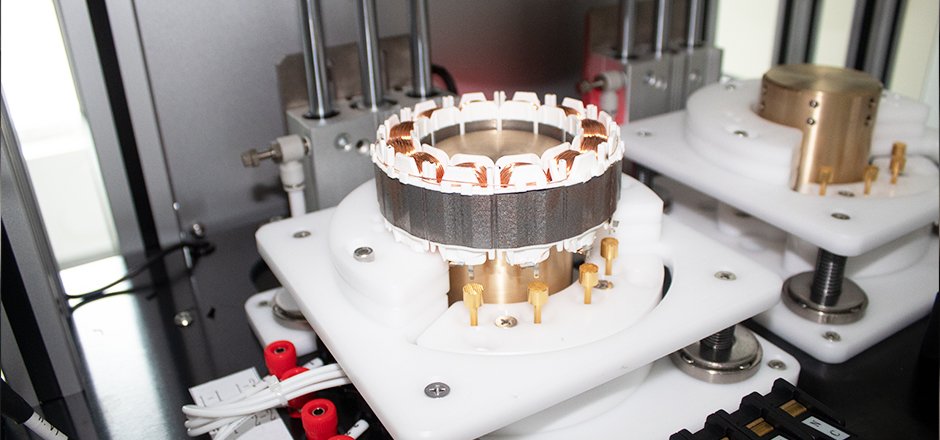
At the foundation of every successful motor evaluation lies a highly integrated electrical stress testing matrix. Detecting minute air gaps within modern card-type stators or dense transformer windings requires high-frequency waveform analysis that goes far beyond standard resistance checks. Manufacturing facilities integrate dedicated surge testers that apply rapid, non-destructive high-voltage pulses directly to component windings. Internal computerised software records the resulting voltage decay waveforms and immediately compares them against validated master reference curves. This high-speed waveform comparison captures subtle surge insulation faults, short circuits and corona discharges that conventional instruments completely overlook. Furthermore, the deployment of robust industrial withstand voltage testers enables manufacturing plants to conduct AC and DC dielectric strength assessments seamlessly. These specialised safety platforms completely isolate high-current paths and precisely measure leakage currents at the nanoampere level, thereby verifying the overall electrical insulation integrity prior to final encapsulation.
However, operating modern electric vehicles at voltage thresholds of 800V or higher introduces destructive electrical phenomena that standard high-voltage testing cannot detect. Under these extreme electrical stresses, microscopic air bubbles within the stator slot insulation may trigger localised creepage faults known as partial discharges. Over extended periods of operation, these minute air-gap discharges gradually erode the surrounding resin insulation, leading to sudden and catastrophic motor burnout. To eliminate these potential in-service failures, quality assurance teams deploy highly sensitive partial discharge testers at critical inspection points. This specialist diagnostic equipment utilises high-frequency coupling sensors to detect ultra-weak electromagnetic pulses at the sub-pico-coulomb level. By isolating these minute insulation creepage activities under simulated operating voltages, the system flags defective components at an early stage in the manufacturing cycle. Combined with surge analysis, AC hi-pot and partial discharge tracking, this provides an impenetrable quality barrier for high-voltage industrial applications.
Bridging the Compliance Gap: How AIP Integrates with the Stringent European Industrial Ecosystem
To operate successfully in the highly regulated European industrial market, strict adherence to complex data traceability frameworks and rigorous factory safety directives is essential. Modern smart manufacturing facilities can no longer rely on benchtop laboratory equipment that isolates quality parameters within isolated data silos. To bridge this digital divide, AIP Instrument(Qingdao AIP Intelligent Instrument Co., Ltd.) has configured its entire hardware infrastructure to support open industrial communication protocols. In-house control software transmits real-time diagnostic logs directly to the Manufacturing Execution Systems (MES) of international factories via native interfaces. This secure digital thread enables technical directors to remotely monitor quality distribution, predict machine wear and tear, and enforce strict automated error-proofing mechanisms. Should a component fail an initial inter-turn inspection, the integrated network immediately locks the physical fixture to prevent it from moving downstream. This comprehensive cyber-physical integration ensures full compliance with the Industry 4.0 paradigm and streamlines international product quality traceability audits.
Furthermore, meeting European metrological requirements necessitates that equipment manufacturers hold validated international safety and calibration certifications. Every set of advanced diagnostic components manufactured by AIP Instruments complies with all relevant CE and ISO standards. This strict alignment with global standardisation specifications ensures that international procurement directors can smoothly pass internal equipment acceptance audits without facing bureaucratic delays. At the same time, maintaining continuous production uptime across multiple continents requires a flexible, responsive technical support network to eliminate long-distance communication barriers. Many manufacturing plants review these real-world deployments through case studies featuring officially certified motor tester showcases to assess the durability of the hardware in the field. Should operational issues arise in European automotive production workshops, application specialists can remotely adjust internal software parameters via secure channels. This proactive global service framework ensures that multinational plants maintain peak equipment efficiency within intensive multi-shift production schedules.
Conclusion: Forging Future-Oriented Procurement Alliances with Global Testing Authorities
To mitigate complex macro-supply chain risks, international motor manufacturers need to establish strong technical alliances with authoritative instrumentation bodies capable of operating at scale. Transitioning to an advanced single-cycle validation framework can safeguard capital investments and enhance the overall system reliability of the entire automated assembly line. By integrating advanced pulse waveform analysis, high-sensitivity partial discharge detection, and real-time mechanical alignment systems, factories achieve comprehensive quality assurance. Ultimately, selecting a mature motor testing equipment manufacturer with extensive manufacturing assets enables global enterprises to maintain consistently high operational efficiency. Partnering with a proven technology innovator such as Qingdao AIP Intelligent Instrument Co., Ltd. not only secures a competitive market position but also guarantees consistent motor testing precision and long-term operational reliability.
To view specialised motor testing equipment and obtain detailed technical specifications, please visit the official global portal: https://www.aiptesting.com/.
Media Contact
Qingdao AIP Intelligent Instrument Co.,Ltd. *****@aipuo.com +86 532-87973318 BUILDING 3, NO.819 HUAGUAN ROAD, HI-TECH ZONE, QINGDAO, 266112 SHANDONG PROVINCE, CHINA https://www.aiptesting.com/