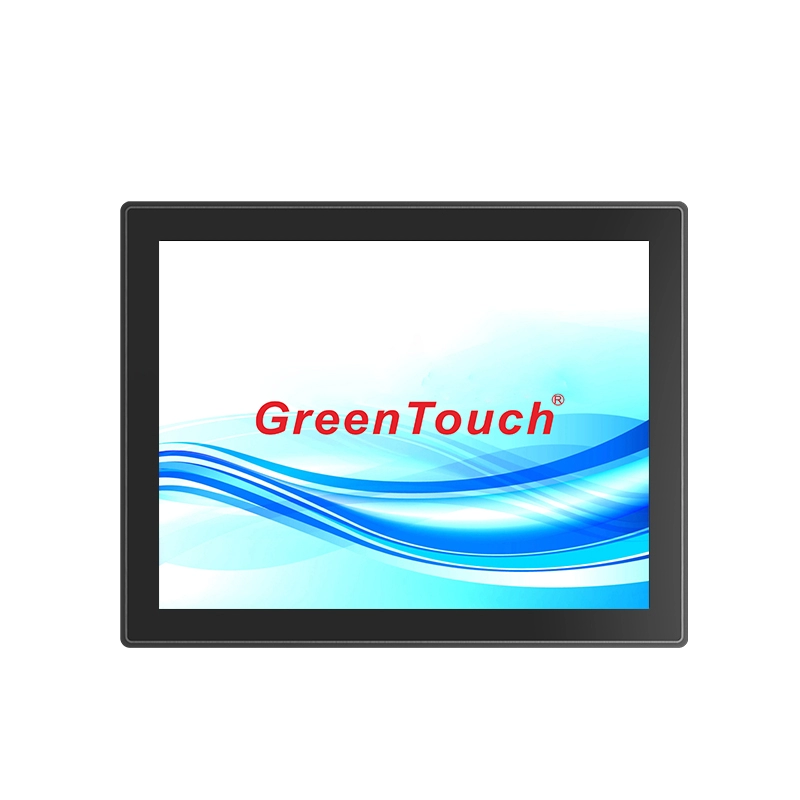
Shenzhen, Guangdong Oct 8, 2026 (Issuewire.com) - Developing specialized interactive equipment requires display hardware tailored to unique mechanical, functional, and aesthetic requirements. Standard off-the-shelf monitors rarely match custom enclosure cutouts, specialized mounting architectures, or corporate visual branding standards. Sourcing from an established custom touch monitor manufacturer allows original equipment manufacturers (OEMs) to tailor metal chassis geometries, cover glass treatments, interface connectivity, and exterior branding into a unified visual terminal. GreenTouch engineers collaborate directly with OEM hardware teams from concept design through serial production. Integrating display customization into early development prevents costly sheet metal rework, accelerates commercialization, and delivers a cohesive product identity for global deployments.
Align Enclosure Architecture with Equipment Aesthetics
Every successful custom display program begins with a comprehensive review of the host machine console. Available internal chassis depth, internal sheet metal clearances, viewing angles, and operator interaction heights dictate the permissible display form factor.
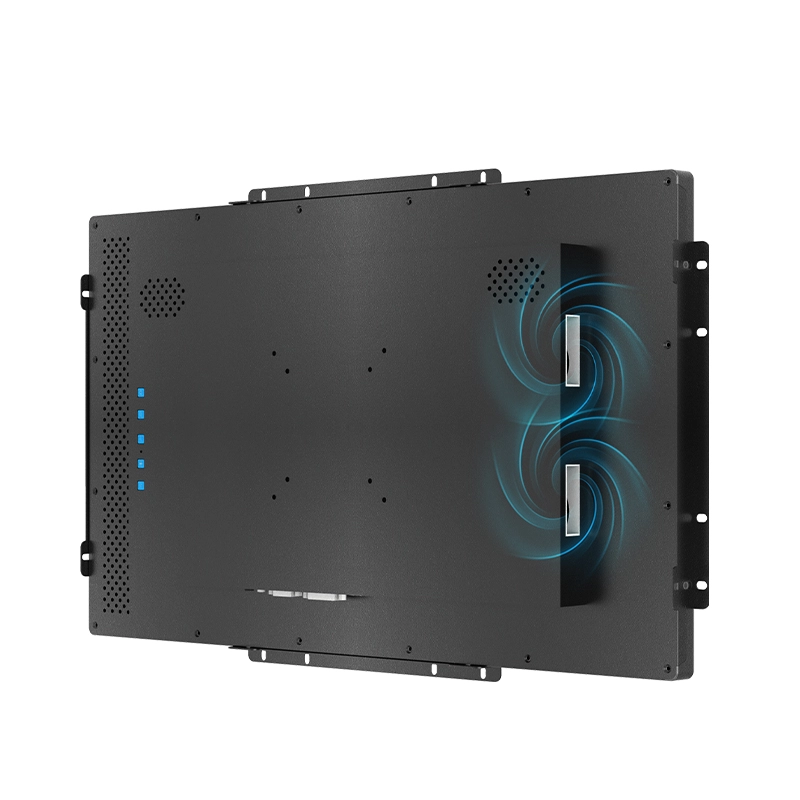
Custom chassis cutouts accommodate specialized connectors, internal cabling runs, and thermal dissipation paths. Sourcing from an experienced OEM supplier provides 2D dimensioned outline drawings (DXF/DWG) and 3D STEP/IGES models during layout planning, allowing mechanical designers to verify clearances, thermal convection channels, and cable paths before physical tooling begins. High-conductivity silicone gap pads (2.0 to 3.5 W/mK) couple internal heat sources directly to the chassis.
Conduction-cooled aluminum rear housings dissipate heat away from sensitive display electronics without noisy, failure-prone cooling fans, supporting continuous 24/7 operation across operating temperatures from -20°C to 70°C.
Select Structural Mounting Options for Cabinet AssemblyOpen-Frame Flanges and Side Mounting Brackets
Selecting an appropriate mounting architecture dictates structural rigidity, front-panel sealing, and visual integration. Open-frame monitors feature integrated side mounting flanges with slotted holes for flush installation behind cabinet cutouts, eliminating dirt-collecting perimeter bezels.
Rear VESA Architecture and Panel Clamping Systems
Cover glass customization tailors the outer touch surface for durability, aesthetics, and environmental resilience. OEMs can specify custom glass dimensions with dimensional tolerances maintained within ±0.2 mm, corner radii, beveled edge profiles, and precision CNC cutouts for cameras, RFID readers, barcode scanners, or mechanical emergency-stop buttons.
Customize Silkscreen Branding and Surface Treatments
Front cover glass customization elevates the visual identity of the host machine. OEMs can specify custom glass dimensions, corner radii, beveled edge profiles, and precision CNC cutouts for cameras, RFID readers, barcode scanners, or mechanical emergency-stop buttons.
High-temperature ceramic silkscreen printing permanently fuses border colors, corporate logos, and functional button icons to the rear surface of the cover glass at temperatures exceeding 650°C. This ceramic bonding process creates scratch-proof, chemical-resistant branding with surface hardness exceeding 7H, withstanding aggressive hospital disinfectants, alcohol, acetone, and industrial cleaning solvents without fading, peeling, or discoloration, providing long-lasting aesthetic appeal and brand consistency.
Specialized optical surface treatments include anti-glare (AG) chemical etching to diffuse harsh overhead reflections, anti-reflective (AR) coatings to reduce surface reflectance below 1.5% and increase contrast, and anti-fingerprint (AF) oleophobic treatments to minimize grease accumulation from continuous user interaction.
Configure Interface Connectivity and Internal Cabling
Standardizing interface connectivity ensures seamless integration with diverse host computing hardware. Video inputs include modern digital HDMI and DisplayPort connections alongside legacy analog VGA or DVI ports for retrofitting older machinery. Touch coordinate communication standardizes on USB 2.0 HID protocols for driverless plug-and-play operation across Windows, Linux, and Android platforms, with RS-232 serial options available for industrial PLC systems.
Internal cabling harnesses can be customized with specific lengths, specialized pinouts, and locking connector housings. Downward-facing or recessed side-facing I/O ports minimize required enclosure depth and facilitate orderly vertical cable routing.
Integrated ferrite suppressors and transient voltage suppression circuitry protect signal lines from electromagnetic interference and factory voltage transients, complying with EN 55032 and EN 61000-4-2 ESD standards.
Validate Thermal Stability and Environmental Protection
Internal power supply circuitry incorporates wide-voltage DC inputs (typically 9V to 36V DC) with over-voltage, over-current, reverse-polarity protection up to -36V DC, and transient surge suppression (IEC 61000-4-5 up to 2 kV line-to-line), shielding internal electronics from factory electrical transients and inductive motor starting spikes.
Front-panel ingress protection is validated through IP65 testing, confirming that the compressed closed-cell silicone gasket prevents water spray and airborne dust from entering the machine enclosure during washdown cycles. Chemically strengthened front cover glass achieving IK08 impact ratings ensures resilience against accidental tool strikes and vandalism.
Identifying and eliminating localized thermal hotspots and structural resonance vulnerabilities during prototype screening guarantees that volume production proceeds without assembly line delays.
Execute Pilot Prototyping and Production Tooling Freeze
Transitioning from virtual CAD models to mass production requires building representative pilot prototypes using production-intent tooling. GreenTouch fabricates evaluation samples to validate mechanical dimensions, FPC tail routing, optical clarity, and touch tracking accuracy before initiating full-scale manufacturing.
FAQ about Custom Touch Monitor Engineering
Equipment designers and procurement managers regularly evaluate these core engineering questions during custom monitor development.
What File Formats Are Needed to Initiate a Custom Monitor Tooling Quotation?
A complete engineering package includes 2D dimensioned mechanical drawings (DXF or DWG), 3D CAD models (STEP or IGES), target display specifications (active area and resolution), required touch technology, operating environment conditions, and compliance requirements.
How Does Direct Optical Bonding Benefit Custom Monitors?
Direct optical bonding fills the internal air gap between cover glass and LCD panel with optical clear resin (OCR) or adhesive (OCA). This process permanently eliminates internal reflections, improves contrast under bright ambient lighting, enhances structural impact resistance, and prevents moisture condensation in humid environments.
What Minimum Order Quantities Apply to Custom Monitor Tooling?
GreenTouch provides flexible MOQ structures, supporting low-volume prototype and pilot production runs (10 to 100 units) to validate tooling before scaling to full volume manufacturing.
Initiate Your Custom Monitor Program with GreenTouch
Developing a custom touch monitor requires harmonizing mechanical design, optical bonding, firmware tuning, and environmental protection. GreenTouch provides complete OEM and ODM engineering support, from initial CAD modeling through cleanroom fabrication and volume serial delivery. Equipment manufacturers and system integrators can submit project specifications directly at https://www.greentouch.com.cn/ for engineering review and prototype evaluation.
Media Contact
ShenZhen GreenTouch Technology Co.,Ltd. *****@greentouch.com.cn https://www.greentouch.com.cn/