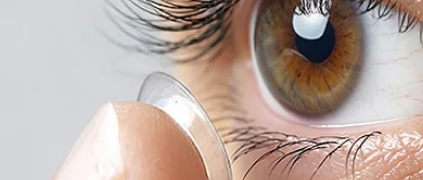
Baiyin, Gansu Aug 26, 2026 (Issuewire.com) - Every time you insert a contact lens, you place a polymer film over the only tissue in your body that gets its oxygen directly from the air. The cornea — the clear dome at the front of your eye — has no blood vessels. It depends entirely on oxygen that diffuses through the tear film from the atmosphere. Understanding how contact lens oxygen permeability, measured as Dk and Dk/t, influences corneal health is the single most important technical knowledge any lens wearer can have. The difference between a lens with a Dk/t of 17 and one with 150 can mean the difference between all-day comfort and chronic corneal stress. This article, compiled by Constar (Gansu Constar Technology Group), a China-based contact lens OEM and ODM manufacturer, explains the numbers, the science behind them, and what every wearer should look for when choosing lenses — so you can make an informed decision with your eye care professional.
Contact Lens Oxygen Permeability at a Glance
- Dk measures oxygen permeability of the lens material — how easily oxygen passes through a given polymer.
- Dk/t (oxygen transmissibility) is the practical number: Dk divided by lens thickness. Higher = more oxygen reaches your eye.
- Holden-Mertz thresholds: Dk/t ≥ 24.1 for daily wear; Dk/t ≥ 87.0 for overnight wear — the minimums to prevent corneal swelling.
- Silicone hydrogel lenses deliver Dk/t values of roughly 100–180, versus 20–40 for traditional hydrogel.
- Silicone hydrogel dominates: 88.4% of global contact lens revenue in 2021, reflecting the shift toward higher oxygen permeability.
What Is Contact Lens Oxygen Permeability (Dk)?
Oxygen permeability — abbreviated Dk — is a material property that expresses how readily oxygen molecules diffuse through a contact lens. The letter D stands for the diffusion coefficient (how fast oxygen moves through the material), and k stands for the solubility coefficient (how much oxygen the material can hold). The unit is the Barrer, expressed as ×10⁻¹¹ cm²/(s·mL O₂/mL·mmHg) at 35°C, as specified in ISO 18369-4 (the international standard for measuring contact lens oxygen permeability).
But Dk alone doesn't tell you how much oxygen actually reaches your eye. A thicker lens with the same Dk blocks more oxygen. That's why Dk/t — oxygen transmissibility — is the number your eye care professional should focus on. Dk/t = Dk ÷ lens thickness. The higher the Dk/t, the more oxygen passes through to the cornea per unit of time.
Why Oxygen Permeability Matters for Your Eyes
The cornea is unique in human anatomy. Unlike skin or muscle, it receives no direct blood supply. Instead, it absorbs oxygen from the air through the tear film. The moment you cover the cornea with a contact lens, you create a barrier that restricts this oxygen flow. If the lens material has low oxygen permeability, the cornea begins to starve — a condition called corneal hypoxia.
The consequences are well documented. Corneal hypoxia can cause:
- Corneal neovascularization — new blood vessels grow into the normally clear cornea, permanently clouding vision.
- Corneal edema — swelling that causes blur, halos, and discomfort.
- Increased infection risk — hypoxic corneal cells are weakened, making bacterial and fungal keratitis more likely.
- Endothelial cell changes — long-term structural damage to the innermost corneal layer.
A landmark study by Holden and Mertz (1984), confirmed in subsequent reviews including a peer-reviewed analysis published in the Cochrane Library, established the minimum Dk/t thresholds needed to prevent corneal swelling during wear — the numbers that still underpin modern contact lens fitting today.
Hydrogel vs. Silicone Hydrogel: The Dk Gap
Not all soft contact lenses deliver the same oxygen supply. The two major material categories — hydrogel and silicone hydrogel — differ dramatically in their oxygen permeability, and understanding this gap is essential for eye health.
- Traditional hydrogel lenses transport oxygen through their water content. Their Dk values typically fall between 10 and 40 Barrer, and their Dk/t ranges from about 17 to 35 — often below the Holden-Mertz daily-wear threshold of 24.1.
- Silicone hydrogel lenses incorporate silicone into the polymer matrix, creating channels that transport oxygen independently of water content. Their Dk values range from roughly 60 to 190 Barrer, and Dk/t from 80 to 180 — far above both the daily-wear and overnight-wear thresholds.
That gap is not theoretical. Research confirms that silicone hydrogel lenses allow up to six times more oxygen to reach the cornea than traditional hydrogel. In 2021, silicone hydrogel lenses represented over 88.4% of total contact lens revenue globally, reflecting how decisively the market has shifted toward materials that better support corneal health.
Key Insight: High water content does not automatically mean high oxygen permeability. Water transports oxygen in hydrogels, but in silicone hydrogels, oxygen flows through the silicone phase — so a low-water silicone hydrogel lens can still deliver far more oxygen than a high-water hydrogel lens. The material matters more than the moisture number on the box.
Holden-Mertz Thresholds: How Much Oxygen Do Your Eyes Need?
In 1984, researchers Brian Holden and Nerida Mertz published the foundational data that established minimum oxygen transmissibility requirements for contact lens wear. Their findings remain the standard reference cited in optometric education worldwide and were validated in the peer-reviewed literature reviewed by the Cochrane systematic review:
- Daily wear (removing lenses at night): minimum Dk/t of 24.1 × 10⁻⁹ to prevent clinically significant corneal edema.
- Overnight wear (sleeping in lenses): minimum Dk/t of 87.0 × 10⁻⁹ to prevent corneal swelling during closed-eye conditions.
Traditional hydrogel lenses often fall below the 24.1 threshold, which is why eye care professionals generally recommend silicone hydrogel for anyone who wears lenses for more than a few hours. And only silicone hydrogel lenses — with Dk/t values well above 87 — are FDA-approved for overnight or extended wear. Sleeping in a low-Dk hydrogel lens is one of the most common causes of preventable corneal complications.
How to Read Your Lens Dk/t Number
Most contact lens packaging and professional fitting guides list the Dk/t value. Here is how to interpret it:
- Dk/t below 20: Insufficient for safe daily wear. Corneal hypoxia risk is significant even with short wear times.
- Dk/t 20–35: Marginal for daily wear. Acceptable only for occasional, short-duration use; not recommended for full-day wear.
- Dk/t 35–80: Adequate for daily wear for most users. Meets the Holden-Mertz daily threshold but is not approved for overnight wear.
- Dk/t above 87: Approved for overnight and extended wear. This is the silicone hydrogel range, where corneal oxygen supply approaches open-eye conditions even with lenses in place.
Your eye care professional should be able to tell you the exact Dk/t of the lens they prescribe. If they can't or won't, that's a reason to ask again — or find a new provider.
What This Means When Choosing Contact Lenses
Oxygen permeability is one of several factors — along with base curve, diameter, water content, and lens design — that determine whether a contact lens is right for you. But it is arguably the most important factor for long-term corneal health. When selecting lenses:
- Ask your eye care professional for the Dk/t value of any lens being prescribed, and compare it against the Holden-Mertz thresholds.
- Prefer silicone hydrogel if you wear lenses more than 6 hours a day — the oxygen permeability advantage is clinically meaningful over a full day.
- Never sleep in a lens unless it is specifically approved for extended wear with a Dk/t above 87.
- Consider daily disposables — they reduce infection risk through single-use hygiene, and today's silicone hydrogel daily disposables combine the highest oxygen permeability with the lowest contamination risk.
- Look for ISO 18369-tested materials — any reputable manufacturer should be able to provide Dk test data conducted under this standard. Constar's clear and colored contact lens portfolios are manufactured under ISO 13485 quality systems and tested to ISO 18369-4 for oxygen permeability.
Frequently Asked Questions: What does Dk mean on contact lenses?
Dk is the oxygen permeability of the lens material, expressed in Barrer units. It measures how easily oxygen diffuses through the polymer. The higher the Dk, the more oxygen passes through the lens to the cornea. Dk/t (transmissibility) divides Dk by lens thickness to give the practical oxygen delivery number.
Is silicone hydrogel better than hydrogel for oxygen permeability?
Yes. Silicone hydrogel lenses typically deliver Dk/t values of 100–180, compared to 17–35 for traditional hydrogel. This means 4–6 times more oxygen reaches the cornea, reducing hypoxia risk, neovascularization, and infection — making silicone hydrogel the preferred material for full-day and overnight wear.
Can I sleep in my contact lenses?
Only if the lenses carry FDA approval for extended wear and have a Dk/t above 87.0. Sleeping in lenses with lower oxygen permeability starves the cornea of oxygen during the closed-eye state, dramatically increasing the risk of inflammation, serious infections, and corneal damage. Always follow your eye care professional's guidance.
About Constar
Gansu Constar Technology Group Co., Ltd. is a China-based contact lens OEM and ODM manufacturer serving global brands and distributors in more than 40 countries. Founded more than 40 years ago and headquartered in Baiyin, Gansu Province, the company operates six production facilities with a capacity of over 15 million lenses per month. All Constar lens materials are manufactured under ISO 13485 quality management and tested to ISO 18369-4 for oxygen permeability, with portfolios spanning silicone hydrogel daily disposables, monthly lenses, and colored/cosmetic series. Constar holds US FDA (510(k), Class II), EU CE 0197 (MDR), TGA, SFDA, AKL, and Class B (Vietnam) certifications.
Sources:
Holden BA, Mertz GW. Critical oxygen levels for overnight wear of hydrogel and silicone hydrogel contact lenses. Invest Ophthalmol Vis Sci. 1984.
Jones L, et al. Silicone hydrogel versus hydrogel soft contact lenses for differences in patient-reported eye comfort and safety. Cochrane Database Syst Rev. 2010 (PMC8110199).
Pozuelo J, et al. Oxygen permeability of contact lens materials — ISO 18369-4 polarographic method. Gels. 2024.
Constar — Product Portfolio and ISO 18369-4 testing documentation.
Media Contact
Gansu Constar Technology Group CO.,LTD info@constarfactory.com https://www.constarfactory.com/




