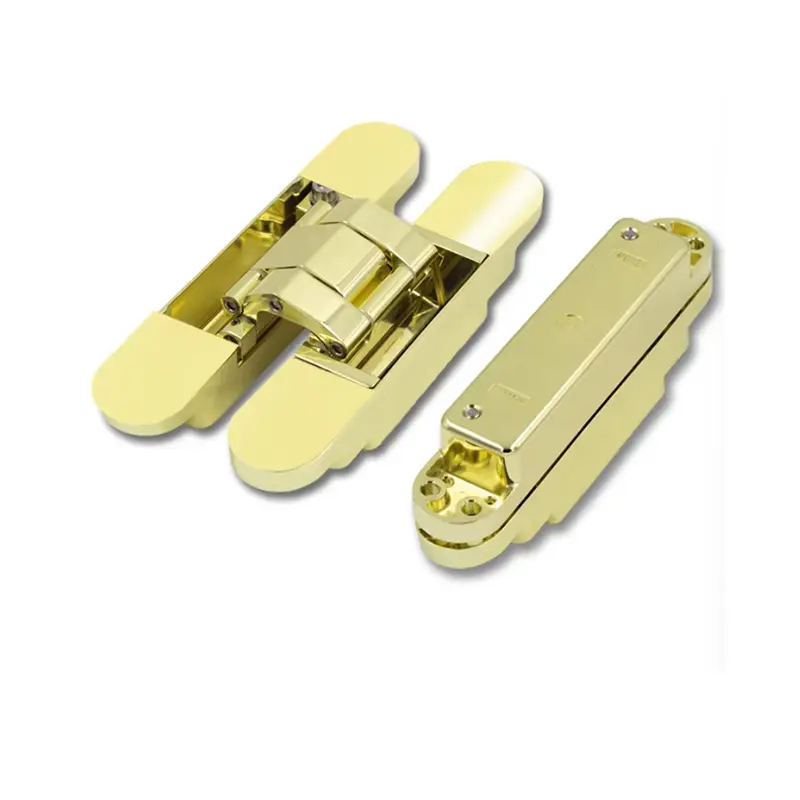
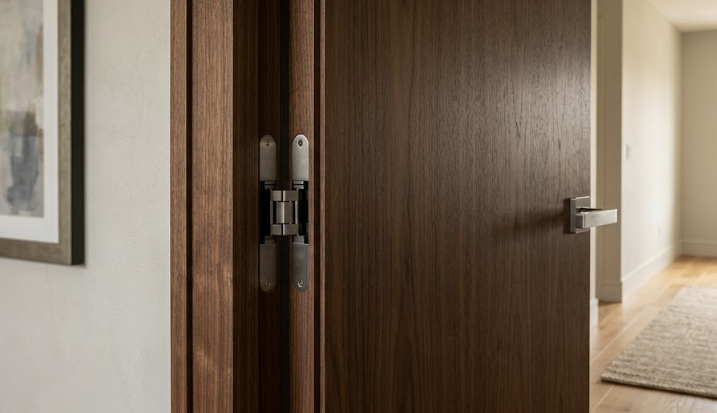
Shenzhen, Guangdong Apr 8, 2026 (Issuewire.com) - The evolution of interior architecture has increasingly moved toward minimalism, where clean lines and seamless surfaces define high-end residential and commercial spaces. Central to this aesthetic shift is the emergence of the modern flush door, a design that sits perfectly level with the wall. To achieve this silhouette, the hardware must be invisible yet high-performing. Advanced 3D Concealed Hinges for Modern Flush Doors represent the pinnacle of this functional art, moving beyond the limitations of traditional pivoting hardware to offer a solution that is as technically precise as it is visually silent. Unlike standard hinges that remain exposed, these internal mechanisms allow for a "hidden" installation, ensuring that the door’s surface remains uninterrupted while providing multi-axis adjustability to maintain perfect alignment over time.
Aesthetic Integration vs. Visual Obstruction
The most immediate distinction between concealed and traditional hinges lies in visual continuity. Traditional butt hinges require the knuckle and pin to be visible on the exterior of the door frame. In a modern minimalist setting, these protruding metal components act as visual obstructions, breaking the vertical lines of the entryway.
Conversely, Skeid’s 3D concealed hinges are engineered to be entirely recessed within the door leaf and the frame. When the door is closed, the hardware is completely invisible. This allows the door to become a cohesive part of the wall’s architecture, a critical requirement for "invisible door" designs and high-end ecological gates. By removing the industrial look of exposed metal, designers can focus on the texture of the wood or the finish of the flush panel without distracting hardware.
Precision Calibration vs. Fixed Positioning
Traditional hinges offer very little room for error during installation. Once a standard hinge is mortised and screwed into place, its position is largely fixed. If a building settles or if the door leaf warps slightly due to humidity, correcting the alignment often requires removing the door, shimming the hinges, or re-drilling holes—a labor-intensive process that can damage the frame.
The technical innovation of the Skeid VT80 series lies in its integrated 3D adjustment system. This technology allows installers to calibrate the door in three dimensions—vertical, horizontal, and depth—using simple tools after the door is hung.
- Vertical Adjustment: Compensates for floor clearance and header alignment.
- Horizontal Adjustment: Ensures the gap between the door and the frame is perfectly uniform on both sides.
- Depth Adjustment: Controls the compression of the seals, which is vital for acoustic insulation and preventing drafts.
This level of precision ensures that flush doors remain "flush" even years after the initial installation, maintaining the architectural integrity of the project.
Structural Durability vs. Weight Limitations
While traditional hinges are often limited by the shear strength of their pins, Skeid’s advanced concealed hinges utilize high-strength alloys designed for heavy-duty applications. Drawing from 20 years of manufacturing experience, the engineering team has optimized the load-bearing geometry of the hinge arms. The VT80 series, for example, is designed to support significant weight loads, making it suitable for solid-core wooden doors and large-scale ecological gates that are common in contemporary luxury developments.
Skeid’s R&D team has focused on reducing friction points within the hinge mechanism. By incorporating high-performance bushings and wear-resistant materials, these hinges pass rigorous cycle testing, ensuring they do not sag or squeak over decades of use. This structural reliability is a direct result of the company’s dual focus as both an Original Equipment Manufacturer (OEM) and an Original Design Manufacturer (ODM), blending specialized technical research with large-scale industrial production stability.
Versatile Application vs. Specialized Usage
Traditional hinges are often categorized strictly by the environment—residential vs. industrial. However, modern architectural demands require hardware that bridges these gaps. Skeid’s product portfolio, which includes not only 3D concealed hinges but also specialized lock bodies and ergonomic handles, is designed for a broad spectrum of applications.
These hinges are increasingly utilized in:
- High-End Residential: For master suites and hidden walk-in closets where the "flush-to-wall" look is paramount.
- Commercial Offices: For executive boardrooms requiring a clean, professional aesthetic combined with high-traffic durability.
- Ecological Gates: Where sustainable materials require hardware that can adapt to the natural movements of organic door cores.
- By offering a comprehensive suite of hardware, Skeid provides a unified technical standard across a project’s entire opening specification, ensuring that the lock body and handle work in mechanical harmony with the 3D hinge system.
Technical Excellence and Manufacturing Standards
The transition from traditional hardware to advanced 3D systems is supported by Skeid's deep manufacturing heritage. Established with a foundation of two decades of expertise, the company operates with a strong technical research and development team that prioritizes verifiable data over marketing claims. Each component undergoes strict quality control to meet international standards, providing architects and contractors with the necessary certifications to specify these products in global projects.
The commitment to technical innovation is reflected in the specialized VT80 product line. These hinges are not merely decorative; they are mechanical solutions for complex architectural challenges. Whether it is a project involving high-density wooden doors or specialized flush-mounted ecological gates, the focus remains on providing a stable, adjustable, and silent operation. This expertise is further validated by the company’s history of participation in international trade exhibitions and its portfolio of successful project implementations, which serve as a benchmark for reliability in the hardware industry.
As the industry continues to move toward smarter, more integrated building solutions, the role of the hinge has evolved from a simple pivot point to a sophisticated piece of precision engineering. Skeid’s 3D concealed hinges define this new era, offering the silent strength and aesthetic invisibility required for the next generation of modern interior design.
For more information on technical specifications and product applications, please visit the official website: https://www.skdwerk.com/
Media Contact
Shenzhen Skeid Technology CO.,Ltd sales1@wico-special-hinge.com




