Shaoxing, Zhejiang Jun 14, 2026 (Issuewire.com) - The global textile and apparel industry is currently experiencing a major shift toward automated, high-efficiency, and smart manufacturing systems. Within the sock manufacturing sector, balancing production speed, yarn compatibility, operational versatility, and cost efficiency has become the primary challenge for enterprises seeking long-term profitability. For international buyers, sourcing equipment from a reliable Premium Fully Automatic Socks Making Machine Manufacturer is no longer just about acquiring machinery; it is a strategic investment that directly impacts product quality, yield rates, and overall business scalability. Navigating the highly competitive global market requires a structured evaluation framework that goes beyond surface-level pricing to scrutinize technical innovation, quality assurance protocols, and complete downstream support.
STEP 1: Define Precise Production Requirements and Target Market Specifications
Before evaluating any manufacturing partner, procurement teams must thoroughly audit their internal production goals. The technical architecture of a modern sock factory depends entirely on the types of products intended for the end consumer. For instance, manufacturing standard athletic compression socks demands significantly different tension controls and needle counts compared to producing complex jacquard fashion hosiery or invisible low-cut socks.
Industrial buyers must define critical operational parameters, including target daily output, specific yarn materials (such as combed cotton, bamboo fiber, polyester, or covered elastane), and necessary dimensional sizes. Defining these metrics helps determine whether a standard plain knitting setup or a highly specialized machine configuration is required. A clear internal technical brief accelerates communication with potential manufacturers and filters out suppliers whose product lines lack the specific technical depth required for your target market.
STEP 2: Evaluate Comprehensive Corporate Infrastructure and International Reputation
Once internal parameters are set, the second step is to assess the supplier's corporate history, manufacturing infrastructure, and industry reputation. A reliable partner must possess an integrated corporate structure that seamlessly unites research and development, manufacturing, international marketing, and customer service. Companies that manage the full lifecycle of their products consistently demonstrate better control over mechanical tolerances and software updates than pure trading entities or fragmented local workshops.
A prime industry example of an integrated framework is Rainbowe, established in 2011 as Shaoxing Rainbowe Machinery Co., Ltd. Located in Shaoxing City, a primary global hub for textile engineering, the company has spent over a decade refining its internal development and production workflows. By adhering to an operational philosophy centered on technical innovation and strict quality dependence, the enterprise has established a resilient international footprint. When analyzing a manufacturer, buyers should look for steady annual growth and a proven track record of handling high-volume international orders, which serve as strong indicators of commercial stability and reliable delivery timelines.
STEP 3: Analyze Product Technical Performance and Mechanical Engineering Capabilities
The core of any evaluation lies in the technical specifications and build quality of the machinery. Buyers must closely analyze the mechanical engineering, driving systems, and internal structural components of the equipment. Modern fully automatic sock making machines must feature advanced computer control systems, high-speed servo drives, and multi-functional knitting configurations to ensure precision at high speeds.
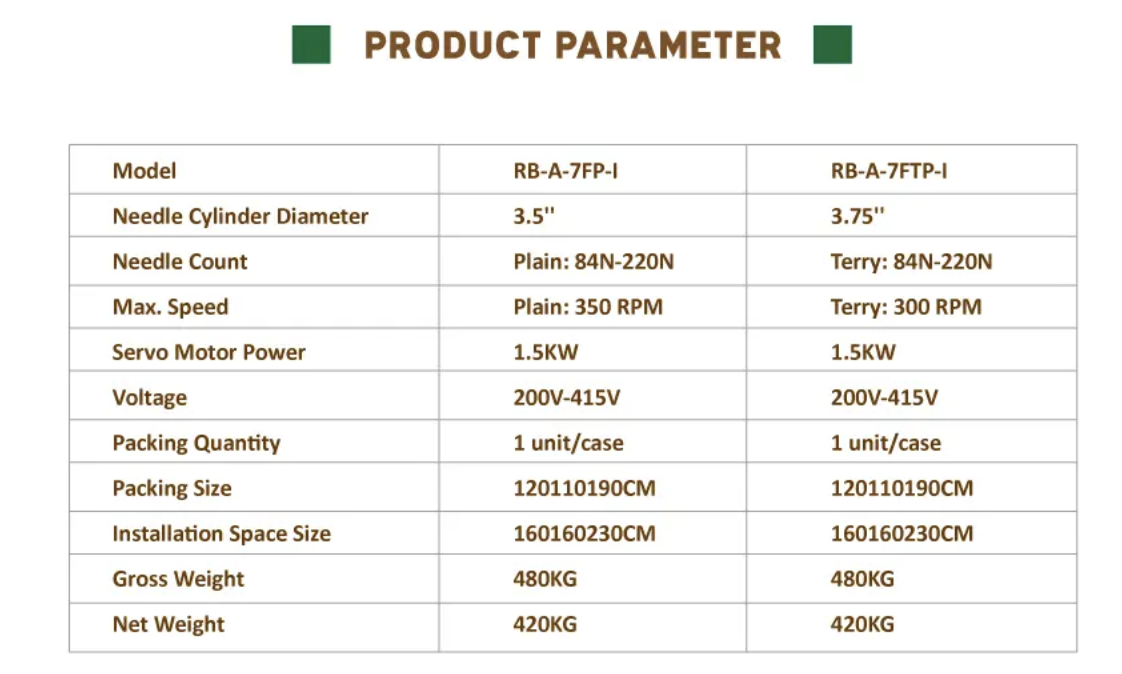
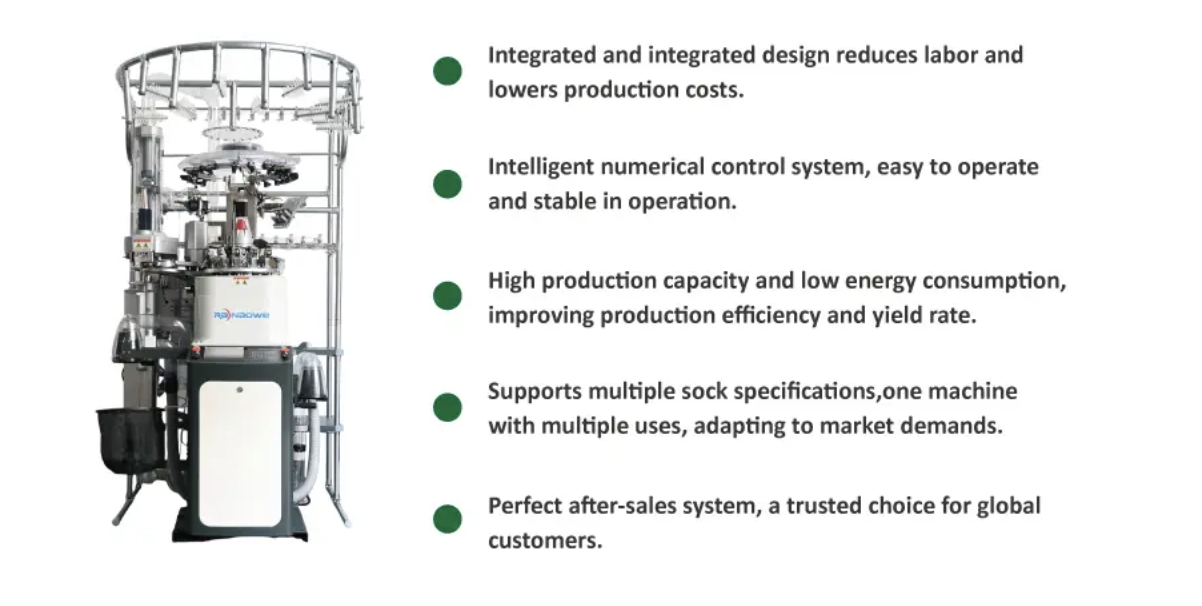
A major benchmark for modern high-efficiency production lines is the 7F fully automatic high-speed heavy-duty sock machine, designed to support advanced configurations like invisible sock manufacturing. Unlike traditional 6F models, 7F technology integrates advanced mechanical upgrades that allow for high-speed operation under heavy structural loads without compromising fabric uniformity. This equipment features a fully computerized control interface, multi-directional yarn feeders, and a reinforced frame that minimizes vibration during high-RPM cycles.
Technical parameters to scrutinize include needle cylinder diameters, needle counts (ranging from 96N to 168N or 200N depending on density requirements), and the machine's ability to seamlessly switch between plain and terry knitting styles. This flexibility allows factories to produce everything from summer ankle liners to heavy-duty winter thermal socks on a single production floor, optimizing capital expenditure and boosting operational efficiency.
STEP 4: Scrutinize Quality Control Frameworks and International Certifications
Technical features mean very little if a machine cannot maintain operational stability across thousands of continuous running hours. Reliable manufacturers implement strict quality control protocols at every step of production, from raw casting inspection to final high-speed calibration before shipping. Buyers should look for suppliers that use premium raw components, advanced CNC machining centers for cylinder production, and rigorous stress-testing procedures.
The most straightforward way to verify an overseas supplier's quality standards is through recognized international certifications. A manufacturer must hold compliance credentials such as the European Union’s CE certification and ISO9001 quality management standards. These documents prove that the machinery meets strict international safety, environmental, and operational efficiency laws. Furthermore, a manufacturer's active participation in major international textile machinery exhibitions (such as ITMA, SaigonTex, or regional industrial trade fairs) shows their commitment to maintaining globally competitive engineering practices.
STEP 5: Verify Auxiliary Equipment Availability and Downstream Integration
Socks production is a multi-stage process that extends far beyond the initial knitting cycle. A fully optimized manufacturing plant requires a complete ecosystem of downstream auxiliary machinery to transform raw knitted tubes into market-ready retail products. Sourcing individual pieces of equipment from fragmented suppliers often leads to integration errors, mismatched production speeds, and complicated maintenance workflows. Therefore, a premier manufacturer should offer an end-to-end equipment portfolio.
A comprehensive production line requires advanced auxiliary systems, including sock toe linking machines for high-precision seams, sock boarding machines for final heat shaping, and specialized dotting or tagging units for commercial branding. Additionally, the availability of compatible sock label sewing machines, automated packing units, and specialized embroidery equipment is critical for keeping production moving smoothly.
Leading suppliers provide a single point of procurement for both heavy machinery and high-quality raw materials, such as spandex covered yarns, nylon, and polyester. This comprehensive supply capability ensures that all downstream processes operate at matching speeds and tension levels, reducing material waste and lowering total operational overhead.
STEP 6: Assess Post-Sale Technical Support and Long-Term Service Systems
The final and most critical step in choosing a manufacturer is evaluating their long-term customer service framework. Industrial machinery requires ongoing maintenance, software updates, and a steady supply of precision spare parts over a lifecycle that often spans decades. A failure in technical support can lead to prolonged factory downtime, which directly impacts a brand's delivery schedules and market reputation.
A reliable manufacturer must offer a well-structured service system that includes remote technical diagnostic support, detailed operational training materials, and an efficient global spare parts logistics network. When a manufacturer views customer satisfaction as an ongoing partnership rather than a one-time transaction, it creates a secure operational environment for the buyer. Choosing a manufacturing partner that combines verified mechanical reliability with a robust global service structure allows textile enterprises to protect their capital investments and position themselves for sustainable growth in the global apparel market.
Corporate Website: https://www.rbsockmachine.com/
Media Contact
SHAOXING RAINBOWE MACHINERY CO., LTD ophelia@sxrainbowe.com