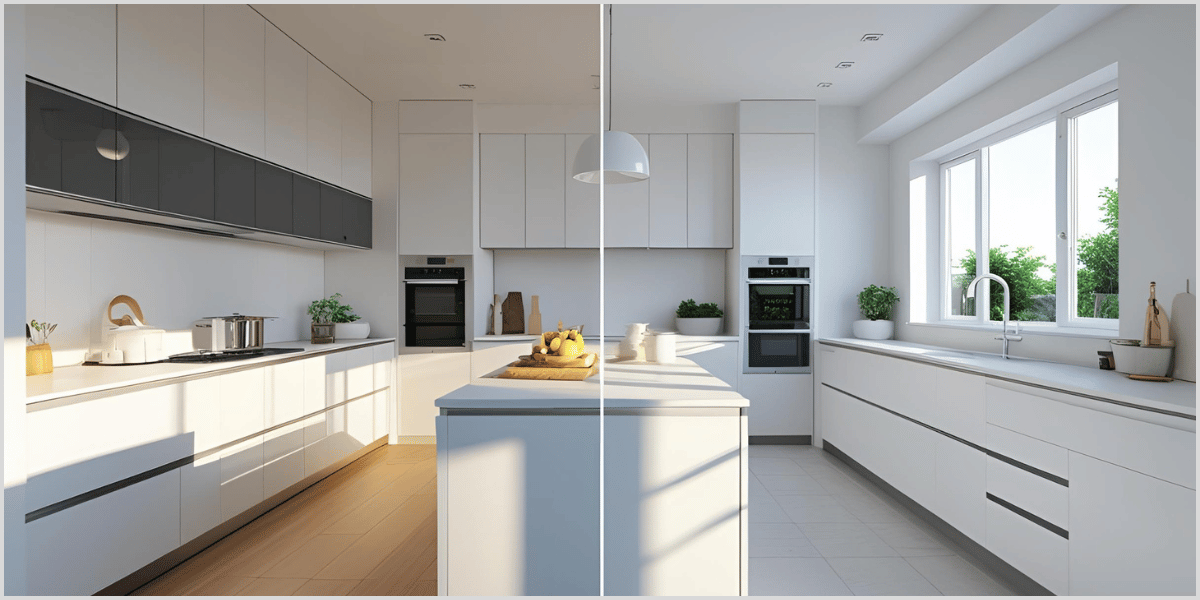
Delhi, India Jun 10, 2025 (Issuewire.com) - Captivating visual content is now a need rather than a luxury in the fast-paced and very competitive real estate industry. Properties displayed in a visually appealing way attract potential buyers and investors so they may see the whole possibilities of a property. Particularly for highlighting home improvements, the integration of excellent photography with 3D visual comparisons is one of the most transforming methods of property marketing used nowadays. This striking mix not only improves the visual appeal of listings but also offers a useful and immersive means to show the possibilities of a rebuilt area. Combining photography and 3D visualizations transforms property renovations, the advantages of this approach, the process involved, and the part PixelShouters, a top provider of real estate visual marketing services, plays in delivering these solutions in this thorough guide.
The Value of Real Estate Visual Storytelling
First impressions are what the real estate business lives on. The National Association of Realtors claims that while perusing homes online, 87% of home buyers find pictures to be the most valuable tool. Visual material provides a complete knowledge of the layout, design, and potential of a property, therefore influencing purchase decisions. But when it comes to renovations especially, standard photography by itself usually falls short in capturing the whole extent of a house. Empty or outdated areas could seem unappealing, and purchasers could find it difficult to see how a house might look following renovations.
This is where 3D visual comparisons and photography combine to be useful. Real estate agents can create a striking "before and after" story by combining photorealistic 3D representations of a property's renovated potential with top-notch images of its existing condition. This strategy closes the imagination gap by enabling consumers to see changes and so build an emotional connection that influences their choice to buy. Modernizing an old kitchen, redesigning a bathroom, or improving curb appeal with outside additions—the synergy of these two media provides unequaled clarity and involvement.
Captivating visual content is now a need rather than a luxury in the fast-paced and very competitive real estate industry. Properties displayed in a visually appealing way attract potential buyers and investors so they may see the whole possibilities of a property. Particularly for highlighting home improvements, the integration of excellent photography with 3D visual comparisons is one of the most transforming methods of property marketing used nowadays. This striking mix not only improves the visual appeal of listings but also offers a useful and immersive means to show the possibilities of a rebuilt area. Combining photography and 3D visualizations transforms property renovations, the advantages of this approach, the process involved, and the part PixelShouters, a top provider of real estate visual marketing services, plays in delivering these solutions in this thorough guide.
The Value of Real Estate Visual Storytelling
First impressions are what the real estate business lives on. The National Association of Realtors claims that while perusing homes online, 87% of home buyers find pictures to be the most valuable tool. Visual material provides a complete knowledge of the layout, design, and potential of a property, therefore influencing purchase decisions. But when it comes to renovations especially, standard photography by itself usually falls short in capturing the whole extent of a house. Empty or outdated areas could seem unappealing, and purchasers could find it difficult to see how a house might look following renovations.
This is where 3D visual comparisons and photography combine to be useful. Real estate agents can create a striking "before and after" story by combining photorealistic 3D representations of a property's renovated potential with top-notch images of its existing condition. This strategy closes the imagination gap by enabling consumers to see changes and so build an emotional connection that influences their choice to buy. Modernizing an old kitchen, redesigning a bathroom, or improving curb appeal with outside additions—the synergy of these two media provides unequaled clarity and involvement.
Why Would One Combine 3D Visualizations with Photography?
For real estate professionals, homeowners, architects, and builders, the combination of photography and 3D representations provides a wealth of advantages. The main benefits are:
1. Improved Visualized Buyer
Photographs precisely depict the present condition of a property, therefore highlighting its original characteristics, layout, and condition. It can not, however, show future opportunities. Conversely, 3D visualizations let experts construct photorealistic drawings of suggested improvements, therefore illustrating how a room might look following repairs. Presenting side-by-side comparisons of "before" images and "after" renderings helps purchasers to clearly grasp the transformation possibilities, therefore facilitating their vision of themselves in the place.
2. Time and Monetary Effectiveness
Usually requiring weeks or months of physical labor to show the potential of a home, traditional renovations are expensive and time-consuming. 3D rendering helps experts to illustrate improvements without the requirement for actual changes by virtual renovations. Since homes can be shown in their "renovated" condition even before construction starts, this saves a lot of resources and lets speedier marketing times possible.
3. More Interest and Engagement
Enhanced listings including 3D visual comparisons draw more clicks, views, and offers. Excellent graphics combined with great photos produces a visually appealing narrative that attracts purchasers. A virtual tour highlighting a restored interior, for instance, might make an empty or outdated home appear warm, inviting, and modern, therefore raising buyer interest.
4. Competitive Edge in a Constrained Market
In a cutthroat real estate market, you really must stand out. Standard listings are not like properties with professional photographs and 3D renderings. Real estate agents and developers have a clear advantage in being able to highlight both the renovated potential and the present state, therefore presenting their listings as creative and progressive.
5. Made Decisions with Knowledge
Clear knowledge of the layout, design, and possible changes of a property thanks to 3D visual comparisons helps consumers. This openness helps buyers to make wise judgments by lowering uncertainty and therefore building trust in their purchase. These images offer as a guide for refurbishment ideas for builders and contractors, therefore reducing expensive errors.
6. Flexibility Over Various Property Styles
From a residential house to a business building to an urban development project, the mix of photos and 3D visuals is flexible. To fit different customer tastes, it can draw attention to distinctive architectural details, contemporary renovations, or environmentally friendly design aspects.
Combining 3D Visuals with Photography: The Process
Establishing a flawless integration between photography and 3D visuals calls for a methodical approach using cutting-edge technology and knowledgeable experience. Professionals mix these tools to highlight property renovations here in a detailed step-by-step breakdown:
Step 1: Property Evaluation and Pictures
The method starts with a careful evaluation of the property to grasp its present state, design, and special characteristics. To get thorough photographs of the inside and outside, professional photographers employ top-notch tools including wide-angle lenses and DSLR cameras. Particularly in areas with different light levels, methods including High Dynamic Range (HDR) photography are used to guarantee ideal illumination and detail. Several views and viewpoints are caught to present a whole picture of the present situation of the property.
Step 2: 3D Modeling and Scanning
Advanced scanning technologies—such as Matterport cameras—are utilized to record spatial data and dimensions, therefore producing a 3D model of the property. To produce a digital replica of the property, this information is then imported into 3D modeling programs as Autodesk 3ds Max, SketchUp, or Blender. Virtual renovations start with the construction, interior design, and surrounding environment of the building.
Step 3: Design Virtual Renovations
Designers and 3D artists work with clients using the 3D model to coordinate renovations. This can call for flooring changes, wall additions or removal, fixture updates, or modern furniture and décor inclusion. The aim is to produce a photorealistic representation reflecting the intended modifications, such a sleek, modern kitchen or a rebuilt outside area with more landscaping.
Step 4: Integration and Photo-Matching
Combining photos and 3D visualizations depends critically on photo-matching. To guarantee authenticity and accuracy, this technique aligns the 3D representations with actual property photos. The representations flow naturally with the images by matching camera angles, lighting conditions, and viewpoints, therefore producing a coherent "before and after" comparison. Perfect photo-matching made possible by programs like 3ds Max and V-Ray lets artists change shadows, lighting, and texture to get a lifelike outcome.
Step 5: Post-Production and Enhancement
Images are post-produced to improve their visual appeal following rendering. This covers retouching, color correction, and final touches to guarantee the renderings are exactly like actual photos. High-resolution photos, virtual tours, and 3D floor plans highlighting the refurbished vision as well as the existing situation comprise the last deliverables.
Step 6: Marketing and Presentation
Clients or possible buyers are shown the merged images via several channels, including websites, social media, and virtual tours. Interactive components improve the viewing experience by letting consumers thoroughly explore the property thanks to 360-degree walkthroughs and clickable floor layouts. To enhance reach and interaction, these images might be posted on Redfin, Zillow, or Instagram.
PixelShouters: Leading Real Estate Visual Market Leader
Renowned in real estate visual marketing, PixelShouters provides a whole range of services including virtual staging, 3D rendering, and photography to enhance property listings. PixelShouters produces excellent, photorealistic images using a team of talented CAD designers, 3D artists, and picture editing experts that improve the appeal of homes and increase sales. The services of PixelShouters are summarized below together with how they help to combine 3D visual comparisons with photographs for property repairs.
Services Offered by PixelShouters
-
Real Estate PhotographyProfessional real estate photography is the area of expertise for PixelShouters, who captures high-quality photographs highlighting homes in their best possible condition. Their photographers guarantee that every detail—from architectural details to natural lighting—is precisely caught using HDR methods and sophisticated tools. "Before" images in remodeling comparisons are derived from these pictures.
-
3D Rendering and VisualizationPixelShouters shines in producing photorealistic 3D renderings for interior and outside environments. Their staff creates amazing renderings of rebuilt homes using industry-leading programs such 3ds Max, V-Ray, and Lumion. These models show contemporary designs, current fixtures, and improved layouts, therefore giving purchasers a clear picture of the possible value of a property.
-
Virtual StagingOne of PixelShouters' main offerings is virtual staging, which lets them turn vacant or out-of-date areas into inviting, contemporary settings. Photographs featuring virtual furniture, décor, and accessories help to create inviting environments that appeal to purchasers. This service works especially well for highlighting renovation opportunities on empty homes.
-
3D Floor PlansPixelShouters provides 2D and 3D floor plans, transforming hand-drawn sketches or CAD files into finely detailed, highly accurate layouts. Their three-dimensional floor plans allow buyers see the arrangement of a house and grasp spatial flow, thereby guiding their ideas of remodeling. Often for a complete viewing experience, these blueprints are combined with virtual tours.
-
Virtual RenovationPixelShouters' virtual renovation service lets experts highlight property improvements without actual changes. Photographs mixed with 3D renderings produce striking "before and after" images that show the effects of renovations—such as upgraded bathrooms, redesigned kitchens, or improved exteriors.
-
Matterport 3D ToursPixelShouters generates immersive 3D virtual tours using Matterport technology that let purchasers virtually explore homes. These tours let viewers move between 3D walkthroughs, dollhouse views, and bird's-eye floor plan perspectives by smoothly matching with floor plans. This service improves the view of refurbished areas, therefore increasing their accessibility to buyers.
-
Aerial Photography and Drone ServicesPixelShouters uses drones to get breathtaking aerial views of homes, stressing neighboring amenities, landscaping, and exterior features. These pictures help to explain how changes might improve curb appeal and blend with the surroundings of the house, therefore supporting 3D representations.
-
Photo Editing and EnhancementTo guarantee photographs are market-ready, PixelShouters offers color correction, retouching, and virtual additions. To show professionally, they can clear clutter, fix little flaws, or add virtual vegetation to photos.
-
Real Estate Floor Plan ConversionReal Estate Floor Plans turn hand-drawn sketches, photos, or CAD files into 2D and 3D floor plans, therefore offering exact and aesthetically pleasing layouts. These layouts are tailored to fit customer needs and include furnished and unfurnished choices to highlight refurbishment possibilities.
How PixelShouters Improves Residential Visuals
Real estate agents looking to highlight improvements rely on PixelShouters' knowledge of fusing photography with 3D visuals as a reliable partner. Their approach entails:
-
Consultation and Customization: PixelShouters works closely with clients to learn their target audience and refurbishment aspirations. Whether it’s a business facility or a luxury house, their crew crafts images to fit the client’s idea.
-
State-of-the-Art Technology: PixelShouters creates photorealistic images indistinguishable from professional photos by means of modern software and instruments. Their usage of tools driven by artificial intelligence guarantees quick turnaround times by simplifying repetitious activities.
-
Affordable Solutions: PixelShouters provides reasonably priced solutions, thereby enabling developers of all kinds, real estate agencies, and homeowners to access premium graphics.
-
Comprehensive Marketing Support: Beyond design, PixelShouters offers advice on how to maximize reach and interaction by using these assets across digital channels like social media, MLS listings, and websites.
PixelShouters produces a seamless "before and after" experience that emphasizes the transforming potential of renovations by combining their photography and 3D visualization technologies. Their efforts not only improve the look of homes but also increase buyer interest and quicken transactions.
Case Studies: Practical Uses
Let’s consider a few hypothetical situations where PixelShouters’ services have been utilized to show the effects of merging photography and 3D visual comparisons:
Case Study 1: Remodeling an Older Suburban House
Selling a suburban house from the 1970s with an antiquated kitchen and unassuming facade falls to a real estate agent. To produce an engaging graphic presentation, the agent teamed with PixelShouters. Professional photographers highlight the roomy layout of the house but dated elements by capturing high-resolution pictures of the current condition. PixelShouters then produces 3D renderings depicting a contemporary kitchen with new appliances, quartz worktops, and open shelves as well as an exterior with revised siding and a front yard that has been landscaped. Combining the "before and after" images into a virtual tour lets consumers view the restored potential as well as the present. The listing generates a lot of interest and many offers within a few days.
Case Study 2: Marketing an Under-Construction Condo
Pre-selling condos in a brand-new condominium project is the developer. Traditional photography is not a possibility while building is still under way. With virtual staging, PixelShouters creates 3D renderings of the interiors using architectural plans, therefore highlighting contemporary designs. They also record overhead drone views of the building site and surrounding area, which they then combine with 3D renderings to depict the eventual development in context. Early buyer attention and pre-sales are secured by the shared unified images on the developer’s website and social media.
Case Study 3: Planning for Renovation of a Commercial Space
A vintage office building is to be renovated under the direction of an architect. PixelShouters helps them to visually compare their vision to investors. Photographers record the building’s present condition, catching its unappealing facade and deteriorated inside. Then PixelShouters creates 3D renderings depicting a modernized office with open-plan workspaces, revised lighting, and a sleek façade. Presenting the side-by-side images in a virtual tour helps investors to be persuaded of the possible success of the project and guarantee financing.
Future Directions in 3D Visualizations and Photography
Driven by technological developments, the discipline of real estate visual marketing is changing quickly. These developing trends will improve the mix of photography and 3D visualizations even more:
-
Virtual Reality (VR) and Augmented Reality (AR): While augmented reality (AR) overlays virtual renovations onto real-world images, allowing buyers to perceive improvements in real-time, virtual reality (VR) lets consumers "walk through" refurbished homes in a totally immersive setting.
-
AI-Powered Automation: AI-powered automation is simplifying processes including texture application and lighting changes, therefore lowering production times and costs.
-
Hyperrealistic Renderings: Advances in rendering software are creating visuals almost exactly like images, hence boosting the realism of 3D comparisons.
-
Interactive 3D Tours: Matterport and other sites are combining 3D tours with clickable floor plans and restoration simulations to provide a more interesting and dynamic experience.
-
Sustainability Visualizations: Growing awareness of environmentally friendly design is driving 3D visualizations of sustainable renovations including green landscaping and energy-efficient fixtures to highlight.
Real Estate Professionals’ Best Practices
Real estate professionals should use these recommended practices to maximize the effects of combining photographs and 3D visual comparisons:
-
Hire Experienced Professionals: Work with respectable businesses like PixelShouters to guarantee premium images consistent with your brand and vision by means of experienced professionals.
-
Prepare the Property: Before photography, clean, organize, and maximize lighting to guarantee the "before" pictures look as best as they could.
-
Tailor Visuals to Your Audience: Customize 3D drawings to fit the tastes of your target audience—modern designs for young professionals or traditional styles for luxury consumers, for example.
-
Leverage Multiple Platforms: Share images on websites, social media, and MLS listings to best maximize exposure. Increase visibility with popular hashtags and SEO techniques.
-
Be Transparent: Tell clearly which aspects are virtual to control buyer expectations and prevent disappointment during in-person viewings.
Finish
Professional photography combined with 3D visual comparisons is changing the way real estate companies market property improvements. Professionals can build striking visual narratives that enthrall purchasers and increase sales by combining photorealistic renderings of a property’s renovated potential with high-quality images of its present condition. Leading this change is PixelShouters with its extensive array of services—real estate photography, 3D rendering, virtual staging, and Matterport tours. Their knowledge of creating flawless "before and after" images helps architects, developers, and real estate brokers present houses in their best light, therefore enabling more affordable, interesting, and powerful restorations. The combination of photography and 3D visualizations will always be essential for effective real estate marketing as technology develops since it will help properties stand out in a crowded market and realize ideas.
Media Contact
Pixelshouters eric@pixelshouters.com 08287546986 Pocket 26, Sector-24, Rohini, Delhi, 144, Pocket 26, Sector-24, Rohini, Delhi https://www.pixelshouters.com/