Qingdao, Shandong Mar 31, 2026 (Issuewire.com) - The global woodworking industry is currently navigating a significant technological shift, where the precision of final products is increasingly dictated by the caliber of machinery used in the initial cutting phase. For many professional workshops, the sliding table saw remains the heart of production, essential for achieving the perfectly square cuts required for modern cabinetry and furniture. When upgrading these critical assets, workshop owners often find themselves at a crossroads: should they invest in long-standing local brands with high prestige, or turn toward a Top 10 Sliding Table Saw Factory from China? While local suppliers have traditionally dominated the high-end market, the emergence of Tier-1 Chinese manufacturers—who now combine massive production scales with advanced CNC-driven engineering—is redefining the global value proposition for woodworkers.
The Modern Dilemma: Prestige vs. Performance ROI
In markets across Europe, North America, and Southeast Asia, the typical dilemma involves balancing the immediate reliability of a local distributor against the significant technological leap offered by leading Chinese industrial bases. Historically, Chinese machinery was viewed through the lens of cost-saving; however, as the industry enters a period of "technological equalization," the gap in output quality between European giants and China’s top-tier factories like Qingdao Yongqiang Woodworking Machinery Co.,Ltd(UNISUNX) has narrowed to the point of near-indistinguishability. The core of this evolution lies in Investment Return (ROI). By opting for a leading Chinese manufacturer, workshops can often acquire a high-precision digitalized system for the same capital outlay required for a basic manual machine from a local brand.
Manufacturing Precision and Build Quality
The primary concern for any workshop manager is whether a machine can maintain its accuracy under multi-shift workloads. Local suppliers often emphasize their historical craft, but modern precision is a product of heavy-duty engineering rather than legacy.
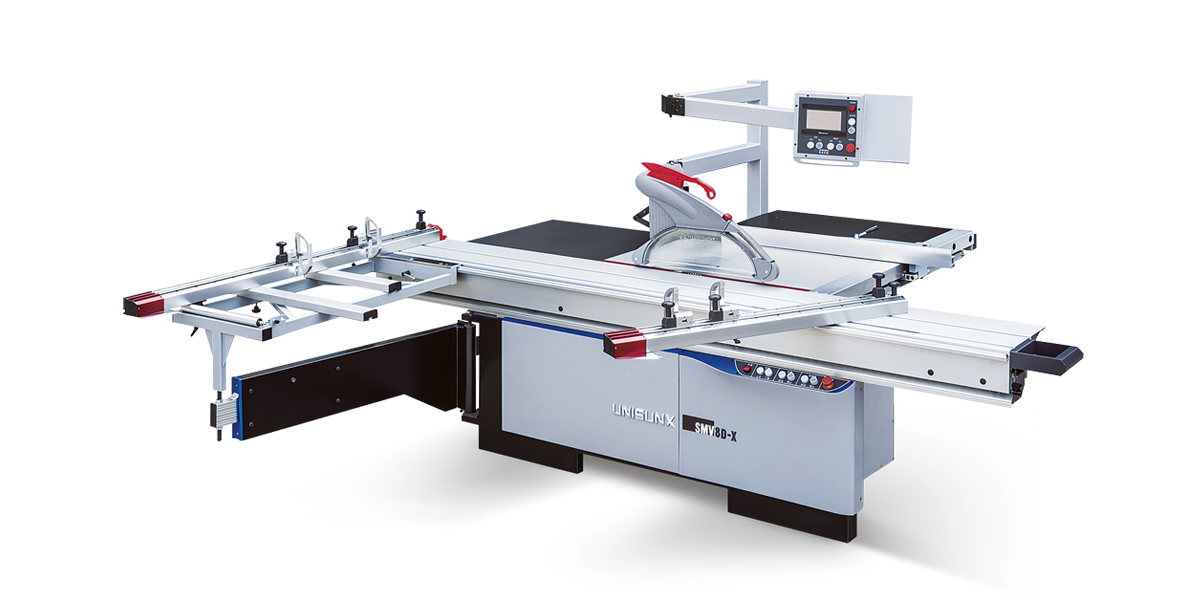
Top Chinese factories have transitioned to using high-grade CNC machining centers to process their machine frames. For instance, in the construction of the SMV8D-X panel saw, the focus is on a heavy-duty cast iron structure and anti-vibration design. This ensures that the internal components remain aligned even when processing large, dense panels. A critical differentiator in modern builds is the use of high-precision round bar guideways or large-format sliding structures. These components are designed to keep tolerances within a 0.1mm range over years of operation. The stability provided by these reinforced structures allows the machine to handle high-speed cutting without the micro-oscillations that often plague lighter, entry-level local equipment.
Technical Innovation and the Shift to Digitalization
A significant shift is occurring in how operators interact with machinery. While many mid-market local suppliers in various regions still rely on manual hand-wheel adjustments for blade height and tilting, the top 10 Chinese factories have normalized digitalization.
Innovation in this sector is now defined by "ease of use." Modern panel saws from leading Chinese bases feature integrated CNC control systems where the operator manages the rip fence, blade height, and tilting angles via a centralized touch screen. This "Chinese-style innovation" addresses a critical global challenge: the shortage of highly skilled woodworkers. By automating the positioning of the saw, the dependence on operator experience is minimized, reducing human error and material waste. This transition from mechanical adjustment to digital precision allows smaller workshops to achieve industrial-level consistency.
Initial Investment vs. Long-term ROI
The financial logic of sourcing from a top-tier Chinese factory is compelling when viewed through the lens of business expansion. In a direct cost analysis, the capital required to purchase a premium local brand can often secure a much higher specification from a leading Chinese producer.
For a workshop owner, this means that instead of a standard manual saw, they can implement a fully automated CNC sliding table saw for a similar budget. The long-term benefit extends beyond the initial purchase; shorter payback cycles allow for faster reinvestment into raw materials, facility expansion, or specialized labor. When a machine pays for itself in half the time compared to a more expensive local equivalent, the workshop’s competitive edge in the local market increases significantly.
Global Supply Chain and After-Sales Support
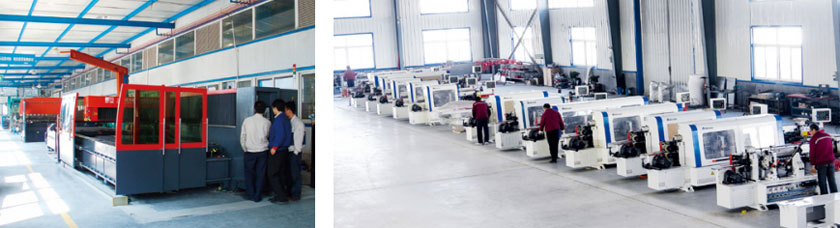
A common hesitation regarding international procurement is the perceived difficulty of maintenance. However, the top woodworking machinery brands in China have spent the last three decades building robust global supply chains. Companies like UNISUNX, which operates three major production facilities, have established themselves as OEM providers for many well-known global brands.
This means that the internal components—motors, electrical systems, and bearings—are often standardized parts available globally. Furthermore, the top-tier Chinese factories utilize sophisticated remote diagnostic tools. If a technical issue arises, engineers can often troubleshoot the software or control system via a cloud connection, bypassing the need for an immediate physical site visit and reducing downtime.
Customization Capabilities and Delivery Efficiency
One of the distinct advantages of a Top 10 Chinese factory is the flexibility in production. Local suppliers often carry fixed stock with standardized configurations. In contrast, large-scale Chinese manufacturing bases are optimized for customization. Whether a workshop requires a specific sliding table length to fit a unique floor plan or requires a specific voltage configuration for their region, Chinese factories are generally more equipped to adjust their production lines.
Furthermore, the concentration of industrial clusters in regions like Qingdao ensures that the entire supply chain—from casting to electronics—is within a small radius. This logistical efficiency means that even with transoceanic shipping, the total lead time from order to installation is often comparable to, or even faster than, ordering a custom unit from a local supplier who may be facing their own domestic supply chain bottlenecks.
Conclusion
Deciding between a local supplier and a top Chinese factory is no longer a choice between quality and price, but rather a strategic decision regarding technology and growth. For workshops aiming to scale, the precision, digital integration, and superior ROI offered by leading Chinese manufacturers like UNISUNX represent a sustainable path forward. As these machines continue to prove their durability in high-intensity environments globally, the "Made in China" label on a sliding table saw has become a hallmark of industrial efficiency and technical parity.
For more information on high-precision woodworking solutions, visit: www.unisunx.com
Media Contact
Qingdao Yongqiang Woodworking Machinery Co.,Ltd ericliu@qd-yongqiang.com http://www.unisunx.com