Yangzhou, Jiangsu Feb 3, 2026 (Issuewire.com) - Understanding the Global Landscape: China vs. Europe
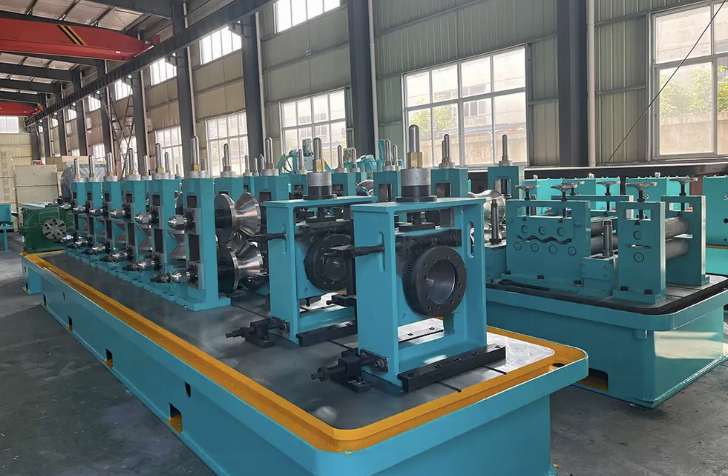
In the rapidly evolving landscape of industrial infrastructure, HF Welded Pipe Machinery Manufacturing from China has emerged as a cornerstone of global steel tube production. As global demand for efficient, cost-effective, and durable piping solutions increases, buyers are increasingly evaluating the technological gap between traditional European manufacturers and the rising industrial prowess of Chinese engineering. The rise of Chinese manufacturers in this field stems not only from cost advantages but also from their deep commitment to technological research and development. Modern Chinese high-frequency welded pipe units integrate highly automated control systems, enabling precise monitoring of the entire process from uncoiling, forming, welding, sizing to flying saw cutting.
For decades, European manufacturers—particularly those from Germany and Italy—set the gold standard for tube mill technology. Their machines are known for exceptional precision, heavy-duty longevity, and advanced automation systems. However, the paradigm is shifting. Chinese manufacturers have transitioned from being "low-cost alternatives" to "high-value competitors." Today, the performance gap in terms of weld quality and production speed has narrowed significantly, while the cost-benefit ratio has swung heavily in favor of Chinese suppliers.
European machines often come with a premium price tag, driven by high labor costs and complex proprietary software that can be expensive to maintain. In contrast, Chinese HF welded pipe machinery offers a more modular and accessible approach. These systems are designed for high-frequency operation and are often more adaptable to various steel grades. For global buyers, the choice often boils down to "total cost of ownership." Chinese mills provide a faster return on investment (ROI) without compromising the structural integrity of the final product, making them the preferred choice for emerging markets and established infrastructure projects alike.
So, What Do Buyers Need?
For global buyers at this crossroads, the criteria have evolved far beyond "functionality" to four mission-critical performance benchmarks
- The "Micron-Level" Precision Ceiling: It’s Accuracy or Nothing
For the modern industrial buyer, a pipe mill is no longer just a machine—it is an extension of precision engineering. From automotive chassis components to high-pressure gas lines, buyers are demanding minimal Heat Affected Zones (HAZ) with relentless scrutiny. They aren't looking for a "rough" workhorse; they need a stabilized system that masters induction frequency and guarantees ovality tolerances measured in microns. In the eyes of the industry, whoever solves the "ultimate forming" puzzle wins the premium market.
- The "Second-Response" Efficiency Revolution: Ending the Downtime Nightmare
In the "time-is-money" world of industrial blogs, Quick Changeover is the ultimate trending topic. Global buyers are losing patience with setup processes that eat up hours of production. They favor agile systems—automated or semi-automated—that allow for seamless specification switching at the touch of a button. Efficiency is no longer just about top-line speeds; it’s about the agility to pivot between orders without missing a beat.
- The "Digital Soul" of Industry 4.0: From Energy Monitoring to Smart Brains
This is no longer a battle of hardware; it is a competition of computing power. Today’s global buyers are searching for a "digital partner." They demand equipment integrated with advanced PLC systems, remote diagnostics, and real-time energy analytics. With "Carbon Neutrality" moving from a slogan to a balance-sheet reality, a "Smart Mill" that uses algorithms to optimize power consumption and reduce waste is now the top choice for multinational corporations.
- The "Lifecycle Value" Beyond Borders: The ROI & Service Gamble
Buyers are becoming increasingly rational: they aren't just looking at the price tag on the initial check; they are calculating the Total Cost of Ownership (TCO). The rapid delivery and extreme cost-performance of Chinese manufacturing are clashing head-on with the legendary durability and high resale value of European brands. However, the true tie-breaker is often the "Service Radius." Buyers demand that, whether their factory is in Southeast Asia or South America, a spare part or technician must be accessible within 48 hours.
Bridging Quality and Experience: The Yangzhou Mivi Approach
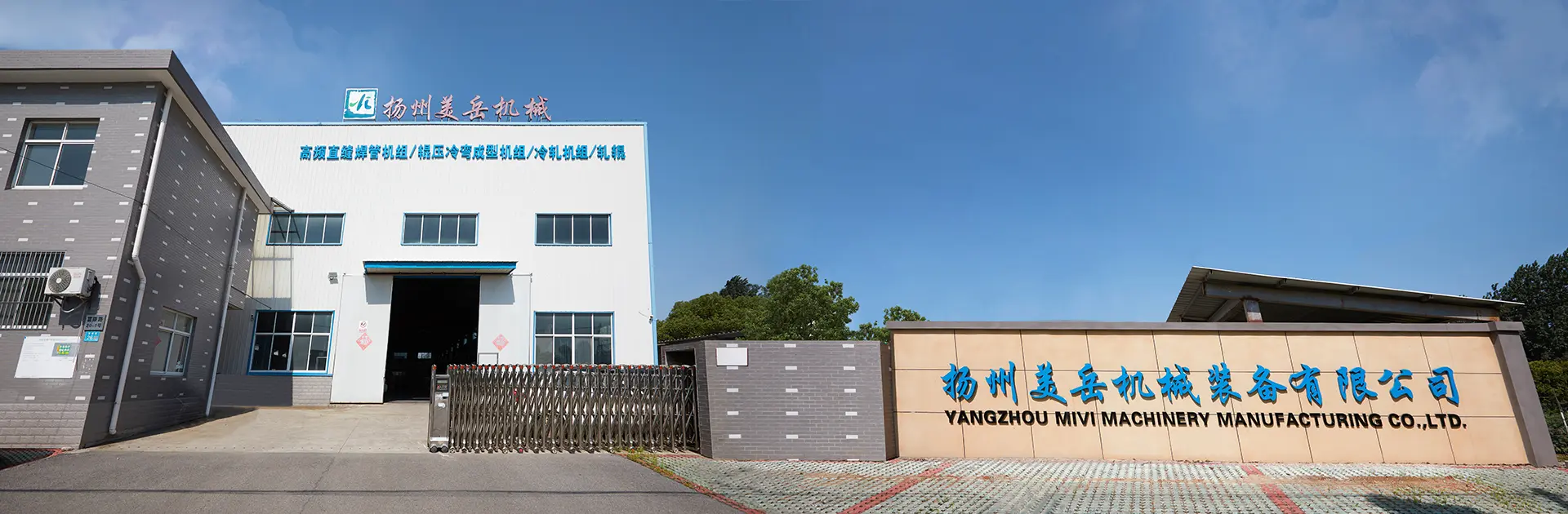
In an increasingly competitive global market, Yangzhou Mivi Machinery Manufacturing Co., Ltd. serves as a premier example of the maturity of Chinese industrial engineering. With over 20 years of export experience, the company possesses a profound understanding of international quality standards and buyer expectations. Its expansive 25,000 m² modern manufacturing base is not only a guarantee of production capacity but also the foundation of a comprehensive industrial ecosystem that integrates independent R&D, precision manufacturing, and global sales.
The core strength of Mivi lies in its exceptional ability to balance "complex engineering" with "practical usability." Unlike simple assemblers, Mivi optimizes mechanical stress from the design phase to ensure equipment remains robust in extreme environments. This is particularly evident in their HF Welded GI (Galvanized Iron) tube mill lines. By achieving precise control over high-frequency induction frequencies and extrusion pressure, these lines maintain rigorous tolerances even during 24-hour continuous, high-load operations. This stability significantly reduces material waste and maintenance costs for clients, marking a true transition from "Made in China" to "High-Value Engineering."
Technical Innovation and Core Competencies
To maintain a competitive edge in the international market, Mivi has focused on several key areas of technical innovation and service excellence:
Advanced Integrated Control Systems: Their machinery utilizes synchronized PLC systems that allow operators to monitor every stage of the milling process—from uncoiling and leveling to forming, welding, and sizing—ensuring consistency in pipe diameter and wall thickness.
High-Precision Tooling and Rollers: The durability of a tube mill is determined by its rollers. Mivi employs high-grade alloy steels and precision grinding techniques to ensure that the rollers have a long service life, reducing the frequency of maintenance and replacement.
Rapid Tooling Changeover Technology: Recognizing the industry trend toward diverse production runs, Mivi’s designs focus on reducing the time required to switch between different pipe dimensions, thereby increasing the overall equipment effectiveness (OEE).
Comprehensive Global Support: Beyond the hardware, the company provides a localized service experience, assisting global buyers with installation, commissioning, and technical training to ensure the machinery operates at peak efficiency from day one.
Conclusion: Strategic Sourcing for the Modern Era
As the global market for steel pipes continues to expand, the decision-making process for buyers has become more nuanced. While European machinery remains a symbol of prestige, Chinese HF Welded Pipe Machinery Manufacturing has proven to be the pragmatic choice for those seeking a balance of innovation, efficiency, and economic viability. Companies like Yangzhou Mivi Machinery Manufacturing Co., Ltd. are not just selling machines; they are providing the foundational technology that builds cities and powers industries. By focusing on technical refinement and a deep understanding of global market needs, they have bridged the gap between cost and quality.
For more information on Mivi’s full range of tube mill solutions and technical specifications, please visit: https://www.mivimachine.com/
Media Contact
Yangzhou Mivi Machinery Manufacturing mivi@mivigroup.com