
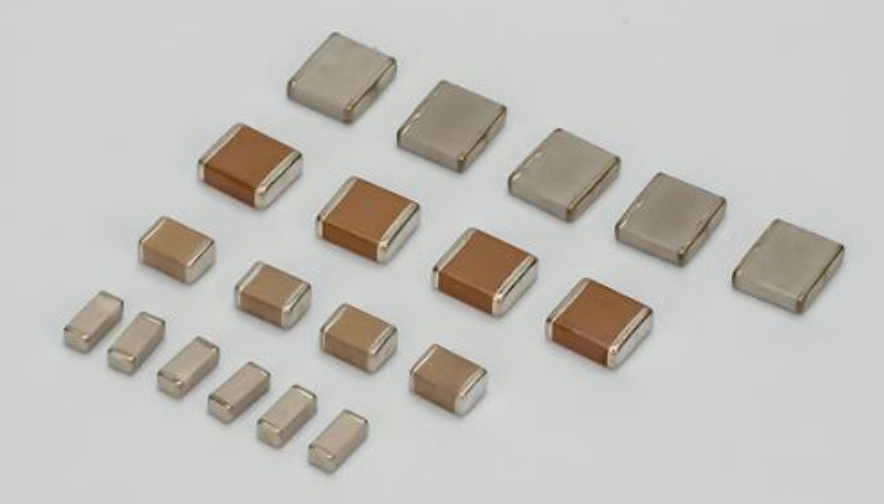
Shenzhen, Guangdong Oct 14, 2026 (Issuewire.com) - High-density printed circuit board assemblies in automotive control modules and industrial power supplies depend on multilayer ceramic capacitors to keep voltage steady. When lead times stretch, procurement teams often place orders with unfamiliar spot sellers simply to keep the line moving. Buying from a distributor that holds verified China MLCC stock is a steadier alternative to blind open-market trading, where quotes shift by the hour and the history of a reel is frequently unknown. CONEVO (https://www.conevoelec.com/about-us/) is a Hong Kong–based spot distributor of IC chips and passive components, working from real on-hand inventory and a global allocation network rather than paper listings. As designs move toward 0201 and 01005 footprints, small physical defects in passive components turn into board-level failures that are hard to trace. A documented stock source and a fast quotation turnaround give buyers a practical way to replace guesswork with a repeatable process. Three Costs That Never Show Up in the Quote Passive components (https://www.conevoelec.com/passives) bought from unvetted brokers can look cheap on the first quote sheet, yet the real expense usually appears later, during SMT assembly or field service. Three problems come up often enough to be worth planning around. 1. Micro-cracks and capacitance driftAn MLCC is built from thin alternating ceramic and electrode layers fired at high temperature. Rough handling or thermal shock during re-reeling can leave internal stress cracks in the dielectric. Such cracks usually pass a simple room-temperature continuity check, then open up when the panel is depaneled and the board flexes. The result is leakage, short circuit, or lost capacitance in a filtering node. Reels that stay in original factory packaging, with lot codes intact, avoid most of this risk. 2. Mixed grades under one part numberAutomotive and other harsh-environment builds call for parts qualified to AEC-Q200, which covers thermal shock and vibration testing. Open listings sometimes combine reels from different production lots under a single part number. Once commercial-grade parts enter a build intended for under-hood or outdoor use, failures tend to appear in the field rather than on the test bench. CONEVO keeps lot codes, date codes and packaging records with each batch, so a shipment can be traced back to a single source instead of a pooled bin. 3. EOL and change notices nobody passes onSpot sellers rarely have access to factory change logs. A buyer may secure enough parts for a pilot run, then find during ramp-up that the case size has been discontinued or the termination material changed. Redesign and re-qualification cost far more than the original saving. Working with a distributor that stays in contact with factory and authorized channels means discontinuation news and cross-reference suggestions usually arrive before the shortage does. Loose Spot Pools vs. Parameter-Level Inventory Many spot brokers sort passives into rough buckets by part number and quantity. That level of detail hides the parameters that decide whether a substitution actually works. Selecting by top-level part number alone can mix dielectric types or ESR ranges, and the difference shows up as instability rather than as an obvious defect. Swapping a Class 1 C0G part for a Class 2 X7R at the same nominal value, for example, changes temperature behaviour and distortion in ways a BOM line does not reveal. CONEVO records passive stock at parameter level instead: capacitance, case size, rated voltage, temperature characteristic, tolerance and packaging are all listed per batch. Buyers can therefore check whether a candidate replacement really matches the original electrical profile before a purchase order is issued. This matters most when a preferred part goes on allocation. With parameters already recorded, sourcing staff can look up drop-in equivalents across brands such as Murata, Samsung, TDK, Yageo, Taiyo Yuden and Walsin, and reply with availability and price the same working day. Substitutions are proposed only where the parameters line up, not to fill an order. Reading Supply Signals Instead of Chasing Prices Spot buying is often reactive: orders go out after quotes have already jumped. By then, prices are set by scarcity and lead times have doubled. Yet the signals usually appear earlier — capacity reallocation at ceramic capacitor factories, shifts in raw material cost, or demand pulling in from one end sector to another. Tracking those signals is part of daily work for a spot distributor. When factories extend lead times on high-capacitance or small-case items such as 0201 parts, CONEVO passes the information on and suggests a sensible buffer window, rather than waiting for the market to move and then quoting a higher number. No one can predict pricing exactly, but a few weeks of warning is often enough to cover a production plan. For customers with steady monthly usage, rolling forecast arrangements and consignment stock help keep supply continuous instead of order-by-order, and the global sourcing network is used to pull material from overseas stock when the domestic market runs dry. After the Order Ships: Inspection, Response Speed, and Surplus Stock Open-market transactions frequently end at delivery. If incoming inspection finds a problem, there is often no one left to talk to, and an opened reel is treated as non-returnable. CONEVO handles the back end differently. Incoming and outgoing checks cover reel and packaging condition, terminal oxidation, solderability, and capacitance sorting against the datasheet, so out-of-tolerance parts are caught before they reach a pick-and-place feeder. Sampling also covers dissipation factor and insulation resistance where the application calls for it, and test data can be supplied with the shipment. Response time is treated as part of the service. Quotations on in-stock items are normally returned within hours, stock photos and lot codes can be provided on request, and goods already on hand ship the same or next working day. Excess stock is the other half of the picture. Forecast changes and redesigns leave plants holding passives they no longer need, with working capital tied up in them. Surplus MLCC lots in original packaging can be bought back or taken on consignment and redistributed through the same network, which returns some cash to the balance sheet and keeps stockrooms clean. Conclusion Sourcing passives is a balance between price and reliability of supply. The open spot market carries costs that do not appear on a quote sheet: cracked dielectrics, mixed grades, and parts that quietly go end-of-life. A more structured approach — traceable China MLCC stock, parameter-level inventory records, early supply information, and quick, documented replies — gives production planning something firmer to stand on. CONEVO combines Hong Kong-based spot inventory with global allocation and inspection support, and also handles surplus stock buyback and consignment. Parametric stock lists and MLCC BOM quotations are available at https://www.conevoelec.com/
Media Contact
CONEVO *****@conevoelec.com http://www.conevoelec.com/