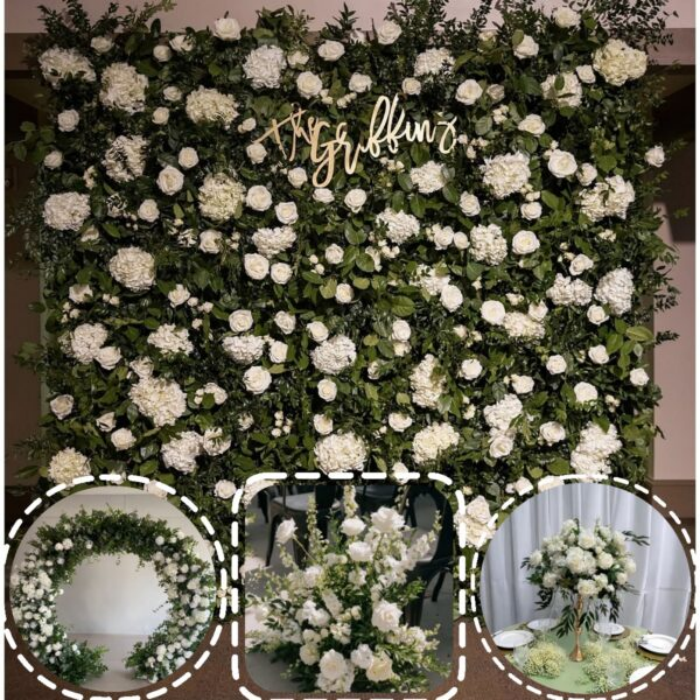
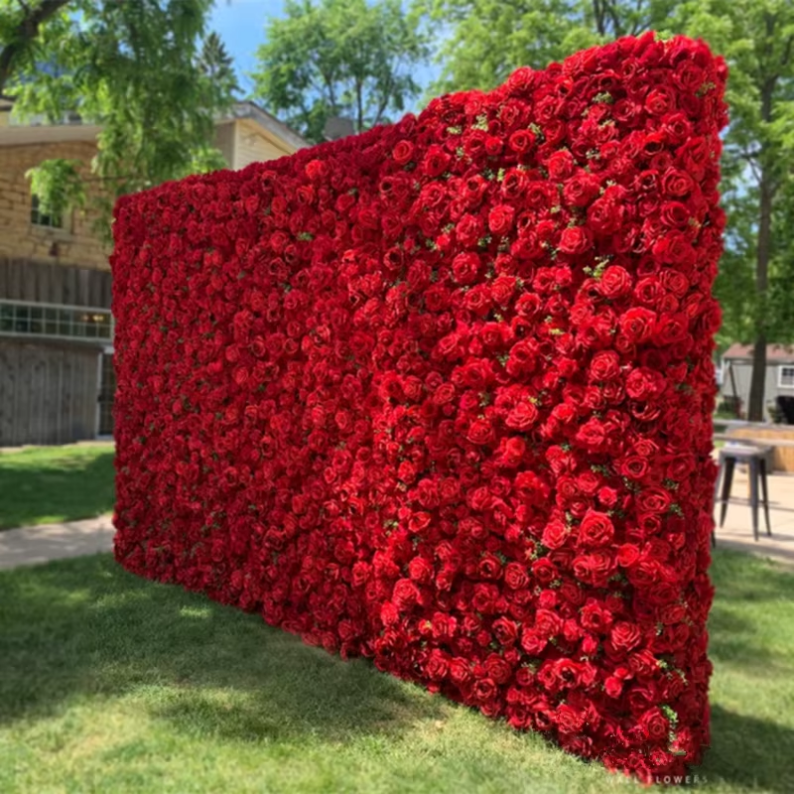
Kaifeng, Henan Jul 13, 2026 (Issuewire.com) - When guests enter a modern grand wedding hall or an upscale commercial banquet, they are frequently captivated by an immense, cascading wall of blossoms that appears to breathe with natural life. The deep dimensional layering of multi-hued roses, delicate hydrangeas, and lush foliage often prompts visitors to reach out, fully expecting the cool, velvet touch of freshly cut morning flora. The revelation that these breathtaking installations are entirely composed of premium artificial materials invariably elicits a collective gasp of astonishment. Achieving this level of visual deception requires moving far beyond basic manufacturing. It demands advanced design engineering capable of transforming structural panels into an uninterrupted organic landscape. As a China Leading Flower Wall Company, Henan Yongnuo Trading Co., Ltd. has pioneered breakthrough manufacturing techniques that overcome the long-standing industry challenges of modular texturing, shifting the paradigm from simple commercial decorations to sophisticated architectural floral art.
The Structural Obstacles to Visual Continuity
Designing an expansive commercial floral installation presents significant engineering challenges. In international event planning, large-scale backdrops must be transported in modular sections to comply with global shipping standards and to ensure practical on-site handling. However, when standard artificial floral panels are assembled side by side, they frequently suffer from visible grid separation lines, unnatural compression along the borders, and structural sagging under heavy weight. These technical limitations disrupt the optical illusion of a singular, continuous wall of flowers.
Traditional production methods rely on flat, uniform placement, which fails to mimic the varied growth habits found in nature. When multiple modular sections are connected, the repetitive placement patterns break the organic rhythm, making the seams highly visible to the human eye. To overcome these limitations and achieve a true three-dimensional effect, manufacturers must completely redesign the underlying grid structures, optimize flower density formulas, and develop specialized interlocking mechanisms that hide the structural joints completely.
The Engineering Solutions for Seamless Assemblya. Advanced Multi-Layered Backing Grids
To prevent the common problem of panel separation, modern manufacturing utilizes a flexible yet high-tensile backing grid system. Instead of rigid plastic squares that form harsh right angles, the structural foundation is engineered with modular, interlocking mesh configurations. These grids feature perimeter tension bars that distribute weight evenly across the entire surface area. This layout ensures that when multiple panels are suspended from a truss system, the vertical load does not distort the alignment of the joints. The flexible composite material also adapts smoothly to variations in ambient temperature, preventing the background framework from warping or sagging during long exhibitions.
b. Varied Botanical Density Formula
True visual continuity is achieved by eliminating the rigid boundaries of individual modules. Industry innovators use an advanced placement system where flowers are attached at calculated, varying angles rather than simple perpendicular lines. By deliberately mixing different stem lengths and angling the flower heads across the outer edges of each panel, the blooms naturally overlap the structural seams. Rayon rose heads, ranunculus, and hydrangeas are grouped in dense clusters that extend beyond the physical border of the grid. When two modules are placed next to each other, the peripheral petals interleave seamlessly, completely concealing the mechanical connection point beneath a dense layer of premium fabric.
c. Dynamic Three-Dimensional Layering
Standard artificial flower walls often look flat and artificial because they use uniform blossom sizes and identical heights. Creating a realistic three-dimensional backdrop requires a detailed, multi-tiered structural design. The assembly process begins with a base layer of dense foliage and smaller silk florets that mask the structural grid. Above this layer, secondary blooms provide mid-level depth and establish the overall color theme. Finally, premium focal flowers—featuring large, multi-petaled rayon roses—are placed at the highest profile levels. This variation in depth creates natural highlights and shadows that mimic a living garden, ensuring the installation looks convincing from any viewing angle.
d. High-Precision Interlocking Fasteners
Eliminating visible seams depends heavily on the precision of the hardware used to connect the panels. Traditional cable ties or basic plastic snaps often create irregular gaps due to uneven tension. The latest seamless systems introduce integrated, heavy-duty male-to-female locking fasteners molded directly onto the edges of the backing grid. These components ensure perfect horizontal and vertical alignment across all panels. By standardizing the locking pressure across the entire installation, the gap between modules is kept well below one millimeter, preventing any visible separation lines even under bright, direct event lighting.
e. Comprehensive Quality Control Systems
The reliability of a large floral installation depends on strict quality control throughout the manufacturing process. Because these large backdrops contain thousands of individual, hand-assembled components, even minor variations in flower attachment strength or fabric dye lots can ruin the seamless effect. Implementing a rigorous quality control system ensures that every production batch undergoes precise color-matching checks under standard lighting conditions. Additionally, automated tensile testing ensures that each stem is securely anchored to the backing mesh. This strict attention to detail eliminates manufacturing defects, prevents flower loss during transit, and protects event planners from the high costs of product returns and structural failures.
Integrating Manufacturing Scale with Creative Design
Transforming these engineering concepts into accessible commercial products requires significant industrial capacity and extensive export experience. Yongnuo demonstrates how a dedicated production infrastructure can effectively support global event supply chains. Operating a modern 30,000-square-meter manufacturing facility equipped with 20 specialized production lines allows the company to maintain the precise manufacturing tolerances needed for seamless modular systems, even during large-scale production runs.
This extensive infrastructure ensures high structural consistency across every product, including complex designs like the hot-selling wedding stage banquet floral background. This particular design features intricate layouts of rayon roses and simulated foliage, requiring precise component placement to maintain its seamless look when scaled to large event spaces. By controlling the entire manufacturing process in-house, the facility maintains stable production capacities and faster delivery times, allowing global event planners to receive large custom orders without long project delays.
For decades, the evolution of the floral decor sector has relied on combining advanced manufacturing technology with an authentic understanding of natural aesthetics. By introducing innovative backing structures, varied density placements, and strict quality control standards, manufacturers have successfully turned artificial backdrops into highly realistic, functional design solutions. These ongoing advancements ensure that the next generation of three-dimensional flower walls will continue to surprise and delight audiences around the world, seamlessly blending industrial precision with the timeless beauty of nature.
To learn more about advanced floral engineering, custom design options, and global wholesale supply programs, please visit the official corporate portal at https://www.yongnuoflower.com/.
Media Contact
Henan Yongnuo Trading Co., Ltd. zhang888bo@gmail.com