Xuancheng, Anhui Jul 8, 2026 (Issuewire.com) - In the highly regulated pharmaceutical sector, the choice of primary packaging is not merely a logistical consideration but a critical factor in ensuring drug stability and patient safety. For pharmaceutical companies operating within or exporting to North American markets, navigating the stringent guidelines established by regulatory bodies is a paramount operational requirement. This imperative highlights the critical distinction between utilizing a Certified Type I Glass Vial Manufacturer versus an uncertified supplier. Regulatory frameworks like the United States Pharmacopoeia enforce strict metrics regarding chemical inertness and hydrolytic resistance to prevent glass delamination and container-drug interactions. By aligning production capabilities with these exact benchmarks, certified manufacturers offer the validation and traceability that modern biopharmaceutical workflows require.
Certified Compliance vs Uncertified Risk
When selecting containment solutions for high-value formulations, lyophilized powders, or biologics, the differentiation between certified compliance and uncertified risk establishes the baseline for operational security. Uncertified glass vial manufacturing often introduces significant vulnerabilities into the pharmaceutical supply chain, including inconsistent material compositions, unverified cleanroom conditions, and a lack of formalized quality management systems. These deficiencies can result in compromised hydrolytic stability, leading to alkaline leaching, structural vulnerabilities, or particle contamination during terminal sterilization or long-term storage.
Conversely, a certified manufacturing architecture relies on verifiable quality indicators. Holding formal international certifications ensures that every batch of glassware is produced under a continuous, auditable framework. This system mitigates risks associated with batch-to-batch variation and eliminates the threat of unvouched material origins. For global drug manufacturers, partnering with an audited entity serves as a strategic risk-mitigation measure, directly reducing the likelihood of regulatory rejections, product recalls, or compromised clinical trial integrity.
Deconstructing Global Quality Frameworks and Their Utility
The foundation of a certified manufacturing operation is established through an interconnected matrix of international standards. Rather than functioning as superficial accolades, these quality certifications dictate daily operational protocols, facility maintenance schedules, and material handling workflows.
ISO 9001:2015 Certification
The ISO 9001:2015 standard serves as the universal framework for an enterprise-wide quality management system. In the context of glass fabrication, it mandates comprehensive process controls, systematic risk assessment, and continuous infrastructure improvement. It ensures that customer specifications are systematically translated into reproducible manufacturing outcomes, from raw material procurement to final product dispatch.
ISO 15378:2017 Certification
While general quality standards are beneficial, the pharmaceutical industry requires specialized protocols. ISO 15378:2017 integrates the core principles of ISO 9001 with specific Good Manufacturing Practices requirements tailored for primary packaging materials for medicinal products. This certification mandates strict contamination control vectors, comprehensive change control protocols, validation of manufacturing equipment, and complete lot traceability. It guarantees that the glass vials are produced under environmental and operational conditions that preserve medicinal purity.
CDE Registration Status
For organizations targeting comprehensive global alignment, registration with national drug regulatory authorities provides essential institutional validation. Maintaining 11 Center for Drug Evaluation registration numbers demonstrates that the primary packaging components have undergone rigorous official evaluations and have been formally approved for integration into final medicinal formulations. This simplifies the regulatory filing process for pharmaceutical developers, providing an established reference for chemical safety and material compliance.
Aligning with North American Pharmaceutical Standards
The North American pharmaceutical market, overseen by bodies such as the United States Food and Drug Administration and structured by the United States Pharmacopoeia, enforces some of the most stringent primary packaging requirements globally. To successfully secure these standards, a manufacturing facility must achieve direct alignment between its operational infrastructure and the detailed mandates of these regulatory frameworks.
Hydrolytic Resistance and Material Chemistry
The United States Pharmacopoeia categorizes pharmaceutical glass based on its chemical composition and resistance to water attack. USP Type I glass must consist of premium borosilicate glass, which possesses superior chemical stability and a minimal thermal expansion coefficient. This chemical composition provides maximum resistance to hydrolytic attack, minimizing the leaching of alkali ions into the pharmaceutical formulation. This is crucial for maintaining the precise pH levels of sensitive injection solutions and protecting against the degradation of complex active pharmaceutical ingredients.
Cleanroom Operations and Environmental Control
North American guidelines emphasize the prevention of particulate and microbial contamination during the final stages of packaging fabrication. To meet these expectations, advanced manufacturing facilities incorporate dedicated cleanroom environments. Operating a 1,000-square-meter, 100,000-level clean workshop ensures that forming, handling, and initial packaging processes occur under heavily filtered, positive-pressure conditions. This infrastructure directly matches the Good Manufacturing Practices guidelines enforced across North America, ensuring that the bioburden and particulate counts of the vials remain well within acceptable limits prior to sterilization.
Global Pharmacopoeia Harmonization
Modern pharmaceutical supply chains are inherently international. Consequently, a manufacturer’s output must demonstrate multifaceted compliance not only with the United States Pharmacopoeia but also with the European Pharmacopoeia, Chinese Pharmacopoeia, and Japanese Pharmacopoeia. Harmonization across these authoritative standards guarantees that the physical, chemical, and dimensional attributes of the glass vials satisfy the requirements of multiple regulatory jurisdictions simultaneously, facilitating seamless cross-border product distribution.
Industrial Scale and Technical Infrastructure
Meeting the stringent demands of global pharmaceutical markets requires significant capital investment, extensive manufacturing experience, and an advanced automated infrastructure. Established in 2009, Anhui HUAXIN GLASS has accumulated 17 years of professional manufacturing experience dedicated to the pharmaceutical and cosmetic packaging industries. This long-term focus has enabled the enterprise to scale its operations to meet both the qualitative and quantitative demands of global procurement teams.
The company’s manufacturing footprint encompasses a large-scale automated production facility covering an area of over 30,000 square meters, supported by a total capital investment of 120 million yuan. To ensure uniform quality and eliminate human error, the facility operates 42 modern, highly automated production lines. This extensive mechanization drives an annual production capacity of 1 billion glass pieces, providing global pharmaceutical networks with a highly stable and reliable supply chain capable of responding promptly to fluctuating market demands.
Material Integrity and Product Case Analysis
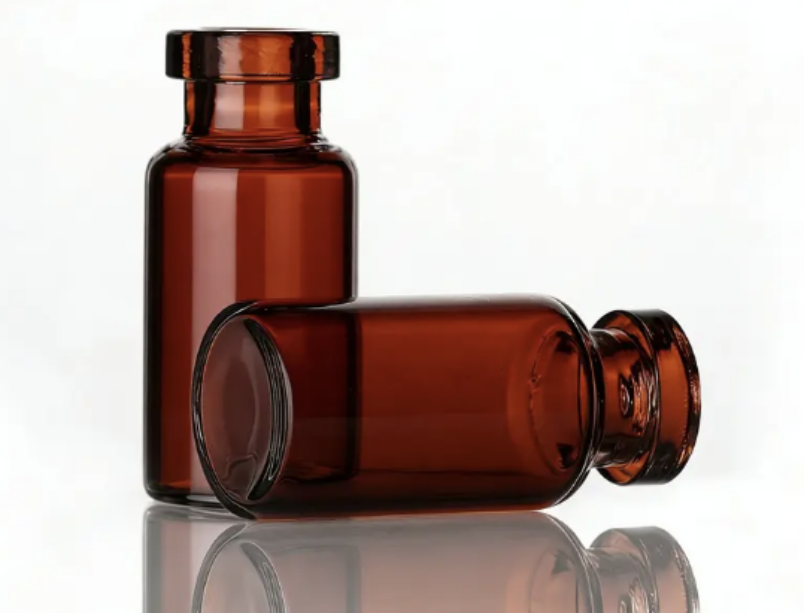
To understand how these certified standards and technical capabilities translate into real-world applications, it is valuable to examine specific product profiles. A primary example is the premium Type I neutral borosilicate glass injection vial designed specifically for lyophilized or powder applications. This specialized container represents the integration of advanced material science and precision manufacturing technologies.
From a material standpoint, these vials utilize high-grade medical borosilicate glass characterized by strong acid and alkali resistance. This molecular structure ensures exceptional physical and chemical stability, minimizing chemical interactions with the enclosed medications even under extreme storage conditions or during the intense vacuum and temperature shifts of the lyophilization process.
The manufacturing process employs precise molding techniques to achieve uniform wall thickness and a highly consistent, standardized vial mouth. This geometric precision is critical for the performance of high-barrier sealing systems, ensuring an airtight seal that protects drug properties over extended shelf lives and provides reliable protection against microbial ingress. Furthermore, the standardized crimp neck dimensions ensure seamless compatibility with high-speed filling lines and specialized closure systems, such as flip-off caps and elastomeric stoppers, preventing mechanical failures or sealing compromises during industrial-scale pharmaceutical processing.
For detailed product specifications or to request Sample Vials, please visit the official enterprise platform at https://www.huaxinglass.com/.
Media Contact
ANHUI HUAXIN PHARMACEUTICAL GLASS PRODUCTS CO.,LTD becky@hx-pharmapack.com