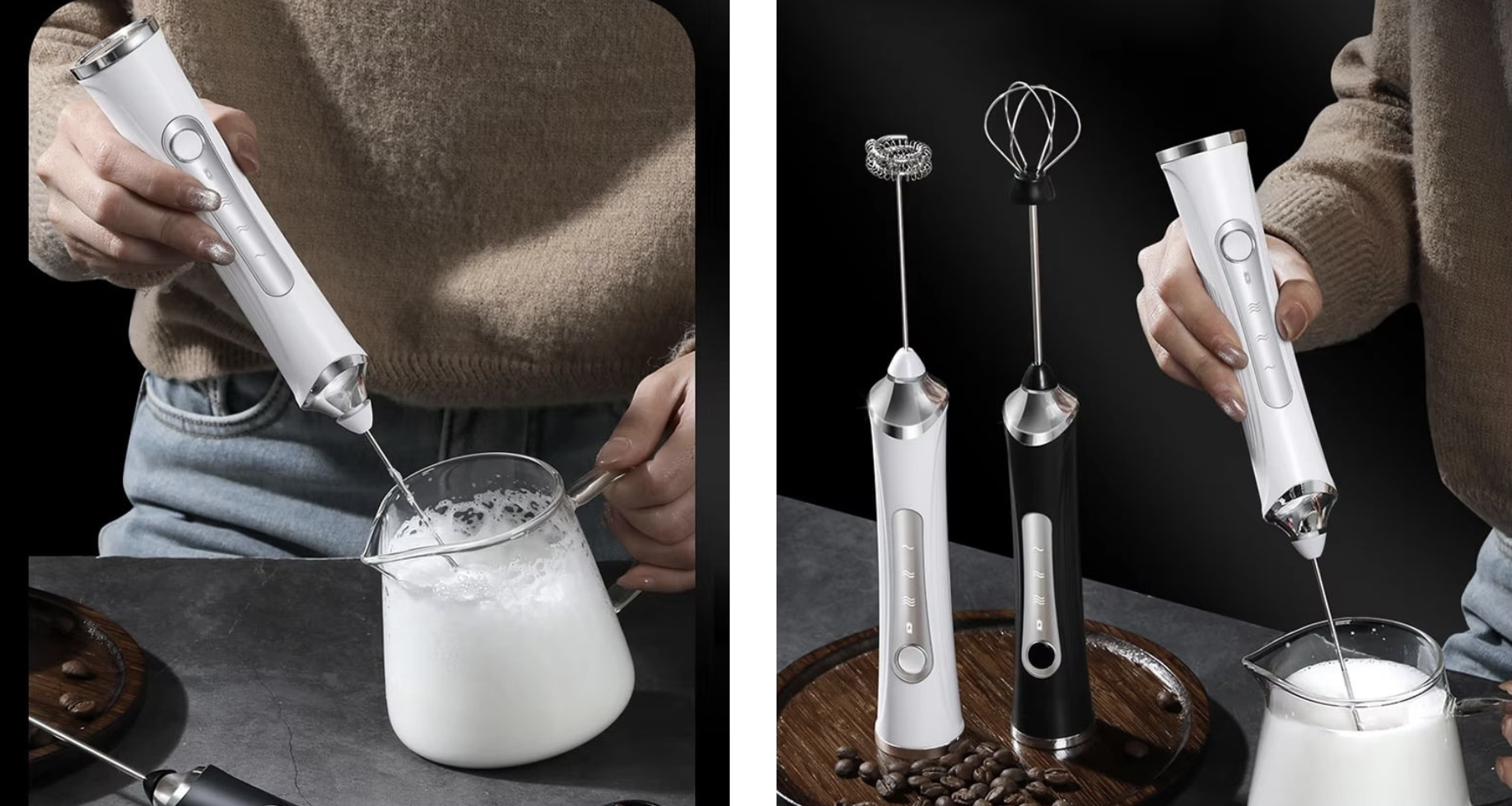

Jinhua, Zhejiang Jun 6, 2026 (Issuewire.com) - Imagine a bustling morning in a modern kitchen. A coffee enthusiast reaches for a newly purchased, uncertified handheld mixer, eager to recreate a café-style barista experience at home. As the whisk spins rapidly at thousands of revolutions per minute, heat generates within the small internal motor, transferring down the stainless steel stem. Unbeknownst to the user, under the surface of the intense agitation and slight thermal rise, low-grade structural materials or unrefined industrial coatings begin to leach trace chemical byproducts directly into the warm milk. Within weeks of regular use, the low-quality plating degrades, exposing underlying structural alloys to oxidation, while the internal plastic housing cracks due to inadequate thermal tolerance. This cautionary scenario represents the daily reality of relying on uncertified kitchen gadgets. In the global beverage equipment market, the choice between verified and uncertified hardware is not merely a matter of price or aesthetics; it is a critical baseline for consumer safety, material longevity, and operational performance.
To mitigate these subtle but significant health and operational risks, specialized beverage preparation devices require strict adherence to international regulatory frameworks. Food contact materials must undergo rigorous evaluation to ensure that mechanical stress, chemical exposure, and temperature fluctuations do not cause toxic substances to migrate into food. For global distributors, hospitality procurement managers, and discerning consumers, identifying a partner that functions as a certified High Quality Milk Frother Manufacturer is paramount. A professional milk frother is more than a simple motorized whisk; it is a precision instrument engineered to introduce controlled micro-aeration into liquids, restructuring milk proteins into a stable, velvety micro-foam. Achieving this texture consistently without introducing chemical contaminants requires an advanced understanding of metallurgy, polymer science, and electrical engineering—foundational capabilities that separate certified manufacturers from cut-rate assembly workshops.
1. Deciphering Global Food-Grade Compliance: The Boundaries of FDA and LFGB Standards
The global regulatory landscape for food contact materials is anchored by two primary testing frameworks: the United States Food and Drug Administration (FDA) regulations and the European Union's sharper equivalent, the Lebensmittel-, Bedarfsgegenstände- und Futtermittelgesetzbuch (LFGB) of Germany. While both regulatory bodies share the overarching objective of protecting public health, their methodologies and tolerance thresholds differ markedly. The FDA framework primarily focuses on determining whether specific materials are generally recognized as safe (GRAS) based on established chemical composition limits and extraction tests using specific solvents. It sets baseline acceptable thresholds for substances such as heavy metals, polymers, and rubber components that come into contact with consumables.
In contrast, the European LFGB standard implements a significantly more stringent testing philosophy. LFGB testing requires comprehensive sensory testing (evaluating whether a component alters the taste or odor of food) and subjects the product to more rigorous migration tests under varied temperature and acidity conditions. For example, components are exposed to simulated food environments for extended periods to measure the exact parts-per-million migration of volatile organic compounds, plasticizers, and heavy metals. A product that complies with LFGB standards automatically fulfills the broader European Union requirements, representing the highest tier of material purity. For high-volume preparation devices, meeting both FDA and LFGB standards ensures that the hardware remains chemically inert under continuous mechanical friction, mild acidic exposure from coffee residues, and temperature variations from steamed milk.
2. Material Integrity and the Technical Risks of Non-Certified Hardware
When a milk frother operates without accredited certification, the consumer faces significant structural and chemical risks. The modern handheld frother relies on a high-speed rotating whisk to generate a precise vortex. If the manufacturing entity uses substandard 201 or 202 series stainless steel instead of certified food-grade alloys, the metal is highly susceptible to localized pitting and crevice corrosion when exposed to moisture and milk proteins. Over time, this degradation compromises the smooth surface of the whisk, creating microscopic cavities where bacterial colonies can proliferate, rendering standard washing procedures ineffective.
Furthermore, non-certified devices frequently utilize low-grade plastics containing bisphenol-A (BPA), phthalates, or unrefined recycling byproducts for their internal housings and structural shafts. When these components experience continuous vibration or mild heat transfer from the electric motor, they can undergo structural failure or off-gassing. Chemical migration is accelerated when these unverified polymers come into contact with warm liquids, allowing micro-contaminants to transfer directly into the consumer's beverage. By choosing hardware manufactured under strict regulatory oversight, procurement professionals eliminate these hidden liabilities, ensuring that every batch of micro-foam remains completely free of heavy metals, volatile chemical compounds, or synthetic residues.
3. Engineering Precision: Inside the Architecture of a High-Performance Drink Mixer
True manufacturing excellence is demonstrated by how effectively a company integrates regulatory compliance directly into the physical architecture of its products. At Blossom, this balance is achieved through systematic material selection and precise mechanical engineering. Examining the technical specifications of an advanced rechargeable handheld milk frother reveals a sophisticated tool designed for optimal liquid dynamics. The core of this premium system relies on a high-grade, certified food-safe stainless steel double-spring whisk head. The dual-coil configuration optimizes the shear force applied to the liquid, allowing the user to create dense micro-foam in less time compared to standard single-spring alternatives.
Beyond the contact materials, the internal drivetrain showcases significant technical innovation. Powered by a high-torque electric motor operating via smart multi-speed logic, the device provides three distinct operational speeds: low speed at approximately 5800 revolutions per minute (rpm), medium speed at 8500 rpm, and high speed reaching up to 12000 rpm. This variable speed architecture gives users the flexibility to execute a wide range of tasks, from gently blending nutritional powders or beating delicate eggs at lower speeds, to emulsifying heavy creams and frothing standard milk at maximum velocity. The integration of a built-in, eco-friendly rechargeable lithium battery eliminates the waste associated with disposable alkaline batteries, providing consistent voltage output that prevents motor deceleration as the charge depletes.
4. Human-Centric Design and Operational Durability Parameters
A premium kitchen tool must balance raw mechanical power with refined user ergonomics and long-term durability. Modern high-quality handheld frothers are engineered with a lightweight, ergonomically contoured handle that minimizes hand fatigue during prolonged operational cycles, which is a vital attribute for professional baristas in fast-paced commercial environments. The exterior layout features intuitive button controls, allowing seamless transitions between the 5800, 8500, and 12000 rpm speed tiers without requiring the user to interrupt the blending workflow.
A major challenge for high-speed handheld devices is maintaining structural alignment under continuous rotational stress. Inferior products often suffer from shaft deviation, causing the whisk to wobble, which reduces frothing efficiency and strains the internal motor. Premium manufacturers resolve this issue by reinforcing the internal stabilization sleeve, ensuring the stainless steel stem remains perfectly concentric even at peak operational velocities. Additionally, the inclusion of a universal USB Type-C charging port ensures effortless compatibility with modern charging infrastructure, allowing the device to be recharged via laptops, power banks, or standard wall adapters, maximizing its utility in both home kitchens and travel environments.
5. Cultivating Global Trust through Transparent Supply Chains and Strategic Innovation
The journey toward becoming a globally respected name in premium kitchenware requires a foundational commitment to supply chain transparency and iterative product development. It begins with a clear mission: ensuring that coffee enthusiasts and culinary professionals around the world—from fast-paced commercial cafes in North America to quiet residential kitchens in Japan—can enjoy flawless beverage preparation with precision and ease. This vision requires a manufacturing infrastructure that treats regulatory compliance not as an optional final inspection, but as a core design principle embedded within the raw material sourcing, machining, assembly, and quality assurance workflows.
By maintaining rigorous adherence to FDA and LFGB testing protocols across all product lines, a forward-thinking manufacturer establishes an open, verifiable relationship with global distribution networks and retail partners. Every batch of steel, polymer component, and electronic module undergoes strict internal auditing to ensure it aligns with the strict standards expected of top-tier kitchenware. This thorough operational model protects international brands from product recalls, shields consumers from health risks, and elevates the daily coffee ritual into an experience defined by safety, reliability, and technical excellence.
To discover more about our certified product lineages, engineering capabilities, and comprehensive OEM/ODM manufacturing services, please visit our official enterprise portal at https://www.zjblossom.com
Media Contact
jinhua blossom science & technology co., ltd fiona@zjblossom.cn