
Shanghai, China Jul 26, 2026 (Issuewire.com) - The global medical aesthetics market is witnessing unprecedented growth, driven by a surging demand for minimally invasive procedures that offer immediate, natural-looking results. At the heart of this boom are injectable aesthetic products, which have become a cornerstone of modern anti-aging and facial rejuvenation therapies. As international demand escalates, global medical aesthetic clinics, brands, and distributors are increasingly turning their eyes toward manufacturing hubs in Asia to optimize their supply chains. In this landscape, sourcing Certified Soft Tissue Fillers from China has emerged as a highly viable strategy for businesses seeking premium quality coupled with robust production scalability. These advanced injectables, spanning hyaluronic acid matrices, skin boosters, and poly-L-lactic acid (PLLA) formulations, offer precise dermal volumization and tissue integration.
However, navigating this vast marketplace requires a deep understanding of international regulatory frameworks, particularly the distinction between CE-marked and non-CE certified products. For global distributors, choosing the right regulatory tier is not merely a matter of legal compliance; it directly impacts patient safety, brand reputation, and long-term commercial viability.
Understanding Soft Tissue Fillers and the Regulatory Landscape
Soft tissue fillers are biocompatible substances injected into various layers of the skin to restore lost volume, smooth out wrinkles, contour facial features, and stimulate endogenous collagen production. Because these materials interact directly with human tissue over extended periods, they are classified as high-risk medical devices in most jurisdictions. The European Union's CE (Conformité Européenne) marking stands as one of the most rigorous and widely recognized safety standards globally. When an injectable product bears a CE mark, it indicates that the manufacturer has fulfilled all stringent safety, health, and environmental protection requirements set forth under European medical device regulations. For international distributors operating across Europe, the Middle East, parts of Asia, and Latin America, the presence or absence of this certification determines whether a product can legally cross borders and enter reputable medical clinics.
CE-Marked vs. Non-CE Fillers: A Comparative Analysis
To make informed procurement decisions, global B2B buyers must analyze how CE-marked and non-CE fillers diverge across critical operational and clinical vectors.
1. Regulatory Compliance vs. Market Restrictions
CE-marked fillers undergo exhaustive third-party audits by designated Notified Bodies to verify conformity with the European Medical Device Regulation (MDR). This certification serves as a legal passport, allowing distributors to seamlessly import and commercialize products across the entire European Economic Area and numerous countries that align their national standards with EU frameworks. Conversely, non-CE fillers face severe market restrictions. They are legally barred from entering regulated western markets, confining their distribution to regions with lax import laws or unmonitored gray markets. Distributors handling non-CE assets risk customs seizures, legal liabilities, and sudden administrative shutdowns.
2. Manufacturing Standards vs. Unverified Production
The production of CE-marked fillers is strictly bound to Good Manufacturing Practices (GMP) and ISO 13485 quality management systems for medical devices. Every stage of production, from raw material synthesis to final terminal sterilization, occurs in certified cleanrooms where particulate matter, humidity, and microbial loads are continuously monitored. Non-CE fillers, while potentially functional, lack verified oversight. Without standardized third-party audits, there is no independent guarantee that the manufacturing facility maintains adequate environmental controls, risking batch-to-batch inconsistency and structural defects in the gel matrix.
3. Clinical Safety and Biocompatibility vs. Unpredictable Adverse Risks
Safety is the paramount metric in medical aesthetics. CE certification requires comprehensive clinical evaluation data, biocompatibility testing (ISO 10993), and rigorous toxicity screening. This ensures that the cross-linked hyaluronic acid or polymer structure exhibits minimal endotoxin levels and trace amounts of residual cross-linking agents (such as BDDE) well below dangerous thresholds, minimizing the risk of delayed-onset granulomas or hypersensitivity reactions. Non-CE alternatives often lack extensive clinical documentation. The absence of verified purification testing increases the probability of high endotoxin loads, which can trigger severe inflammatory responses, tissue necrosis, or chronic foreign body reactions post-injection.
4. Traceability and Post-Market Surveillance vs. Lack of Accountability
Under CE mandates, manufacturers must implement a robust Post-Market Surveillance (PMS) system and ensure total traceability via Unique Device Identification (UDI) systems. If an adverse event occurs anywhere in the world, the batch can be instantly traced back to the specific raw materials and production date. Non-CE products rarely feature equivalent administrative tracking. In the event of product failure or patient complications, distributors are left without reliable corporate accountability, leaving their distribution networks highly vulnerable to legal and financial fallout.
Sourcing from China: Bridging the Gap Through Industrial Excellence
China's biomedical sector has undergone a massive transformation, shifting from high-volume manufacturing to high-tech, quality-driven innovation. Leading Chinese contract manufacturers have heavily invested in automated manufacturing lines, advanced polymer research, and international regulatory alignment. For global distributors, sourcing from China no longer means compromising on compliance. By partnering with top-tier Chinese entities that prioritize international standards, distributors can access cutting-edge aesthetic technologies at highly competitive price points, backed by the production capacity needed to fulfill large-scale global demands.
The integration of advanced cross-linking technologies in China has allowed local firms to manufacture hyaluronic acid fillers that match or exceed Western benchmarks in viscoelasticity, extrusion force, and structural longevity. When these technological milestones are validated by international certifications, global distributors gain access to an optimized supply chain capable of sustaining brand growth in highly competitive landscapes.
Lumicen: Engineering Next-Generation Aesthetic Solutions
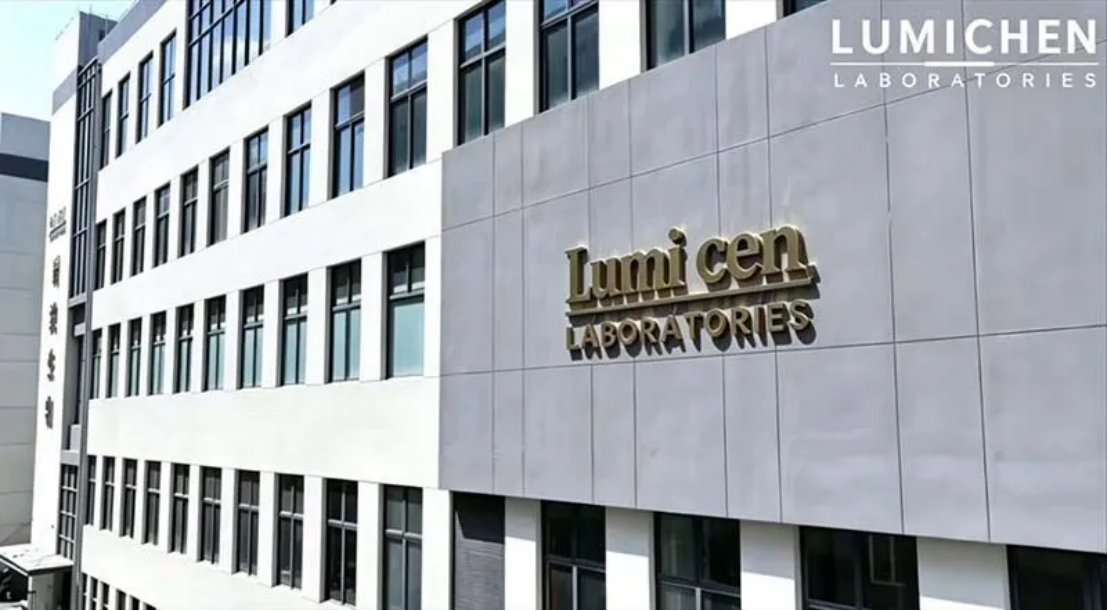
Positioned at the forefront of this industrial evolution is Lumicen, a professional manufacturer specializing in the development and production of injectable aesthetic products. Operating out of state-of-the-art facilities governed by strict GMP-compliant manufacturing protocols, the company provides comprehensive OEM, ODM, and private label solutions tailored to the exacting demands of global brands, medical aesthetic clinics, and distributors worldwide. Rather than relying on generic formulations, the enterprise bridges the gap between advanced polymer chemistry and regulatory compliance, ensuring that every batch delivers optimal safety, consistency, and structural reliability.
The company's advanced production ecosystem utilizes highly sophisticated quality management systems where raw materials undergo multi-stage purification processes. This engineering focus eliminates impurities, resulting in ultra-low endotoxin profiles and minimized residual cross-linking agents, placing their formulations at the pinnacle of clinical safety. By offering tailored private label support, the organization empowers international partners to establish and scale their own proprietary aesthetic portfolios with complete confidence in product integrity and supply chain stability.
A prime example of the brand’s technical innovation is realized in its specialized product lines, such as the Lumicen Sub-Skin formulation. Designed for deep dermal implementation and subcutaneous tissue remodeling, this high-viscoelasticity hyaluronic acid matrix demonstrates the company's mastery over gel rheology. The product is engineered to provide superior resistance to enzymatic degradation and mechanical deformation, making it highly effective for facial contouring, structural volumization, and jawline definition. By achieving a precise balance between elasticity and cohesivity, the formulation ensures smooth extrusion forces during injection while maintaining its localized structural shape over an extended duration, offering clinics a reliable alternative to legacy Western brands.
Beyond product innovation, the firm addresses the operational challenges faced by international buyers through comprehensive logistics integration and reliable supply chain support. Recognizing that global distribution requires seamless regulatory navigation, the manufacturer provides transparent technical documentation, stability testing data, and comprehensive compliance briefs. This total transparency allows distributors to confidently integrate these premium formulations into their local regulatory frameworks, accelerating market entry and maximizing commercial momentum.
Conclusion
For global medical aesthetic distributors, the decision to source soft tissue fillers from China represents a strategic pathway to commercial scaling, provided that quality compliance remains non-negotiable. The clear distinctions between CE-marked and non-CE alternatives highlight the necessity of partnering with verified, GMP-compliant manufacturers. By aligning with sophisticated producers like Lumicen, international distributors can secure premium injectable solutions that safeguard patient health, satisfy rigorous regulatory bodies, and deliver sustainable competitive advantages in a rapidly evolving global marketplace.
To explore advanced product portfolios, technical specifications, and custom OEM/ODM collaboration frameworks, visit the official enterprise platform at https://lchyaluronic.com/
Media Contact
Shanghai Mingru Bio-Tech Co., Ltd. mingru.trade@gmail.com