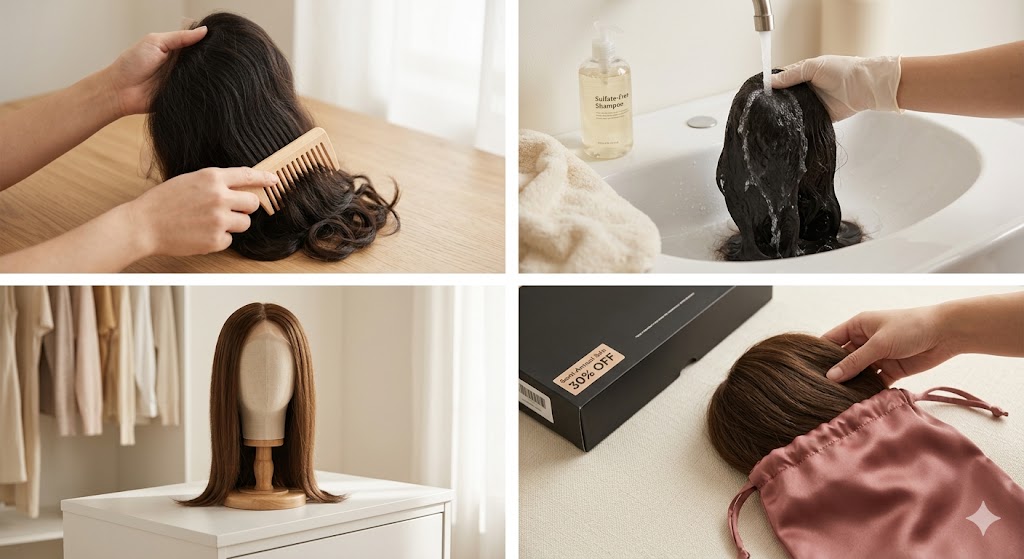
South Orange Village, New Jersey Aug 13, 2026 (Issuewire.com) - Let’s be honest: high-quality human hair extensions are an investment. You drop hard-earned money on gorgeous, flowy bundles to achieve that flawless sew-in, so why on earth would you toss them out after just one install? We’ve all been guilty of throwing perfectly good hair into a random plastic bag, abandoning it in the back of a drawer, and assuming it’s a lost cause.
Unlike synthetic alternatives, which are typically a one-and-done deal, 100% human hair bundles are literally designed for the long haul. When processed, cleansed, and stored correctly, premium raw and virgin hair can be reused for over a year, giving those extensions a second, third, or even fourth life.
Whether you’re working with bone-straight tresses or high-maintenance curly hair bundles, the secret to maximising your money lies entirely in your takedown and refresh routine. In this guide, we are going to walk through exactly how to assess your bundle’s health, strip away weeks of product buildup, restore that factory-fresh lustre, and store them properly between installations so they are always ready for round two.
Can Your Bundles Be Saved?
Before you commit to a full wash-and-revive routine, you need to determine if your bundles actually have enough life left in them to justify the effort. Not all hair survives a rough install or a heavily manipulated styling period.
The Quality Test
To figure out if your hair is ready for another round, you need to perform a quick quality test focusing on three main areas: weft integrity, hair elasticity, and split ends.
First, examine the wefts (the track where the hair is sewn). Are they unravelling, shedding excessively, or ripped from where the needle passed through? If there is extreme damage to the tracks, then expect nightmares when you go to reinstall them. Second, test the elasticity of the hair by pulling on a few strands. If they snap right away without any stretch, then the hair is extremely brittle and lacks moisture. While a quick trim can fix minor fraying, if the splits travel midway up the hair shaft and cause severe tangling at the nape of your neck, it might be time to let those bundles go.
Raw vs. Virgin Hair Lifespan
It’s also important to manage your expectations based on the type of hair you bought. Raw hair bundles—which have not been chemically processed, steam-treated, or altered in any way—are the holy grail of longevity. With proper care, raw hair can easily last up to three to four years. Virgin hair, while still 100% human, has usually been steam-processed to achieve uniform textures like "body wave" or "deep curly." Because of this mild processing, virgin hair typically has a lifespan of about one to two years. Understanding what you purchased dictates how much chemical and heat abuse the hair can handle over its lifespan.
Step-by-Step Bundle Refresh Routine
If your hair passed the quality test, it’s time to bring it back to life. Think of this process as a spa day for your extensions.
Step 1: Gentle Removal & Weft Inspection
The life of your next install actually begins the moment you take out your current one. Rushing through the takedown process is the number one reason bundles get ruined. Take your time unravelling the thread. Use proper hair shears or a seam ripper to cut only the thread, never the actual weft tracks. Cutting the wefts causes massive shedding, breaking the continuous track that holds the bundles together. Once removed, lay the tracks flat and gently pull away any leftover thread, lint, or debris stuck in the seams.
Step 2: The Clarifying & Hydrating Wash
After weeks of leave-in conditioners, edge control, serums, and holding sprays, your bundles are likely coated in a thick, invisible layer of product buildup. This buildup controls moisture from penetrating the hair shaft, leaving it stiff and dull.
Begin by filling a sink with warm water and a dime-sized amount of a good clarifying shampoo. Submerge the bundles and gently squeeze the soapy water through the hair—do not scrub, bunch, or rub the hair together, as this forces the cuticles open and causes extreme matting. Rinse thoroughly.
Next, it’s time for the ultimate hydration hack. Apply a generous amount of a rich, silicone-free deep conditioner from the wefts down to the ends. Place the saturated bundles into a large Ziploc bag, seal it, and drop the bag into a bowl of hot (not boiling) water for 30 to 45 minutes. This creates a mini-greenhouse effect. The steam opens the hair cuticle, allowing the conditioner to penetrate deeply and revive dried-out strands.
Step 3: Detangling & Pattern Recovery
Once the deep conditioning treatment is complete, rinse the hair with cool water to snap the cuticles shut, locking in all that brilliant moisture. While the hair is still soaking wet and slippery, begin the detangling process.
Your tool choice here is critical. For straight or loose wavy hair, a wide-tooth comb works best. For curly hair bundles, a flexi-brush (like a Denman or a tangle teezer) is ideal for clumping the curls back together. Always, without exception, start detangling from the very tips of the hair and slowly work your way up to the weft. This prevents you from ripping through knots and breaking the hair. If you are reviving curly hair, scrunch the hair gently upward after detangling to encourage the curl pattern to spring back into its original shape.
Step 4: Air-Drying vs. Thermal Drying
Step away from the blow dryer! The most crucial step for maintaining the longevity of your bundles is how you dry them. Thermal drying (using a blow dryer) blasts the cuticles open, introduces unnecessary heat damage, and almost guarantees a frizzy outcome.
Instead, opt for air drying. Lay your detangled, damp bundles flat on a clean microfiber towel or an old cotton t-shirt. Ensure the wefts are completely flat so they dry thoroughly (a damp weft can breed mold and a musty smell—yuck!). Air drying preserves the cuticle direction, keeps the hair incredibly soft, and allows raw and virgin textures to dry into their beautiful, natural states without any heat-induced frizz.
Storage Strategies to Prevent Matting and Frizz
You’ve successfully washed, detangled, and dried your bundles. They look fantastic. But if you throw them loosely into a bathroom drawer, all your hard work will be undone in a matter of days. Proper storage is the final piece of the puzzle.
How to Store Bundles Long-Term
Ditch the cheap plastic bags that your hair might have come in. Plastic traps residual moisture and doesn't allow the hair to breathe. Instead, invest in satin storage bags. Satin creates zero friction, meaning your hair won't tangle, snag, or dry out while it waits for its next install.
If you are storing wavy or curly hair bundles, utilise the "Twist & Store" method. Gently twist the completely dry hair into one loose rope, or loop it into a soft figure-eight, before sliding it into the satin bag. This prevents the curls from separating and expanding into a frizzy mess, keeping the pattern perfectly intact.
Environmental Considerations
Where you keep your satin bags matters just as much as the bags themselves. You must treat your bundles like delicate fabric. Keep your extensions stored in a cool, dry place. Avoid leaving them in direct sunlight, which can actually bleach the color of the hair over time and bake the moisture out of the strands. Furthermore, keep them out of the bathroom if possible; the daily fluctuating humidity and moisture from your shower can seep into the storage bags, causing the hair to swell and frizz. A dark closet shelf or a dedicated storage box is the ideal home for your hair.
Pros, Cons & FAQs
Pros of Reusing Bundles:
- Massive Cost Savings: Reusing high-quality hair saves you hundreds of dollars per salon visit.
- Better Texture Over Time: High-quality raw hair often gets softer and more manageable after a few good washes.
Cons of Reusing Bundles:
- Time-consuming: The removal, washing, and drying process requires patience and a free afternoon.
- Weft Thinning: Even with the best care, wefts naturally lose a little volume through standard shedding over multiple installs.
FAQs:
Can I re-dye bundles before reinstalling them?
Yes, high-quality human hair can be dyed multiple times. However, if the hair has already been bleached, proceed with caution. Always deep condition aggressively after a color session to replenish lost moisture.
Should I seal my wefts before the second install?
Absolutely. Because the wefts have already endured needle thread and regular manipulation, applying a thin layer of liquid weft sealant before reinstalling is a fantastic way to reinforce the tracks and prevent future shedding.
Conclusion
Throwing away good human hair is like throwing away money. By taking the time to gently remove, thoroughly clarify, deeply hydrate, and carefully store your bundles, you guarantee that your investment pays off. Treat your hair extensions with the same patience and high-quality products you use on your natural hair, and those beautiful bundles will keep you looking flawless for installs to come.
Media Contact
Olivia Smith *****@gmail.com https://www.indiquehair.com/




