Chongqing, China Apr 16, 2026 (Issuewire.com) - The rapid proliferation of Unmanned Aerial Vehicles (UAVs) has transformed the global security landscape, moving from a niche hobbyist concern to a critical strategic challenge for critical infrastructure, airports, and national borders. As drone technology becomes more accessible and sophisticated, the demand for robust, reliable, and high-precision detection systems has surged. Central to this defensive shield is the low-altitude surveillance radar—a specialized technology designed to detect small, slow, and low-flying targets that traditional air defense systems often overlook. For procurement officers and security specialists, identifying a China Leading Low Altitude Surveillance Drone Detection Radar Factory is no longer just about finding a hardware supplier; it is about selecting a partner capable of delivering scientific precision and field-tested reliability.
Selecting the right manufacturing partner involves navigating a complex field of technical specifications, signal processing capabilities, and environmental adaptability. The following guide outlines a five-step evaluation framework to assist global buyers in identifying top-tier radar manufacturers that meet the rigorous demands of modern low-altitude security.
Step 1: Evaluating the Research Pedigree and Academic Foundation
The first indicator of a leading factory is the depth of its research and development (R&D) infrastructure. Low-altitude detection is notoriously difficult because of "ground clutter"—signals bouncing off buildings, trees, and moving objects that can mask a drone’s presence. Solving these issues requires advanced physics and mathematics, not just assembly lines.
When evaluating a factory, look for deep institutional ties. For instance, MYT is affiliated with the Institute of Internet of Things (IoT) under the Chinese Academy of Sciences. This level of academic backing ensures that the equipment is built on the latest breakthroughs in low-altitude security research. A leading facility should boast a significant human capital investment; a team comprising over 100 R&D members and over 120 test engineers, including PhD and Master’s degree holders, is the benchmark for maintaining technological superiority in this fast-evolving sector.
Step 2: Assessing Core Radar Technologies and Signal Processing
The hardware is only as good as the algorithms driving it. A primary challenge in drone detection is distinguishing a small quadcopter from a bird or weather-related interference. A top-tier factory must demonstrate mastery over clutter algorithms for signal processing. This technology is essential for filtering out the impact of weather and biological clutter to ensure a low false-alarm rate.
Furthermore, buyers should prioritize factories that offer diverse antenna technologies. While traditional waveguide slot antennas with Digital Beamforming (DBF) remain a reliable standard, cutting-edge manufacturers have pioneered Multiple-Input Multiple-Output (MIMO) microstrip antenna arrays. These newer technologies allow for more precise spatial resolution and better identification of multiple targets simultaneously. When reviewing technical data, look for specific performance benchmarks. For example, a high-performance X-band radar should ideally provide a detection distance of up to 10km for targets with a small Radar Cross Section (RCS), utilizing advanced digital T/R (Transmit/Receive) technology to maintain signal integrity over long distances.
Step 3: Inspecting Product Durability and Environmental Protection Standards
Low-altitude surveillance radars are often deployed in the world’s most unforgiving environments, from humid coastal regions to scorching desert borders. Therefore, the factory’s manufacturing standards regarding ingress protection and thermal management are non-negotiable.
A professional factory will subject its products to rigorous environmental testing. Look for an IP66 protection level, which ensures the equipment is dust-tight and protected against powerful water jets. This is critical for 24/7 autonomous operation in rain or sandstorms. Additionally, leading factories provide integrated solutions that combine the radar with ultra-wideband signal sources and power amplifiers. These components should be housed in ruggedized, military-grade enclosures capable of withstanding extreme temperature fluctuations without compromising the sensitivity of the internal SDR (Software Defined Radio) broadband components.
Step 4: System Integration and Multi-Sensor Fusion Capabilities
Radar is the "eyes" of a security system, but a complete solution requires a "brain" and "hands." A leading factory should not only produce radar but also offer integrated defense systems that include spectrum-based radio detection and photoelectric camera tracking.
The ability to fuse data from different sources is a hallmark of technological maturity. For example, the integration of AI-based recognition and tracking for photoelectric cameras allows the system to visually confirm a radar-detected target automatically. In the selection process, ask the manufacturer about their SDR technology. A leading factory should provide solutions covering a wide frequency range—ideally from 70MHz to 8000MHz—allowing the system to detect not only the physical presence of the drone via radar but also its control signals via spectrum analysis. This multi-layered approach ensures that even if a drone is designed with stealth characteristics, its electronic emissions or physical movement will be captured.
Step 5: Verification of Global Field Experience and Tailored Support
Technical specifications on a datasheet can only tell half the story. The final step in selecting a China Leading Low Altitude Surveillance Drone Detection Radar Factory is verifying their track record in real-world deployments. Low-altitude clutter varies significantly by geography; a radar that works in a flat desert may struggle in a dense European city.
Leading manufacturers often have a global footprint, with key partnerships spanning Europe (such as the UK and Spain), the Middle East, and South America. This international exposure is vital because it means their engineers have accumulated "ground truth" data on local conditions. This experience allows the factory to provide tailored technical support, adjusting algorithms or antenna configurations to suit the specific topography and electromagnetic environment of the client's site. A factory that sends engineers on-site for local calibration demonstrates a commitment to the end-user’s success that a pure hardware exporter cannot match.
Technical Spotlight: The X-Band Advantage
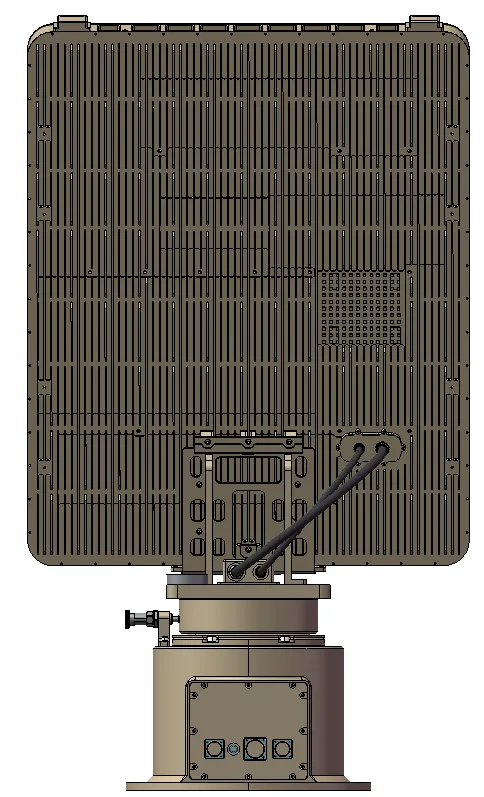
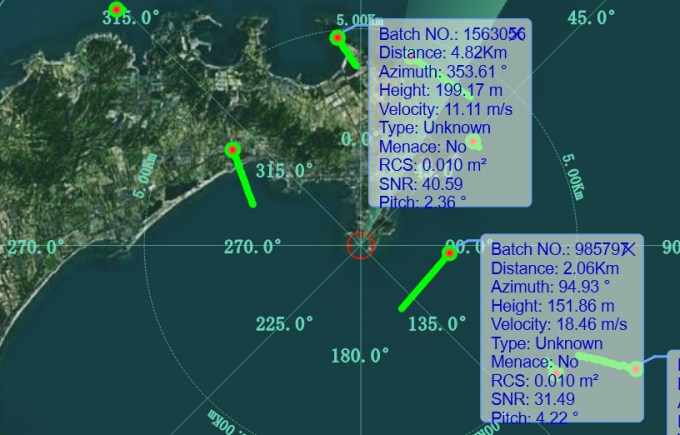
To understand the level of sophistication required, one can look at the latest X-band low-altitude surveillance radars produced by top factories: https://www.chinaantidrone.com. These systems utilize Digital Beamforming (DBF) and digital T/R technology, which allow for a more flexible and precise scanning pattern compared to older analog systems. With a 10km detection range and an IP66 rating, these units represent the current "gold standard" for border and facility protection. They are designed to operate autonomously, providing high-refresh-rate data that can be integrated into a larger command-and-control (C2) network.
By following these five steps—academic R&D pedigree, core algorithm mastery, rugged manufacturing standards, system integration, and global field experience—organizations can ensure they are investing in a low-altitude defense solution that is both effective today and adaptable for the threats of tomorrow.
Media Contact
Chongqing Miao Yi Tang Technology Co., Ltd. gary@chinaantidrone.com




