Hillsboro, Oregon Jul 27, 2026 (Issuewire.com) - Many professionals strive to appear confident. Confidence is often associated with leadership, expertise, and the ability to make decisions under pressure. According to attorney Bracken McKey, one of the most important lessons professionals learn over time is that confidence and certainty are not the same thing.
After more than twenty-five years of making high-stakes decisions in public service and private practice, McKey believes some of the strongest leaders are those who understand the limits of their knowledge while still having the confidence to move forward when decisions must be made.
"People often confuse confidence with having all the answers," McKey said. "In reality, confidence is being able to make a thoughtful decision even when some questions remain unanswered."
McKey is encouraging professionals and organizations to think more carefully about how they approach uncertainty, particularly in environments where decisions must be made quickly and information is often incomplete.
Why Certainty Is Often Unavailable
Many of the most important decisions people make come with uncertainty.
Business leaders face changing market conditions. Managers navigate personnel challenges. Organizations respond to new risks and unexpected developments. In many cases, waiting for complete certainty is not an option.
Research from leadership and decision-making studies has shown that effective leaders often make decisions with imperfect information. Their success comes not from perfectly predicting the future, but from evaluating available information, assessing risks, and remaining adaptable as circumstances change.
McKey says this reality becomes clearer as careers progress.
"The longer you work in complex environments, the more you realize that certainty is rare," he said. "You can gather information, ask questions, and prepare carefully, but there will always be factors outside your control."
Confidence Comes From Preparation
While certainty may be difficult to achieve, confidence can still be developed.
According to McKey, confidence is often rooted in preparation, discipline, and experience rather than prediction.
Professionals who consistently review information, consider multiple perspectives, and think critically about decisions are often better positioned to move forward when circumstances are unclear.
"Confidence isn't about assuming you're right," McKey said. "It's about knowing you've done the work necessary to make the best decision possible at that moment."
Studies in organizational psychology have found that preparation and experience are among the strongest contributors to decision confidence. Individuals who rely on sound processes tend to perform better under pressure than those who depend solely on instinct.
The Risks of False Certainty
McKey warns that certainty can sometimes create problems when it leads people to stop questioning assumptions.
History provides countless examples of organizations and leaders who became overly confident in their conclusions and overlooked important information as a result.
Research on cognitive bias has repeatedly shown that people are more likely to ignore conflicting evidence when they become convinced they already know the answer.
"One of the biggest mistakes professionals make is assuming there is nothing left to learn," McKey said. "The moment you stop asking questions, you increase the chance of missing something important."
This is one reason experienced leaders often remain open to new information, even after a decision has been made.
Strong Leaders Balance Confidence and Humility
McKey believes the most effective leaders strike a balance between confidence and humility.
They are confident enough to make decisions when necessary. They are humble enough to recognize that they may not have perfect information.
That balance helps organizations remain flexible and responsive.
"Good leaders are willing to act, but they are also willing to adjust when new information becomes available," McKey said. "Those two qualities work together."
Research from leadership development programs consistently shows that leaders who demonstrate intellectual humility are more likely to foster collaboration, encourage innovation, and create environments where people feel comfortable raising concerns.
Questions Organizations Should Ask
McKey encourages leaders and teams to examine how they approach uncertainty by asking several key questions:
- Are we making decisions based on evidence or assumptions?
- Have we considered alternative viewpoints?
- Are we open to new information?
- Do we have a process for revisiting decisions when circumstances change?
- Are we confusing confidence with certainty?
These questions can help organizations strengthen decision-making and reduce the risks associated with overconfidence.
Building Better Decision-Making Habits
According to McKey, improving judgment does not require eliminating uncertainty. It requires developing habits that allow people to function effectively despite uncertainty.
Those habits include preparation, continuous learning, honest communication, and a willingness to evaluate outcomes objectively.
Organizations that encourage these behaviors often create stronger decision-making cultures and better long-term performance.
"The goal isn't to know everything," McKey said. "The goal is to make thoughtful decisions, remain open to learning, and keep improving as new information becomes available."
Call to Action
McKey encourages professionals to reflect on a recent decision in which certainty was unavailable and to consider which factors influenced their confidence.
By understanding the difference between confidence and certainty, leaders can improve their judgment, strengthen organizational performance, and make better decisions in complex environments.
About Bracken McKey
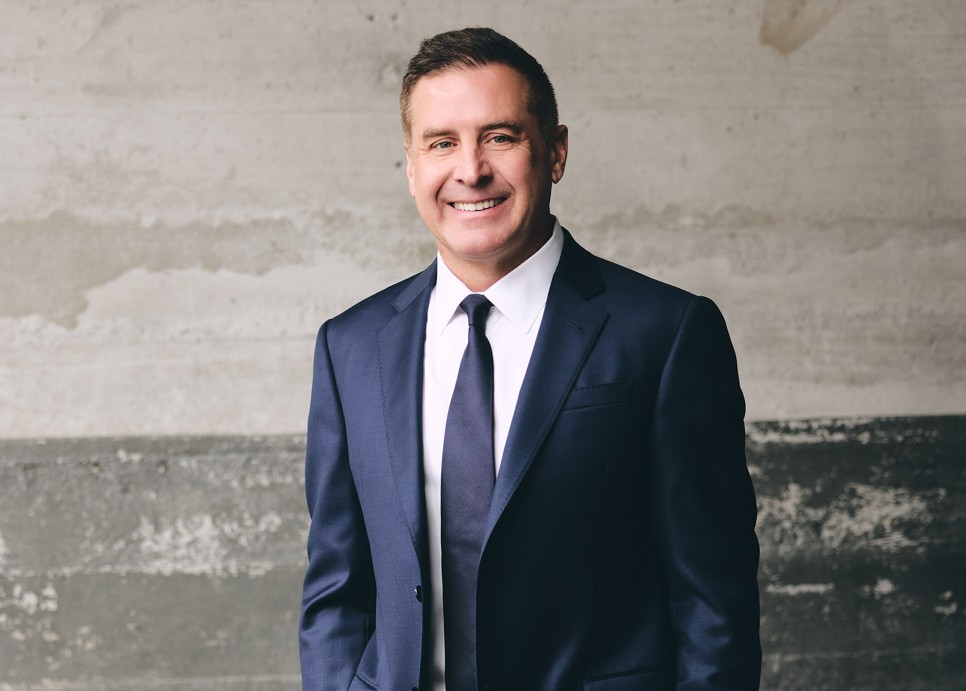
Bracken McKey is an attorney and owner of McKey Law in Oregon. With more than twenty-five years of experience in public service and private practice, he has built a career around complex decision-making, risk assessment, leadership, and professional judgment. Through his writing, speaking, and legal work, he shares insights on leadership, organizational performance, human behavior, and long-term decision-making.
Media Contact
Bracken McKey bracken@mckeylaw.com https://www.mckeylaw.com/