Shanghai, China May 28, 2026 (Issuewire.com) - The Modern Warehouse Landscape in Europe and Australia
In modern supply chain landscapes, maximizing throughput while ensuring workplace safety has become a core strategic priority. Achieving this level of efficiency requires integrated engineering that seamlessly bridges raw material intake with automated processing. A foundational element of this paradigm is the integration of advanced material handling systems capable of supporting continuous, high-volume workflows without introducing bottlenecks. To achieve this, partnering with a Reliable Vacuum Lifter Exporter in China allows international enterprises to access heavy-duty, certified lifting equipment engineered to meet stringent global operational frameworks.
Industrial ecosystems across Europe and Australia are facing structural challenges that heavily influence their operational strategies. In Europe, strict occupational health regulations, high labor costs, and a shrinking pool of specialized personnel have driven industries toward advanced industrial mechanization. Similarly, Australian operations manage vast supply networks prone to localized labor deficits and rising overhead costs, rendering traditional manual handling methods economically unsustainable.
This regional strain is increasingly visible in day-to-day warehouse operations. Industry analysts and local supply chain directors frequently highlight a persistent "skills cliff"—a reality where older, experienced equipment operators are retiring, while younger generations reject physically demanding, repetitive manual roles in favor of flexible or digital employment. Industry executives in Germany and the UK note that more than a third of logistics enterprises cannot fill vacant frontline roles, leading to systemic overwork and skyrocketing recruitment premiums. In Australia, operations managers face identical bottlenecks, describing a landscape where the demand for material handlers and forklift drivers far outstrips local supply, directly threatening business continuity during peak seasonal spikes. "We are competing intensely for the exact same pool of physical labor," notes a Melbourne-based logistics coordinator, "and the reality is that relying purely on manual team-lifting or mechanical chains is no longer a viable way to protect our margins or our people."
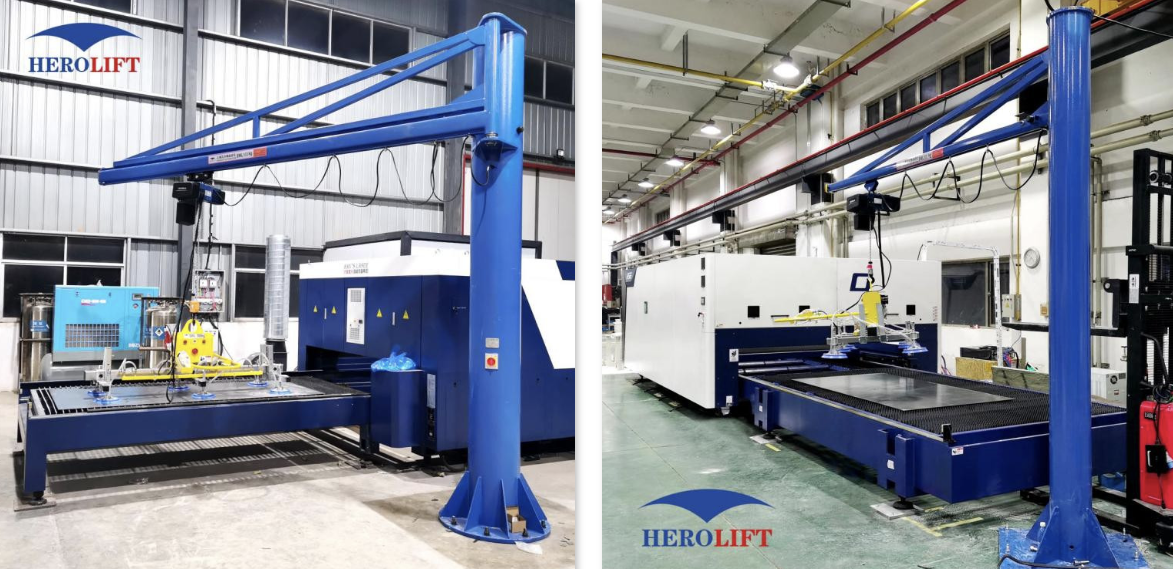
Transitioning toward automated warehousing and automated raw material feeding is no longer just an optional upgrade for capital expenditure; it is a fundamental requirement to protect margins and maintain high throughput. Manual handling of dense sheet metals, heavy glass panes, or large laminated composites introduces significant liabilities, including workplace injuries, inconsistent cycle times, and material degradation caused by mechanical clamping. By implementing specialized vacuum lifting systems at key points within the logistics chain—such as transferring raw materials to precision laser cutters or managing heavy pallet lines—facilities can establish highly predictable, continuous operational workflows. This strategic implementation effectively mitigates the processing delays and safety risks inherent to manual material movement.
i. Establishing Manufacturing Scalability and Engineering Credibility
Meeting the rigorous operational requirements of European and Australian fulfillment and production centers demands an export partner with substantial manufacturing scale and verified technical credentials. Since its establishment in 2006, HEROLIFT has developed into a specialized force in the material handling industry, focused on delivering precise vacuum components, track systems, and comprehensive loading and unloading solutions.
The company operates a state-of-the-art research, development, and production facility spanning over 7,000 square meters. Over the past two decades, this technical foundation has enabled the development and production of 80,000 equipment units, alongside the implementation of more than 25,000 customized handling solutions for enterprises across 60 specialized industrial sectors. With an export footprint spanning over 150 countries, the manufacturer ensures all equipment meets demanding international regulatory frameworks, holding certifications such as the ISO9001 Quality Management System and UDEM International Certification EN ISO 12100. This compliance ensures seamless integration into precision manufacturing and automated warehouse environments worldwide.
ii. Engineering Analysis of Heavy-Duty Materials Handling Equipment
The core functionality of modern vacuum lifting technology centers on achieving complete operational reliability under continuous duty cycles. Standardized heavy-duty vacuum lifters are engineered to handle dense, smooth, or structured plate materials, eliminating the surface damage often caused by mechanical grabs or chains.
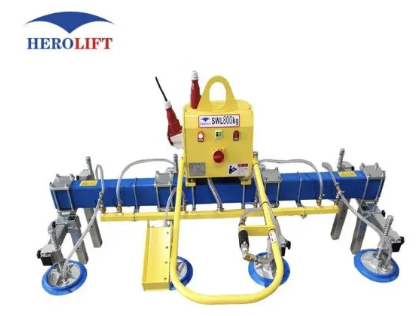
These industrial systems utilize high-resistance structural steel frames to prevent deflection under maximum mechanical loads. Rather than relying on simple suction seals, industrial vacuum lifting designs integrate complex safety chambers and structural reservoirs. The integrated safety tank functions as a critical failsafe; in the event of an unexpected input power interruption, the reservoir maintains the negative pressure differential within the suction pads, securely holding heavy workpieces for an extended duration to allow operators to safely lower the load. Adjustable suction pad configurations allow a single asset to handle multi-type workpiece dimensions, providing versatile utility across metal processing, woodworking, and automotive glass assembly lines.
iii. Optimizing Workflows through Integrated Material Handling
Integrating heavy-duty vacuum handling technology into automated workflows yields quantifiable improvements across key manufacturing and logistics metrics. By replacing slow, multi-operator overhead cranes or hazardous manual team lifts, a single technician can safely manage, position, and transfer loads of up to 1.5 tons.
This optimization yields a measurable increase in overall facility throughput, balancing cycle times between material storage and automated processing machinery. This layout prevents material staging bottlenecks and eliminates surface micro-scratches on sensitive substrates like aluminum, polished stainless steel, architectural glass, and finished polymers. By removing heavy physical strain from daily routines, these systems protect operator health, prevent repetitive strain injuries, and significantly lower operational overhead. This balanced combination of safety, structural durability, and refined vacuum engineering enables European and Australian logistics hubs to achieve the high efficiency required by modern automated supply chains.
For comprehensive technical specifications and customized engineering consultations regarding material handling solutions, please visit the official company site at HEROLIFT.
Media Contact
SHANGHAI HEROLIFT AUTOMATION TECHOLOGY CO.. LTD melissa.men@herolift.cn