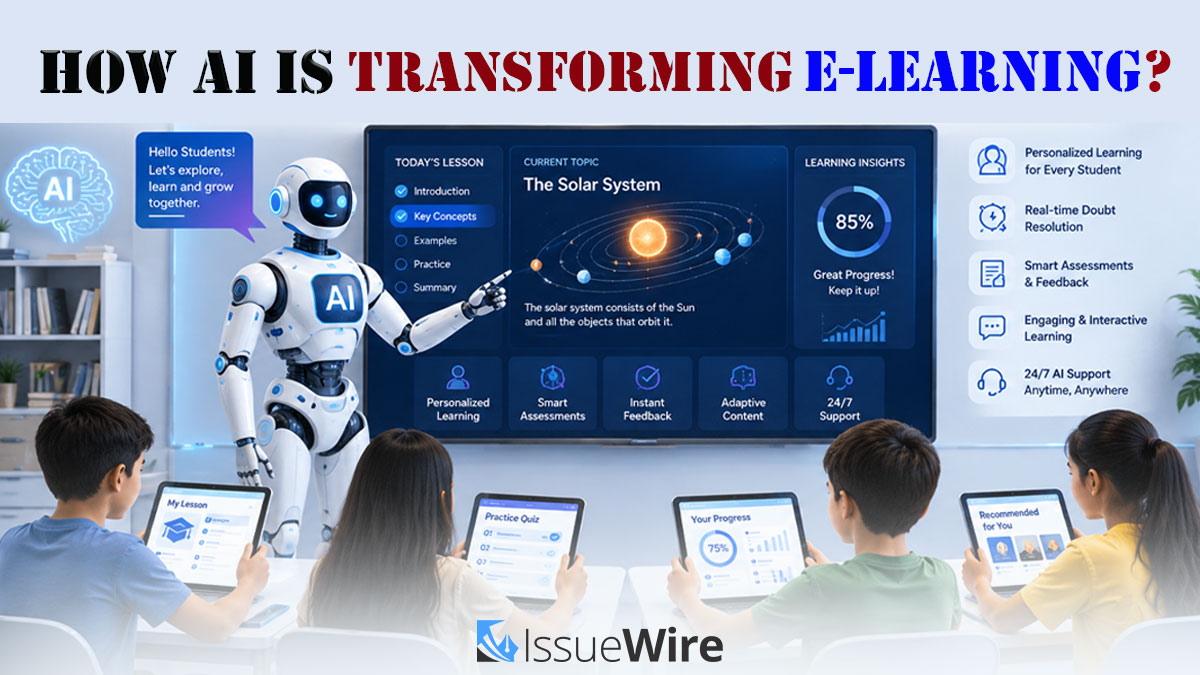
In the last couple of years, almost every other eLearning platform has announced its AI features for users. From Udemy, Skillshare, and Coursera to LinkedIn Learning, all major platforms have introduced AI tools, but how these platforms are leveraging AI is still unclear to online users. Rebuilding an eLearning platform based on AI can cost significantly more than introducing a new AI feature, and this trend is integrated into the industry right now.
The Shift in Market for eLearning Platforms
The market for AI education has grown from $5.88 billion in 2024 to $8.30 billion in 2025, which shows a massive increase with a growth rate of 41% every year. The industry is projected to grow to $41 billion by 2030 with a huge CAGR of 42.83%. The spending decisions of eLearning platforms are influencing this growth, as 60% of educators have already accepted AI as a part of the classroom. 92% of university students have used AI in education in 2025, and more than 67% of all students use AI daily.
The New Framework for AI Builds
Not all eLearning platforms use AI in the same way, and based on their functionality, the AI implementation can be divided into three tiers based on their operational impact.
- Tier 1: Efficiency - In this case, AI is leveraged for repetitive administrative work, which helps to save costs and reduce the amount of human error.
- Tier 2: Enhancement - AI is used for adaptive delivery and personalization, which helps to improve the learning experience for each learner with measurable impact and increased completion.
- Tier 3: Capability - This allows using AI for crafting new course types, materials, and assessment methods based on new-age learning. It changes the idea of what the platform can offer.
If seen on a global scale, most eLearning platforms started working with AI with a focus on Tier 1, which has now shifted to Tier 2, but only a few platforms have meaningfully adapted to Tier 3.
-
Personalization (Tier 2)
eLearning platforms try to provide a personalized learning path for every individual, and AI can help add value to it. Instead of following the same course structure for every learner, this helps adjust the learning curve in real time and caters to the unique needs of the students. Personalized learning accelerates the course by 50% and improves satisfaction among students by 82%.
-
Content Creation (Tier 1)
Content creation takes an enormous amount of budget from the eLearning platforms, and AI can help to reduce that. To create content for a course, you will need Subject Matter Experts, Instructional Designers, videographers, editors, as well as technical support. AI is being leveraged to handle the repetitive work. Platforms like LinkedIn Learning and Udemy have already started using AI for this purpose, and it has reduced the burden of educators by 30%.
-
Assessment and Feedback (Tier 3)
This is the potential area where AI is changing the traditional way of e-learning assessment. Instead of just depending on multiple-choice and OMR sheets, advanced AI is now capable of assessing written assignments, project work, code submissions, and other material, and it also provides detailed feedback with valuable inputs.
-
Automatic Administration (Tier 1)
Starting from progress tracking and grading to enrollment management and communication through email, there are plenty of administrative jobs based on learning that are repetitive and expensive when done by humans. With AI Chatbots and automation, greater efficiency is achieved.
The e-learning platforms in modern times are still in their early stage of AI integration, and the next wave will bring predictive learning with real-time adaptive content and an advanced infrastructure.


