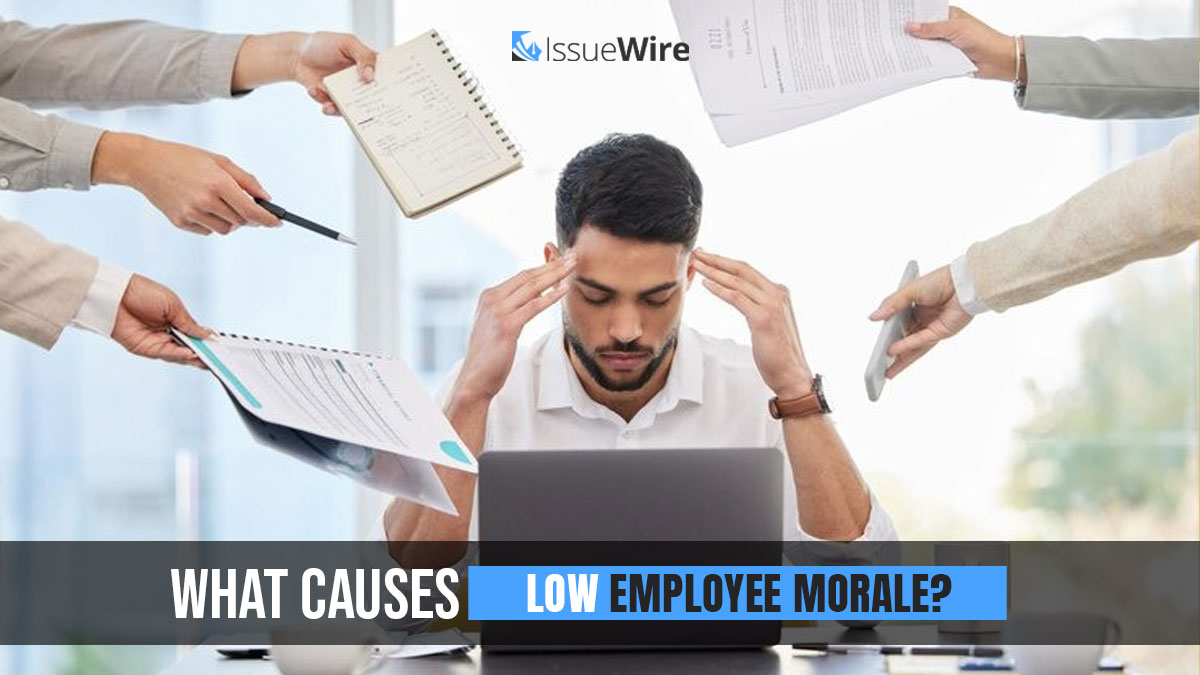
Low employee morale is one of the biggest concerns in most industries. It does not happen overnight, but rather grows gradually for many days till an employee snaps. The unspoken frustration of work is quite common among most workers, and it can lead to disengagement in workplace operations. It requires deeper attention and removal, as it can be very expensive for the business. According to a Global Workplace report in 2023, low employee morale is costing around $8.8 trillion in productivity every year.
What is Low Employee Morale? Let’s find the root causes
Employee morale refers to what employees feel about their work, team, workplace, or the overall organization. Low employee morale refers to a state in which they often feel undervalued, unmotivated, and unfocused at work. This can lead to lower output, absenteeism, and higher turnover, which are bad news for businesses.
5 Root Causes for Low Morale:
-
Deficiency in Management and Leadership
To keep the workforce motivated and productive, effective leadership needs to be instilled in every organization. Unclear decisions by the management show a clear sign of deficiency, and that leads to a lack of vision and direction. There should be a sense of purpose with effective communication and transparency. The employees are required to be informed of every company decision, or else it can lead to mistrust and low employee morale. Absence of employee recognition and appreciation is also one of the root causes, as 66% of global employees are more likely to leave.
-
Company Culture and Workplace Environment
The company culture plays a vital role in employee morale. A negative workplace environment with toxicity and discrimination, along with backstabbing, gossiping, and judgmental views, is more likely to lead the company to its shutdown. There should be a sense of psychological safety where employees can easily work without stress and suppression of ideas. Adequate tools and resources should be provided to them for ease and efficiency without pushing them to burnout. 77% of modern employees prioritize work-life balance more than anything.
-
Opportunities for Career Development and Evolving Job Roles
Every employee wants to grow in their respective fields, and they can lose their morale when there is no evolution or advancement in their career. A company must provide opportunities for growth and career progression, which helps to keep them motivated in their respective roles. There should be cross-training opportunities so that all kinds of employees can get training and learn new stuff while working.
-
Benefits and Compensation
There are a variety of benefits offered by the hiring company, which are known as employee perks. Better perks lead to more satisfaction, and that allows boosting employee morale. More than 67% of the global employees are more likely to leave their jobs when they receive a better salary package, and therefore, the company must review its payments and salary structures to keep them market competitive. There should be performance-based incentives that allow the winning organization to achieve its goals.
-
Changes in Organization and Stability
Any kind of uncertainty regarding the future can affect the morale of employees. It causes anxiety and leads to disengagement, and further leads to job insecurity. The fear of lay-offs is prevalent in this age of AI, and employees need to be reassured with their dedicated job roles with trust. More than 85.69% of job-secure employees are more likely to stay engaged at their work. It requires more employee engagement in the decision-making process to make them feel appreciated and valued.
Low employee morale is a difficult challenge, and no business organization should ignore it. Consult with the professional for the best results.


