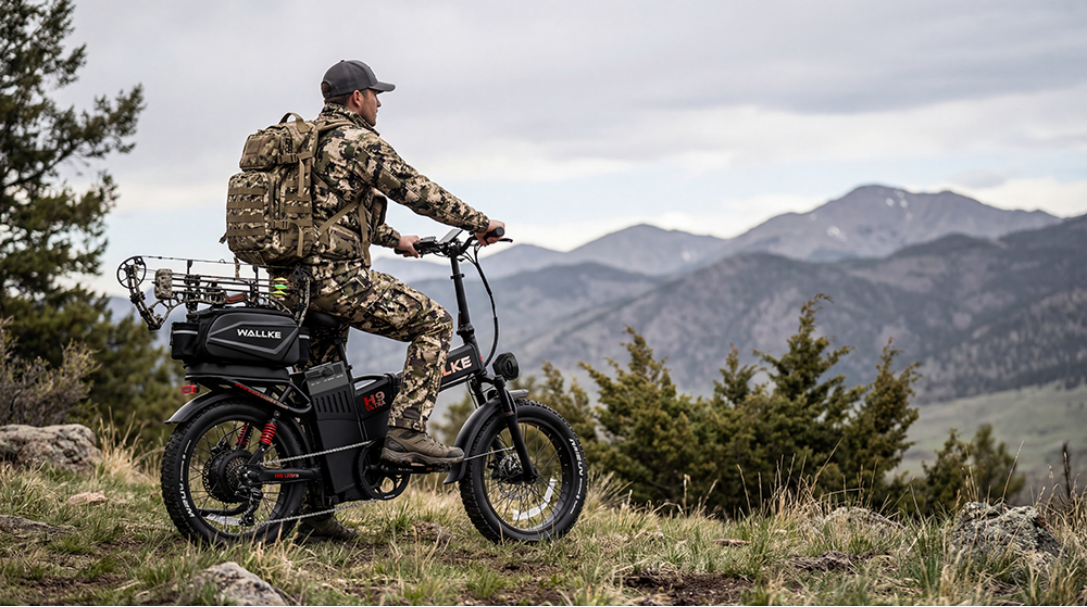
Xianggang, China Apr 8, 2026 (Issuewire.com) - The morning mist still clings to the forest floor as a rider navigates a steep, unpaved incline, loaded with over 50 pounds of camping gear. For most, this terrain marks the end of the road, but for the rider atop a modern, engineered machine, it is simply the start of the journey. This scene underscores a shifting paradigm in personal mobility: the rise of the heavy-duty electric bike.
Far more than a standard commuter, a true heavy-duty electric bike is an engineered platform designed to transcend the limitations of conventional cycling, offering the torque, structural integrity, and reliability required for demanding tasks, from off-grid exploration to industrial utility. A true high-load machine is defined by its architectural integrity, specialized power delivery, and an uncompromising approach to safety, transforming the way we move by bridging the divide between conventional bicycles and motorized utility vehicles.
Defining Structural Integrity and Utility Standards
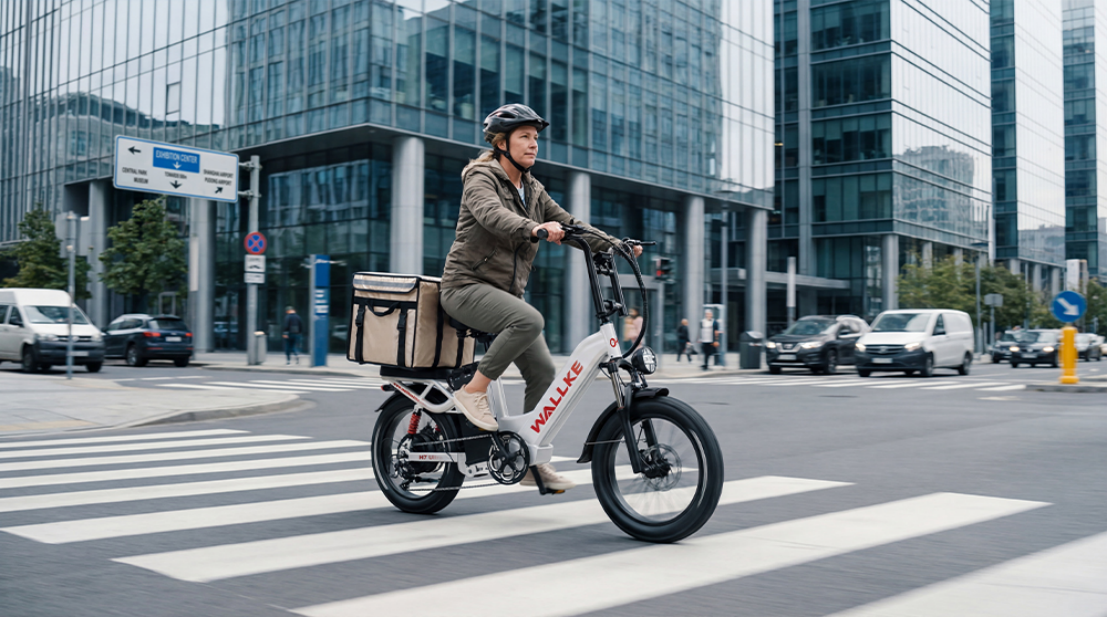
The term "heavy-duty" is frequently used loosely in marketing; however, from an engineering perspective, it denotes a vehicle capable of sustaining physical stresses far exceeding those of standard recreational bicycles. A certified utility ebike is not merely a bike with a larger battery or thicker tires; it is an integrated system engineered to manage high-force loads across diverse, often demanding, terrains.
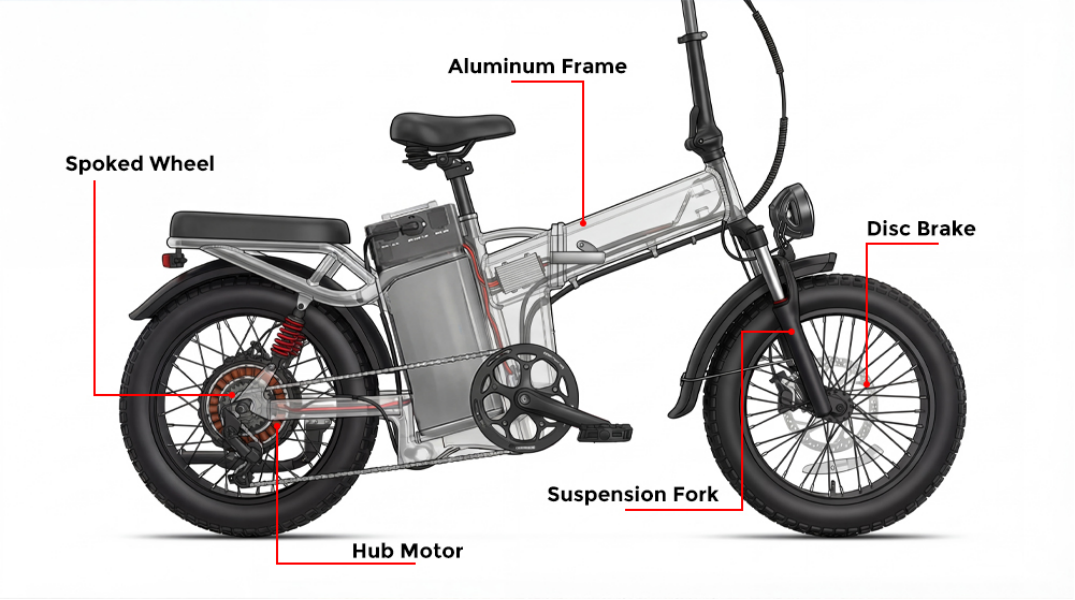
For a high-load ebike, structural integrity is the foundational requirement. Manufacturers like Wallke employ industrial-grade aluminum alloys, prioritizing reinforcement at critical stress points—specifically the head tube, seat tube junctions, and the bottom bracket. Unlike entry-level models that rely on thin-walled tubing to minimize manufacturing costs, these high-end frames undergo rigorous Finite Element Analysis (FEA) to ensure structural rigidity under maximum load.
When evaluating a high weight capacity ebike, one must analyze the synergy between the frame, suspension, and wheelset. True heavy-duty machinery relies on specific engineering benchmarks to maintain performance and safety:
- Architectural Rigidity: Utilizing premium aluminum alloy construction with significant wall thickness (often 3.0mm or greater) to resist frame fatigue and prevent flexing under heavy cargo or rider weight.
- Load-Distributing Wheelsets: A heavy-duty machine requires high-gauge spokes, reinforced deep-section rims, and heavy-duty hub bearings. This combination is essential to resist lateral and vertical deformation caused by the kinetic energy of a fully loaded bike hitting road obstacles.
- Systemic Synergy:Components must be calibrated as a single unit. An over-powered motor paired with a standard-grade frame creates a safety hazard; true utility bikes match motor torque with proportional stopping power via four-piston hydraulic disc brakes and a robust, reinforced drivetrain.
Without these specific structural considerations, a bicycle cannot safely sustain its advertised payload over time. Prioritizing these engineering standards distinguishes a low maintenance ebike—built for longevity and reliability—from disposable consumer products that succumb to inevitable component failure under sustained stress.
The Engineering Behind Resilience: Standards and Testing
Safety is the cornerstone of the heavy-duty category. Authentic heavy-duty models are subjected to real-world stress testing to ensure the frame and suspension can endure consistent, high-impact usage without catastrophic component failure or premature structural degradation. A robust bike must adhere to stringent Heavy Duty Standards that dictate how these machines are validated before reaching the consumer. These standards include:
- Dynamic Load Testing: Machines are subjected to thousands of cycles of vertical force, simulating years of heavy usage on uneven, high-vibration terrain.
- Braking Performance Metrics: As total weight increases—often exceeding 300 pounds including the rider and cargo—braking distance becomes a critical safety factor. High-end systems employ hydraulic four-piston calipers and large-diameter rotors to ensure consistent, controlled deceleration even in wet or downhill conditions. Understanding that safety is inseparable from load capacity, Wallke maintains the highest engineering standards; most of the brand's heavy-duty models are rigorously tested to support a total payload of up to 400 pounds, ensuring that every rider maintains confident control even when fully loaded.
- Thermal Management: A heavy-duty motor must be paired with an efficient controller that handles high torque without overheating, ensuring that the bike can sustain speed on long climbs without the power cutting out.
The Hidden Math of Long-Term Ownership: Why Quality is an Efficiency Strategy
As we strive for peak performance, we must acknowledge a fundamental reality: engineering a true heavy-duty electric bike inevitably involves increased design complexity and material costs. Utilizing industrial-grade aluminum alloys, reinforced suspension systems, and high-output, durable motors—these rigorous material standards and precision manufacturing processes naturally raise the base production costs. Many consumers, when first encountering these premium models, may hesitate due to the higher price tag. However, viewing these costs merely as an expense is short-sighted; from an engineering perspective, this is essentially a premium paid upfront for the vehicle’s long-term lifecycle value.
In the discussion of high weight capacity ebike ownership, the comparison between low-cost, mass-market options and premium, high-capacity bikes often centers on price. However, a more accurate metric is the Total Cost of Ownership (TCO).
While a low-cost bike might have a lower initial price, it often suffers from "component fatigue" and premature mechanical breakdown. To truly visualize value, one must consider the Total Long-Term Cost Equation:
Total Cost = (Initial Purchase Price) + (Frequency of Service × Cost per Service) + (Lost Time Value).
Wallke’s 2026 heavy-duty lineup is engineered to disrupt this equation by drastically lowering maintenance frequency through four critical hardware advantages that entry-level manufacturers simply cannot match due to cost constraints:
- Puncture-Resistant & Ultra-Quiet Tires: Unlike standard ebike tires that are prone to debris penetration and high-speed noise, Wallke utilizes specialized anti-puncture, ultra-silent tires. This reduces the most common "down-time" event—flats—while providing a smoother, more efficient rolling resistance that preserves battery life.
- Next-Gen High-Reliability Motors: Motor burnout is the most expensive failure in an ebike. Wallke’s 2026 motor architecture boasts a 60% lower failure rate compared to same-price-point competitors. This is achieved through superior heat dissipation and internal gearing materials that are inaccessible to budget brands.
- Heavy-Duty 18-Gate Controllers: While the industry standard for this segment often relies on basic 12-gate controllers, Wallke’s 2026 series is equipped with a massive 40A 18-gate controller. By increasing the number of MOSFETs (power transistors), the system handles high-current loads with significantly less heat stress, virtually eliminating the risk of "controller fry-out" during prolonged high-speed or heavy-load operation.
- High-Performance Braking Systems & Compound Pads: In a heavy-duty context, brakes are the primary safety interface. Wallke moves beyond standard consumables by using oversized hydraulic systems and premium-compound brake pads. These pads offer superior thermal stability—meaning they won't "fade" during long descents—and provide a shorter stopping distance under full 400 lb loads. Their high-density composition also ensures a longer replacement cycle, further driving down the cost per mile.
Over a period of three to five years, a premium-engineered Wallke bike proves more economical because it stays on the road rather than in the workshop. By reducing the frequency of parts replacement and minimizing the downtime associated with mechanical failures, the owner achieves not only peace of mind but substantial, long-term financial savings. In this light, investing in Wallke is not a luxury—it is a calculated efficiency strategy.
Since 2018, Wallke has focused on the philosophy that a bike should be a machine of empowerment. As riders become more discerning, they are prioritizing the structural and technical certifications that transform a simple electric bike into a dependable, long-term utility asset.
For more information on high-performance utility machines, please visit: https://wallkeebike.com/
Media Contact
Hong Kong tengye Trading Limited doris@wallkeebike.com